
Harishyam Arts Blog
Sharad Navratri 2025 Day 2 Maa Brahmacharini Significance, Muhrat, Appearance, Puja Samagri, Vidhi, Katha, Aarti | चैत्र नवरात्रि 2025 दिन 2 मां ब्रह्मचारिणी, जानिए पूजा विधि, महत्व, मुहर्त, स्वरूप, पूजा सामग्री, विधि, कथा, मंत्र, आरती
By Lakshay Sharma | On 11 September, 2024 | Views
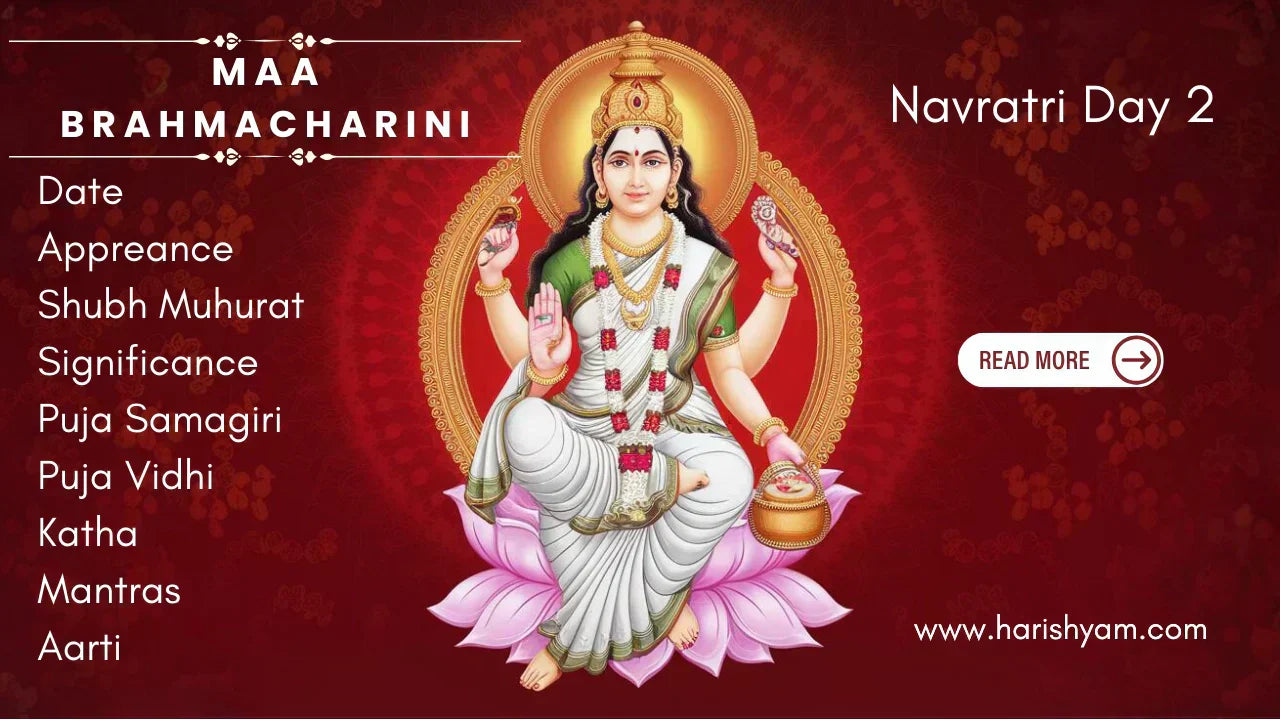
As the vibrant festival of Sharad Navratri unfolds, Day 2 is dedicated to the revered goddess Maa Brahmacharini. This day is an opportunity to honor and seek the blessings of Maa Brahmacharini, who embodies the virtues of penance, purity, and devotion. Her worship on this auspicious day is believed to bring spiritual enlightenment and immense inner strength.
In this blog post, we will explore the significance of Maa Brahmacharini, the auspicious muhurat for her worship, her divine appearance, the essential puja samagri (items), detailed puja vidhi (rituals), the captivating katha (story) associated with her, and the melodious aarti (hymn) that brings devotees closer to her grace. Join us as we delve into the profound aspects of Maa Brahmacharini's worship and learn how to celebrate this sacred day with devotion and reverence.
Date of the 2nd Day of Sharad Navratri 2025: 23th September 2025
Goddess of the day: Maa Brahmacharini
Color of the Day: Red
Flower of the Day: Chrysanthemums / Shevanti.
Sweet / Prasadam of the Day: Sugar and fruits / Singhare atte ka halwa or kacche kele ki barfi
Other Names: Tapascharini, Aparna and Uma
Importance: This goddess signifies loyalty, love, knowledge and wisdom
Who is Maa Brahmacharini ? | कौन हैं मां ब्रह्मचारिणी ?
Maa Brahmacharini is the second form of Goddess Durga, worshipped during the nine days of Navratri. The name "Brahmacharini" is derived from two words: "Brahma," which means penance or austerity, and "Charini," which means one who performs.
Therefore, Maa Brahmacharini symbolizes devotion, penance, and sacrifice. She is depicted as a serene and graceful goddess holding a rosary (japa mala) in one hand and a water pot (kamandal) in the other.
Maa Brahmacharini is associated with the story of Goddess Parvati's extreme penance to attain Lord Shiva as her husband. Her austere form signifies patience, endurance, and self-discipline. Worshipping her is believed to bestow wisdom, strength, and determination, helping devotees to overcome challenges in life. She embodies the spirit of renunciation and devotion, encouraging her followers to pursue the path of spirituality.
Her blessings are sought for inner peace, mental clarity, and spiritual growth.
Appearance of Maa Brahmacharini
Maa Brahmacharini is depicted as a calm and graceful goddess who exudes simplicity and devotion. Her appearance reflects her austere nature and the intense penance she undertook. Here are some key elements of her appearance:
- Two Hands: Maa Brahmacharini is shown with two hands. In one hand, she holds a rosary (japa mala), symbolizing her devotion and continuous meditation. In the other hand, she carries a water pot (kamandal), which represents austerity and purity.
- White Saree: She is typically dressed in a simple white saree, representing purity, peace, and self-discipline.
- Bare Feet: Maa Brahmacharini is often depicted walking barefoot, emphasizing her renunciation of worldly comforts and her commitment to spiritual practice.
- Radiant Aura: Despite her simple attire and lifestyle, Maa Brahmacharini has a radiant and serene aura, symbolizing the inner strength and wisdom gained through penance.
Her overall appearance signifies devotion, sacrifice, and the pursuit of higher spiritual goals, encouraging her devotees to lead a disciplined and virtuous life.
Navratri 2025 Day 2 Significance
On the second day of Navratri, devotees honor Maa Brahmacharini, the second form of Goddess Durga, known for her deep penance and devotion. She symbolizes austerity, wisdom, and inner strength. Maa Brahmacharini's name reflects her practice of 'Brahmacharya,' representing a life of discipline, celibacy, and unwavering devotion towards Lord Shiva.
Worshipping her during Navratri is believed to instill perseverance, self-control, and a calm mind in devotees. Her blessings guide individuals on the path of wisdom and spiritual growth, helping them face life's challenges with patience and determination.
Maa Brahmacharini is revered for her profound penance and spiritual dedication. Her worship on the second day of Navratri symbolizes the importance of self-control, purity, and steadfast devotion. By following her puja vidhi, devotees seek her blessings for inner strength and spiritual growth.
Day 2 of Navratri: On the second day of Navratri 2025, the focus is on worshiping Maa Brahmacharini, the second form of Goddess Durga. This day is known as Day 2 of Navratri and is an integral part of the Shardiya Navratri festival
The Symbolism of Goddess Brahmacharini is deeply rooted in her attributes and the objects she carries:
The kamandalu and japamala are integral symbols of Goddess Brahmacharini
1. Kamandalu (Water Pot):
- Symbolism: The kamandalu represents purity, simplicity, and the renunciation of material desires. It signifies the goddess's ascetic nature and her dedication to a life of spiritual discipline. In Hindu rituals, the kamandalu is often associated with the sustenance of life and spiritual knowledge.
- Spiritual Meaning: By carrying the kamandalu, Goddess Brahmacharini underscores her commitment to a life of austerity and spiritual focus. It symbolizes her ability to sustain spiritual wisdom and provide the nourishment of divine knowledge.
2.Japamala (Rosary):
- Symbolism: The japamala, or rosary, is a tool used for counting recitations of mantras or prayers. It represents meditation, devotion, and the continuous practice of spiritual disciplines. It reflects the goddess's commitment to constant remembrance of the divine and her dedication to spiritual practice.
- Spiritual Meaning: Through the japamala, Goddess Brahmacharini emphasizes the importance of disciplined prayer and meditation. It signifies her role as a guide in the path of spiritual growth and her unwavering focus on the divine.
Navratri Day 2 Puja Samagiri List | नवरात्रि दिवस 2 पूजा सामग्री सूची
On the second day of Navratri, dedicated to Maa Brahmacharini, the puja samagri (items for worship) typically includes the following:
- Kalash: A sacred pot filled with water, often adorned with mango leaves and a coconut on top.
- Diya (Lamp): An oil lamp to light during the puja.
- Incense Sticks (Agarbatti): For fragrance and to purify the space.
- Flowers: Fresh flowers for offering.
- Fruits: Seasonal fruits for prasad (offering).
- Navedya: Food offerings such as fruits, sweets, or special dishes.
- Red or Yellow Cloth: To cover the altar or deity.
- Rice: Used for various rituals, including making a small heap for offerings.
- Til (Sesame Seeds): Often used in rituals.
- Jaggery: Used in offerings and prasad.
- Coconut: Offered to the goddess, usually placed on the Kalash.
- Puja Thali: A plate containing all the essential items for the puja.
- Rangoli Colors: For decorating the area around the altar.
- Chandan (Sandalwood Paste): Applied on the deity’s forehead.
- Sindoor (Vermilion): Used for applying on the deity’s forehead.
- Puja Bell: To ring during the prayers.
These items are used to perform the puja with devotion and respect, honoring Maa Brahmacharini and seeking her blessings.
Puja Vidhi of Maa Brahmacharini (Maa Brahmacharini Worship Procedure)
Maa Brahmacharini is worshiped on the second day of Navratri. She represents penance, austerity, and devotion, embodying the path of self-discipline and dedication. Here is a detailed guide for performing her puja:
1. Preparation (तैयारी)
- Choose an auspicious time for the puja.
- Clean the puja area thoroughly and place a clean cloth on the altar.
- Gather all the necessary puja items (samagri).
2. Kalash Sthapana (Establishing the Sacred Pot)
- Place a Kalash (sacred pot) on the altar.
- Fill the Kalash with water and add betel leaves and supari (areca nut).
- Place a coconut on top of the Kalash, and cover it with mango leaves.
- Sprinkle Ganga Jal on the Kalash to purify it.
3. Maa Brahmacharini’s Idol or Picture (मां ब्रह्मचारिणी की मूर्ति या चित्र)
- Place the idol or picture of Maa Brahmacharini on the altar.
- Decorate the idol with flowers and chunari (sacred cloth).
4. Puja Samagri Offering (पूजन सामग्री अर्पण)
- Roli and Kumkum: Apply a tilak on the forehead of the idol or picture.
- Rice: Offer rice grains along with roli and kumkum.
- Flowers: Offer white flowers or lotus flowers.
- Diya (Lamp): Light a ghee lamp and place it in front of the idol.
- Dhoop and Incense: Light dhoop and agarbatti and offer them to the goddess.
- Panchamrit: Offer Panchamrit (a mixture of milk, curd, ghee, honey, and sugar) to the goddess.
5. Mantra Chanting (मंत्र जाप)
- Recite the following mantra dedicated to Maa Brahmacharini:
- "Om Devi Brahmacharinyai Namah"
- Chant the mantra with devotion, ideally 108 times.
6. Aarti and Prayers (आरती और प्रार्थना)
- Perform aarti (waving of a lighted lamp) in front of the goddess using camphor.
- Sing aarti songs or hymns dedicated to Maa Brahmacharini.
- Offer heartfelt prayers for strength, wisdom, and blessings.
7. Prasad Distribution (प्रसाद वितरण)
- Offer the prasad (sweets or fruits) that you have prepared to the goddess.
- Distribute the prasad among family members and devotees as a blessing
Navratri Day 2 Maa Brahmacharini ki Katha | माँ ब्रह्मचारिणी की कथा
माँ ब्रह्मचारिणी देवी दुर्गा के नौ रूपों में से एक हैं, जिन्हें नवरात्रि के दूसरे दिन पूजा जाता है। उनकी कथा बहुत ही प्रेरणादायक है और भक्तों को तपस्या और संयम का महत्व सिखाती है।
एक समय की बात है, हिमालय पर्वत पर राजा हिमवान और रानी मैनावती के घर एक कन्या का जन्म हुआ, जिनका नाम पार्वती रखा गया। पार्वती बचपन से ही बहुत ही सुंदर और गुणी थीं, लेकिन उनके दिल में भगवान शिव की आराधना करने की गहरी इच्छा थी।
जब वे युवा हुईं, तो उन्होंने भगवान शिव को प्रसन्न करने के लिए कठोर तपस्या करने का निर्णय लिया। उन्होंने पूरी तरह से ब्रह्मचारिणी जीवन जीने का संकल्प लिया, जिसका मतलब था कि उन्होंने सभी भौतिक सुखों और इच्छाओं का त्याग कर दिया और केवल भगवान शिव की आराधना में लीन हो गईं।
वे वर्षों तक केवल फल-फूल खाकर, और बिना किसी आराम के तपस्या करती रहीं। उनकी इस कठोर तपस्या और समर्पण को देखकर देवताओं ने भगवान शिव से अनुरोध किया कि वे पार्वती को दर्शन दें। भगवान शिव उनकी तपस्या से प्रभावित हुए और अंततः उन्हें दर्शन दिए।
भगवान शिव ने पार्वती को उनकी तपस्या और समर्पण के लिए आशीर्वाद दिया और उन्हें अपनी पत्नी के रूप में स्वीकार किया। इस प्रकार, पार्वती की तपस्या सफल हुई और वे महादेव की पत्नी बनीं।
इस कथा से हमें यह सिखने को मिलता है कि सच्ची भक्ति और तपस्या से किसी भी लक्ष्य को प्राप्त किया जा सकता है, और जीवन में संयम और समर्पण की महत्वपूर्णता को समझने में मदद मिलती है।
Maa Brahmacharini Mantra | माँ ब्रह्मचारिणी पूजा मंत्र
Mantra 1
- ॐ देवी ब्रह्मचारिण्यै नमःदधाना करपद्माभ्यामक्षमाला कमण्डलु।देवी प्रसीदतु मयि ब्रह्मचारिण्यनुत्तमा।।
- Transliteration: Om Devi Brahmacharinyai NamahDadhana Karapadmabhyam Akshamala Kamandalu |Devi Prasidatu Mayi Brahmacharinyanuttama ||
- Meaning: "Salutations to Goddess Brahmacharini,Who holds a rosary and a water vessel in her lotus-like hands.O supreme Goddess Brahmacharini, please be pleased with me and bless me."
Maa Brahmacharini Dhyan Mantra
- वन्दे वांछितलाभाय चन्दार्धकृतशेखराम्।जपमाला कमण्डलु धरा ब्रह्मचारिणी शुभाम्।।
- Transliteration: Vande Vanchhitalabhaya Chandrardhakrita-Shekharam |Japamala Kamandalu Dhara Brahmacharini Shubham ||
- English Meaning: "I bow to Goddess Brahmacharini,Who adorns a crescent moon on her head,Holding a rosary and a water pot,The auspicious Goddess who grants all desires."
These mantras invoke the blessings of Maa Brahmacharini, the embodiment of penance and devotion, to receive spiritual wisdom and guidance.
Brahmacharini Mata Ji Ki Aarti Lyrics in Hindi | ब्रह्मचारिणी माता जी की आरती
माँ ब्रह्मचारिणी की आरती भक्तों द्वारा पूजा के दौरान गाई जाती है। यह आरती माँ की स्तुति और उनकी शक्ति को व्यक्त करती है। यहाँ पर माँ ब्रह्मचारिणी की आरती के बोल दिए जा रहे हैं:
जय ब्रह्मचारिणी जय ब्रह्मचारिणी,
भक्तों के दुखों को हरने वाली।
सर्वदा सुख-संपत्ति देने वाली,
जय ब्रह्मचारिणी जय ब्रह्मचारिणी।
शिव की अर्धांगिनी देवी ब्रह्मचारिणी,
भक्ति की साधना में संलग्न महती।
शिव के लिए तपस्या की ओर अग्रसर,
जय ब्रह्मचारिणी जय ब्रह्मचारिणी।
नर और नारियों को सच्ची भक्ति देती,
माँ ब्रह्मचारिणी अजर-अमर होती।
सच्चे भक्तों को यह पाती है वरदान,
जय ब्रह्मचारिणी जय ब्रह्मचारिणी।
सभी पापों को धोने वाली, सबको सुख देने वाली,
शक्ति की देवी ब्रह्मचारिणी, भक्तों की शरण में आयी।
जय ब्रह्मचारिणी जय ब्रह्मचारिणी,
भक्तों की मनोकामना पूरी करने वाली।
जय माँ ब्रह्मचारिणी, अज्ञेय शक्ति की देवी,
तेरे चरणों में सबकी मुरादें पूरी हों।
सर्वविघ्न हरिनी, सबकी समस्याओं को मिटाने वाली,
जय ब्रह्मचारिणी जय ब्रह्मचारिणी।
FAQ's
Q.1 ब्रह्मचारिणी माता का भोग क्या है?
A: ब्रह्मचारिणी माता को साधारण और पवित्र भोग पसंद है। आमतौर पर, दूध, फल (जैसे सेब, नाशपाती), खीर, और ताजे मिठाई जैसे लड्डू या चिरोटा अर्पित किए जाते हैं। इन भोगों को चढ़ाने से माँ की कृपा प्राप्त होती है।
Q.2 ब्रह्मचारिणी की पूजा कैसे करें?
A: ब्रह्मचारिणी की पूजा निम्नलिखित विधियों से की जाती है:
स्वच्छता: स्नान करके और शुद्ध वस्त्र पहनकर पूजा स्थल को साफ करें।
स्थापना: माँ ब्रह्मचारिणी की प्रतिमा या चित्र को पूजा स्थल पर स्थापित करें।
दीप प्रज्वलन: दीपक और अगरबत्ती जलाएं।
अक्षत और पुष्प अर्पण: प्रतिमा पर अक्षत (चावल) और फूल अर्पित करें।
मंत्र जाप: माँ के मंत्रों का जाप करें (जैसे “ओं ब्रह्मचारिण्यै नमः”)।
भोग अर्पण: फल, मिठाई, और अन्य भोग अर्पित करें।
आरती: आरती गाएं और देवी को समर्पित करें।
प्रसाद वितरण: पूजा के बाद प्रसाद सभी भक्तों में वितरित करें।
Q.3 मां ब्रह्मचारिणी को कौन सा फूल पसंद है?
A: माँ ब्रह्मचारिणी को मुख्यतः सफेद फूल पसंद आते हैं, जैसे कनेर और चांदनी। सफेद फूल उनकी पवित्रता और तपस्या का प्रतीक होते हैं।
Q.4 ब्रह्मचारिणी माता का पसंदीदा रंग कौन सा है?
A: ब्रह्मचारिणी माता का पसंदीदा रंग सफेद है। सफेद रंग शुद्धता, तपस्या, और भक्ति का प्रतीक होता है, जो माँ के चरित्र को दर्शाता है।
Q.5 मां ब्रह्मचारिणी का वाहन क्या है?
A: माँ ब्रह्मचारिणी का कोई विशेष वाहन नहीं है। उन्हें अक्सर तपस्या और साधना की देवी के रूप में पूजा जाता है, इसलिए उनका कोई वाहन नहीं होता। उनकी पूजा सरलता और ध्यान की भावना को प्रकट करती है।
Conclusion
Maa Brahmacharini, worshipped on the second day of Navratri, represents purity, devotion, and spiritual wisdom. Her blessings guide devotees toward a path of self-discipline and perseverance, helping them face challenges with grace and inner strength. Performing her puja with sincerity during Navratri is believed to bring peace, wisdom, and determination to one's life.
For those looking to bring home a symbol of Maa Brahmacharini’s divine energy, you can find exquisitely crafted Maa Brahmacharini marble murtis at Harishyam Arts, perfect for personal worship and spiritual connection.
As the vibrant festival of Sharad Navratri unfolds, Day 2 is dedicated to the revered goddess Maa Brahmacharini. This day is an opportunity to honor and seek the blessings of Maa Brahmacharini, who embodies the virtues of penance, purity, and devotion. Her worship on this auspicious day is believed to...

Lakshay Sharma
I’m Lakshay Sharma, a writer with a deep passion for Hindu mythology, Vastu Shastra, and home interiors. I enjoy exploring the rich traditions of Hindu gods and goddesses, sharing insights into Vastu principles, and offering guidance on creating sacred spaces like Puja Mandirs. Through my writing, I aim to inspire harmony and spiritual well-being, blending traditional knowledge with modern perspectives.
Harishyam Arts | Jaipur
Related Blogs

How to Choose the Perfect Mini Temple for Home
Lakshay Sharma | April 08, 2026
How to Choose the Perfect Mini Temple for Home

Durga vs Mahishasura: The Story Behind Navratri
Lakshay Sharma | April 07, 2026
Durga vs Mahishasura: The Story Behind Navratri

Brass vs Marble vs Wooden Idols: Which One Should You Choose?
Lakshay Sharma | April 06, 2026
Choosing the right idol for your home, office, or temple is more than just a d...
Read More...
Top Tanjore Painting Designs for Home Décor in 2026
Lakshay Sharma | April 05, 2026
Tanjore paintings, also known as Thanjavur paintings, are a timeless symbol of...
Read More...
Wooden Animal Statues for Vastu & Interior Design
Lakshay Sharma | April 04, 2026
In today’s world of mindful living and aesthetic interiors, the use of decorat...
Read More...
Why White Marble Ganesh Idols Are Most Popular in India
Lakshay Sharma | April 03, 2026
In India, the worship of Lord Ganesha holds a special place in the hearts of m...
Read More...
The Story of Lord Krishna Lifting Govardhan Hill
Lakshay Sharma | April 02, 2026
The story of Lord Krishna lifting Govardhan Hill is one of the most celebrated...
Read More...
What Are the Different Types of Wooden Pooja Mandirs Available?
Lakshay Sharma | April 01, 2026
A pooja mandir holds a sacred place in every Indian home. It is not just a pie...
Read More...
Why Brass Idols Are Considered Auspicious in Hindu Homes?
Lakshay Sharma | March 31, 2026
In Hindu tradition, the presence of divine idols in the home is more than deco...
Read More...
Custom Living Room Furniture for Heritage Homes
Lakshay Sharma | March 30, 2026
Heritage homes are more than just residences—they are living stories shaped by...
Read More...
Significance of Radha Krishna Marble Idols
Lakshay Sharma | March 29, 2026
In the world of spirituality and art, few representations are as revered and c...
Read More...
How to Select the Perfect Marble Krishna Idol for Home
Lakshay Sharma | March 28, 2026
Bringing a Marble Krishna Idol into your home is not just about décor—it is ab...
Read More...
Modern vs Traditional Mandir Design – What Should You Choose?
Lakshay Sharma | March 27, 2026
In India, a mandir is not just a structure—it is a sacred space where devotion...
Read More...
Benefits of Having a Home Temple
Lakshay Sharma | March 26, 2026
In today's fast-paced world, creating a personal sanctuary at home has become ...
Read More...
Marble Ganesh Idol for Business Success
Lakshay Sharma | March 25, 2026
In the competitive world of business, success depends not only on strategy, pl...
Read More...
Affordable Premium Wall Art for Modern Homes
Lakshay Sharma | March 24, 2026
In today’s world of evolving interiors and expressive living spaces, wall art ...
Read More...
Which Mandir Is Best for Small Apartments?
Lakshay Sharma | March 23, 2026
When designing a peaceful and spiritual corner in a compact home, one of the m...
Read More...
Rajasthani Hand-Carved Furniture Style Guide
Lakshay Sharma | March 22, 2026
When it comes to heritage craftsmanship and timeless elegance, few styles comp...
Read More...

Best Brass Idols for Gifting During Festivals
Lakshay Sharma | March 20, 2026
Festivals are a time of joy, togetherness, and celebration. They are also a wo...
Read More...
Why Marble Idols Are Ideal for Outdoor Temples
Lakshay Sharma | March 19, 2026
In the heart of every devout Hindu or Jain household, an outdoor temple serves...
Read More...
Why Marble Durga Idols Are Popular for Navratri
Lakshay Sharma | March 18, 2026
Navratri, the nine-night festival celebrating Goddess Durga's victory over evi...
Read More...
Temple Idol Installation Guide
Lakshay Sharma | March 17, 2026
Installing a temple idol is not just a decorative or architectural step — it i...
Read More...
Why Handcrafted Idols Have More Spiritual Value
Lakshay Sharma | March 16, 2026
In a world that moves at the speed of machines, where almost everything is mas...
Read More...
Which God Idol Is Best for Office?
Lakshay Sharma | March 15, 2026
In today’s fast-paced professional world, creating a positive and peaceful wor...
Read More...
How Harishyam Arts Ensures Safe Global Delivery
Lakshay Sharma | March 14, 2026
In today’s interconnected world, art is no longer limited by geography. Collec...
Read More...
Premium Wooden Mandirs for Luxury Homes
Lakshay Sharma | March 13, 2026
In a luxury home, every detail tells a story — from the flooring beneath your ...
Read More...
What are the best marble Mandir designs for home?
Lakshay Sharma | March 12, 2026
A home is not complete without a sacred space that brings peace, positivity, a...
Read More...
Wall-Mounted vs Floor-Standing Mandirs
Lakshay Sharma | March 11, 2026
A home temple is more than just a piece of furniture—it is a sacred space wher...
Read More...
Brass Buddha vs Marble Buddha – Which Is Better?
Lakshay Sharma | March 10, 2026
In the world of art and home décor, Buddha statues hold a special place. They ...
Read More...
Importance of Brass Idols in Vastu
Lakshay Sharma | March 09, 2026
In the world of interior design and spiritual practices, Vastu Sh...
Read More...
Buying Indian Marble Idols in USA, UK & Australia – Complete Guide
Lakshay Sharma | March 08, 2026
Indian marble idols are more than decorative items—they are symbols of devotio...
Read More...
Brass vs Marble Idols: Which Should You Choose?
Lakshay Sharma | March 07, 2026
Decorating your home or temple with idols is not just about aesthetics—it’s ab...
Read More...
Top 10 Popular Brass God Idols and Their Meanings
Lakshay Sharma | March 06, 2026
Brass idols have been a cornerstone of Indian art and spirituality for centuri...
Read More...
Where Can I Buy Wooden Pooja Mandir for Home Online?
Lakshay Sharma | March 05, 2026
A Wooden Pooja Mandir is more than just a beautiful ...
Read More...
Akshaya Tritiya 2026: Auspicious Timing for Buying Gold-Plated Brass Ganesha Idols
Lakshay Sharma | March 04, 2026
Akshaya Tritiya is one of the most sacred and prosperous days in the Hindu cal...
Read More...
Why Handmade Wooden Mandirs Are Better
Lakshay Sharma | March 03, 2026
Why Handmade Wooden Mandirs Are Better Than Machine-Made Alternatives<... Read More...

Antique Finish vs Polished Brass Idols
Lakshay Sharma | March 02, 2026
Antique Finish vs Polished Brass Idols: Which One Should You Choose? Read More...

Why White Marble Is Considered Sacred in Hinduism
Lakshay Sharma | March 01, 2026
In Hinduism, every material used in worship carries deep spiritual meaning. Fr...
Read More...
Which Hindu God Murti Can be Made in Black Stone?
Lakshay Sharma | February 28, 2026
In the vibrant world of Hindu idol craftsmanship, the choice of material for a...
Read More...
Does Brass Tarnish Outdoors? What Happens When a Brass Statue Is Left Outside
Lakshay Sharma | February 27, 2026
Brass statues add timeless elegance to gardens, patios, and outdoor spaces, bl...
Read More...
Pooja Mandir Trends 2026: Modern Designs, Materials, and Styles for Home
Lakshay Sharma | February 26, 2026
In the hustle of modern life, the Pooja Mandir remains a sacred cornerstone of...
Read More...
Experiencing Gangaur Festival in Jaipur: Dates, Traditions, and Travel Tips
Lakshay Sharma | February 25, 2026
Jaipur, the Pink City, bursts into a kaleidoscope of colors, devotion, and art...
Read More...
When and Why You Should Repaint Marble Murtis?
Lakshay Sharma | February 24, 2026
Marble murtis—those stunning, timeless idols carved from pristine white or col...
Read More...
Where can I find custom-made white marble god statues in India?
Lakshay Sharma | February 23, 2026
White marble god statues hold a sacred place in Indian homes, temples, and off...
Read More...
Can You Gift a Puja Mandir to Someone?
Lakshay Sharma | February 22, 2026
In Hindu tradition, the puja mandir—also known as a prayer altar or home templ...
Read More...
What Are the Key Factors to Consider When Buying Sandstone?
Lakshay Sharma | February 21, 2026
Sandstone is one of the most widely used natural stones in architecture, const...
Read More...
Are Wooden Idols Worth Buying?
Lakshay Sharma | February 20, 2026
Choosing an idol for your home or sacred space is a deeply personal decision. ...
Read More...
Who is the best corian Mandir manufacturer in India?
Lakshay Sharma | February 19, 2026
In Indian culture, a mandir is more than just a physical structure—it is the s...
Read More...
When Is Gangaur in 2026? Date, Meaning, Story, Vrat Katha, and Puja Vidhi Explained
Lakshay Sharma | February 18, 2026
Gangaur is one of the most significant and beloved festivals of Rajasthan, cel...
Read More...


