
Harishyam Arts Blog
The 24 Tirthankaras of Jainism: Names, Symbols, and Significance
By Lakshay Sharma | On 02 November, 2025 | Views
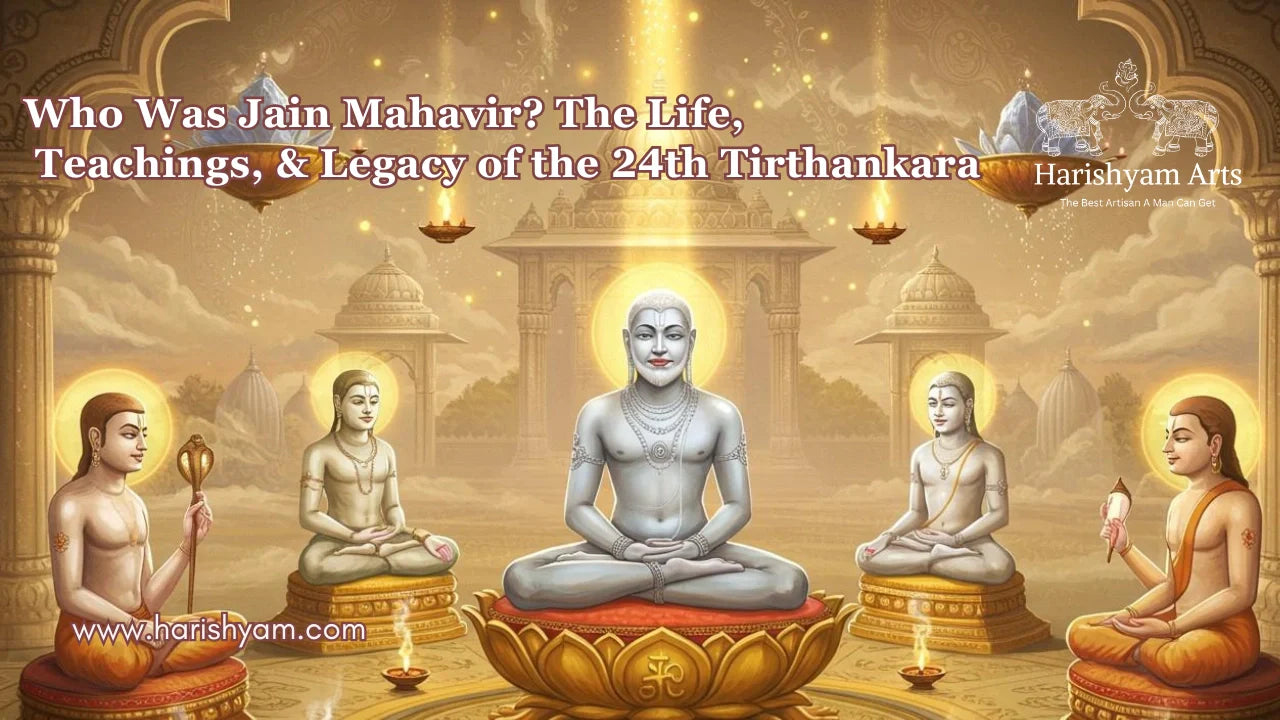
In Jainism, the Tirthankaras are revered as divine spiritual teachers who have conquered worldly desires and attained enlightenment. They guide others on the path of liberation, compassion, and truth. The word Tirthankara means “ford-maker,” symbolizing one who helps souls cross the ocean of worldly life and reach salvation. Jain philosophy recognizes 24 Tirthankaras in every time cycle, each representing supreme purity, wisdom, and self-discipline. At Harishyam Arts, we honor their legacy through beautifully crafted Jain idols and sculptures that inspire devotion and peace in every home and temple.
The Meaning of ‘Tirthankara’
A Tirthankara is not a creator or god in the conventional sense but a spiritually perfected soul who shows the path to others. The term comes from Sanskrit—Tirtha (crossing place) and Kara (maker). They create a “ford” for others to cross the cycle of birth and death. Each Tirthankara teaches the principles of Ahimsa (non-violence), Satya (truth), Asteya (non-stealing), Brahmacharya (chastity), and Aparigraha (non-possession). Their teachings emphasize self-realization, compassion for all living beings, and freedom from material attachment — timeless values that continue to guide humanity.
The 24 Tirthankaras: Names, Symbols, and Meaning


Spiritual Significance of the 24 Tirthankaras
Each Tirthankara serves as a spiritual beacon, guiding souls towards liberation through moral conduct and meditation. They remind humanity of the eternal values of compassion, non-violence, and truth. Their life stories demonstrate the power of self-restraint and purity, inspiring followers to rise above worldly attachments. Worshiping their idols cultivates inner peace and reminds devotees of their ultimate goal — Moksha (liberation).
The Complete 24 Tirthankaras
1. Rishabhanatha (Adinath)
Symbol: Bull | Birthplace: Ayodhya | Color: Golden | Time Period: Prehistoric (84,00,000 Purva)
Rishabhanatha, the first Tirthankara, is believed to have established the foundations of civilization by teaching agriculture, business, and other basics of life. Born to King Nabhi and Queen Marudevi, he governed with wisdom and kindness before renouncing his kingdom. After rigorous austerities, he attained Kevala Jnana and spent years teaching the path to moksha, finally achieving liberation at Mount Kailash. The bull symbol represents strength and steadfastness. Hindu scriptures including the Bhagavata Purana mention Rishabhnath, referring to him as Lord Vishnu, and the Vedas also reference his name.
2. Ajitanatha
Symbol: Elephant | Birthplace: Ayodhya | Color: Golden | Time Period: Prehistoric (72,00,000 Purva)
Ajitanatha, meaning "Invincible One," emphasized non-attachment and self-control in his teachings. Born to King Jitashatru and Queen Vijaya, he ruled prosperously before witnessing life's realities and choosing asceticism. He taught that spiritual growth comes through denial of material possessions and practiced harsh austerities before attaining omniscience.
3. Sambhavanatha
Symbol: Horse | Birthplace: Shravasti | Color: Golden | Time Period: Prehistoric (60,00,000 Purva)
Sambhavanatha, meaning "Auspicious," focused his teachings on non-violence and moral order. Born to King Jitari and Queen Susena, he displayed exceptional compassion toward all life forms from childhood. His reign was marked by justice and welfare, and he eventually renounced his kingdom to pursue spiritual truth through penance.
4. Abhinandananatha
Symbol: Monkey/Ape | Birthplace: Samet Sikhar | Color: Golden | Time Period: Prehistoric (50,00,000 Purva)
Abhinandananatha, meaning "Worship," advocated for non-attachment to material things and encouraged meditation as a path to enlightenment. Born to King Sinha and Queen Satyaki in Mithila, he was known for his modesty and gentleness. He served his kingdom simply before renouncing his throne to seek spiritual reality and attain Kevala Jnana.
5. Sumatinatha
Symbol: Goose/Heron | Birthplace: Ayodhya | Color: Golden | Time Period: Prehistoric (40,00,000 Purva)
Sumatinatha, meaning "Wise," taught understanding, clear vision, and right actions. Born to King Megha and Queen Mangala, he was nicknamed Sumati (wise intellect) due to his brightness from childhood. He governed with wisdom, ensuring his people lived affluent lives, before hearing the call of higher knowledge and becoming an ascetic.
6. Padmaprabha
Symbol: Red Lotus | Birthplace: Samet Sikhar | Color: Red | Time Period: Prehistoric (30,00,000 Purva)
Padmaprabha, meaning "Lotus-Bright," emphasized purity and spiritual detachment, along with mental and emotional health. Born to King Shridhar and Queen Susima, he was named after the lotus due to his beautiful fair complexion. As a responsible and sympathetic monarch, he came to understand material success's transient nature and renounced his throne to gain liberation through deep concentration.
7. Suparshvanatha
Symbol: Swastika | Birthplace: Samet Sikhar | Color: Golden | Time Period: Prehistoric (20,00,000 Purva)
Suparshvanatha, meaning "Good-sided," preached non-violence and embraced moderate living while protecting mental self-discipline. Born to King Pratistha and Queen Prithvi, he possessed wisdom and compassion from birth. He was a kind, fair, and wise king who relinquished his throne for spiritual life and attained liberation after years of meditation and austerity.
8. Chandraprabha
Symbol: Crescent Moon | Birthplace: Chandrapuri | Color: White | Time Period: Prehistoric (10,00,000 Purva)
Chandraprabha, meaning "Moon-bright," focused on calmness and tranquility of mind. Born to King Mahasena and Queen Lakshmana, he was known for his quiet, calm, and collected nature. He exercised power fairly and benignly before becoming dissatisfied with ephemeral worldly rewards and taking up the life of a hermit, gaining Kevala Jnana through intense meditation.
9. Suvidhinatha (Pushpadanta)
Symbol: Crocodile/Dolphin | Birthplace: Kakandi | Color: White | Time Period: Prehistoric (2,00,000 Purva)
Suvidhinatha, also known as Pushpadanta meaning "Blossomed-toothed," showed that charity, righteousness, and selflessness lead to liberation. Born to King Sugriva and Queen Rama, he was blessed with a fantastic intellect and superb skills. After ruling fairly for many years, his desire for worldly things diminished, and through strict self-rule, he became omniscient.
10. Shitalanatha
Symbol: Wishing Tree (Kalpavriksha)/Shrivatsa | Birthplace: Bhadrikpuri | Color: Golden | Time Period: Prehistoric (1,00,000 Purva)
Shitalanatha, meaning "Coolness," taught non-activity, non-attachment to the body, and calmness. Born to King Dridharatha and Queen Nanda, he was a great, fair, and kind ruler. Like all Tirthankaras, he recognized the world's impermanence and gave up his throne, seeking salvation through austerity and yoga, ultimately attaining Kevala Jnana.
11. Shreyansanatha
Symbol: Rhinoceros | Birthplace: Samet Sikhar | Color: Golden | Time Period: Prehistoric (84,00,000 Years)
Shreyansanatha, meaning "Good," promoted right conduct, restraint, and proper behavior toward spiritual progress. Born to King Vishnu and Queen Vishnu Devi in Simhapuri, he was endowed with a good heart and characterized by wise kingship. He abdicated and became a hermit, becoming so proficient in penance that he eventually rose to omniscience.
12. Vasupujya
Symbol: Buffalo | Birthplace: Champapuri | Color: Red | Time Period: Prehistoric (72,00,000 Years)
Vasupujya, meaning "Worship with offerings," preached asceticism and temperance, emphasizing patience, tolerance, simple living, steadiness, and removal of desire. Born to King Vasupujya and Queen Jaya in Champapuri, he was a hero and benevolent king who protected his people. Despite his successful monarchy, he left his kingdom in search of spiritual realization and attained Kevala Jnana through years of penance.
13. Vimalanatha
Symbol: Boar | Birthplace: Kampilya | Color: Golden | Time Period: Prehistoric (60,00,000 Years)
Vimalanatha, meaning "Clear," recognized the need for purity of mind, body, and spirit. Born to King Kratavarma and Queen Shyamadevi in Kampilya, he was always fair with a clear conscience. Understanding that worldly wealth has no eternity, he abdicated his throne and became an ascetic, achieving omniscience after years of penance.
14. Anantanatha
Symbol: Falcon/Hawk/Bear | Birthplace: Ayodhya | Color: Golden | Time Period: Prehistoric (30,00,000 Years)
Anantanatha, meaning "Endless," emphasized non-possession and dedication to supreme spiritual goals. Born to King Sinhasena and Queen Suyasha in Ayodhya, he was remembered for his wisdom. Understanding everything's temporary nature, he left the throne and practiced for his soul's spiritual liberation, arriving at Kevala Jnana status through meditation.
15. Dharmanatha
Symbol: Vajra (Thunderbolt) | Birthplace: Ratnapuri | Color: Golden | Time Period: Prehistoric (10,00,000 Years)
Dharmanatha, meaning "Duty," gave direction on righteousness, truth, and ethical duty. Born to King Bhanu and Queen Suvrata in Kausambi, he was a righteous and just king admired for justice and favor. Understanding royal power and fame's ephemeral nature, he left his palace and kingdom for extreme austerity, dedicating himself to meditation and spiritualism until achieving supreme omniscience.
16. Shantinatha
Symbol: Deer/Antelope | Birthplace: Hastinapur | Color: Golden | Time Period: Prehistoric (1,00,000 Years)
Shantinatha, meaning "Peace," was the embodiment of non-violence, peace, and inner stillness. Born to King Vishvasena and Queen Achira in Shikharagiri, he was famous for his calmness and understanding. He governed with emphasis on non-violent conflict resolution before realizing life's vanity and leaving his kingdom to become a hermit monk, achieving Kevala Jnana through rigorous meditation and self-control.
17. Kunthunatha
Symbol: Goat | Birthplace: Hastinapur | Color: Golden | Time Period: Prehistoric (95,000 Years)
Kunthunatha, meaning "Heap of Jewels," taught righteousness and kindness to all beings. Born to King Shursena and Queen Shridevi in Champa, he was admired for intelligence and moral principles. After reigning justly, he embraced ascetic life, abdicated his kingship to search for truth, and performed severe austerity to obtain Kevala Jnana.
18. Aranatha
Symbol: Fish/Nandyavarta | Birthplace: Hastinapur | Color: Golden | Time Period: Prehistoric (84,000 Years)
Aranatha, meaning "Division of time," preached non-attachment and spiritual practice. Born to King Sudarshana and Queen Devi at Ahalyapur, he was a king of justice and mercy. Recognizing the world's falsity after glamour passed, he gave up his kingdom and became a hermit, gaining deep spiritual understanding through meditation.
19. Mallinatha
Symbol: Water Pot (Kalasha) | Birthplace: Mithila | Color: Blue | Time Period: Prehistoric (55,000 Years)
Mallinatha, meaning "Wrestler," emphasized humility and spiritual equality. Mallinatha is unique as the only female Tirthankara among the 24, though this is debated—some Digambara sect Jains believe she was reborn as a man before becoming a Tirthankara. Daughter of King Kumbha and Queen Prabhavati, born in Vallabhipur, she was beautiful and intelligent. She advocated for women's spiritual rights and successfully practiced austerities that brought her to Kevala Jnana.
20. Munisuvratanatha
Symbol: Tortoise | Birthplace: Kusagranagar | Color: Black | Time Period: Prehistoric (30,000 Years)
Munisuvratanatha, meaning "Of good vows," concentrated on tolerance and self-control. Born to King Sumitra and Queen Padmavati in Pundarik, he was introspective and astute. After achieving much in his political career as a wise, just, and compassionate monarch, he abdicated to become a seeking Yogi and attained perfect knowledge through strict meditation practice.
21. Naminatha
Symbol: Blue Lotus | Birthplace: Mithila | Color: Golden | Time Period: Prehistoric (10,000 Years)
Naminatha, meaning "Bowing Down," called for union of individual soul with universal soul, emphasizing non-violence and enlightenment. Born to King Vijay Chakravathi and Queen Vapra Devi in Rajagriha, he was kind and wise. He successfully governed with kindness before giving up power and kingdom upon understanding material world's temporary nature, receiving Kevala Jnana through deep concentration.
22. Neminatha (Arishtanemi)
Symbol: Conch Shell | Birthplace: Dvaraka | Color: Black | Time Period: Contemporary of Lord Krishna (1,000 Years)
Neminatha, meaning "The rim of whose wheel is unhurt," instituted non-attachment to material possessions and compassion. Born to King Samudravijaya and Queen Shivadevi in Dwarka, he is stated to be Lord Krishna's cousin. He was a man of justice and charity who stressed welfare throughout his kingdom. In paintings, he is depicted with dark complexion. Realizing materialistic glory's impermanence, he exited the world in search of spiritual emancipation, gaining full realization to become a Kevala Jnani through austerities and spiritual practices.
23. Parshvanatha
Symbol: Snake/Serpent | Birthplace: Kashi (Banaras) | Color: Blue/Green | Time Period: 877-777 BCE (100 Years)
Parshvanatha, meaning "Lord Serpent," is believed to have existed two centuries before Mahavira. Born around 817 BCE to King Ashvasena and Queen Vamadevi in Varanasi, he was a righteous king whose kingdom was dominated by non-violence and truth. He is said to have propounded Jain religion, which was later revived by Mahavira. According to Svetambaras Sect, Parshvanath founded the four-fold restraints: Ahimsa (non-violence), Satya (truthfulness), Asteya (non-stealing), and Aparigraha (non-possession)—the fifth vow, Brahmacharya (celibacy), was added by Mahavira. Understanding the illusory nature of worldly beauty, he abdicated and indulged in austerities, attaining Kaivalya on Mount Sammeta (Parasnath) in Jharkhand. The Navagraha Jain Temple in Karnataka houses the tallest statue of Parsvanath.
24. Mahavira (Vardhamana)
Symbol: Lion | Birthplace: Kshatriyakund (Bihar) | Color: Golden | Time Period: 599-527 BCE (72 Years)
Mahavira, meaning "Prospering great hero," is the most important among the Tirthankaras and shaped modern Jainism. Originally known as Vardhamana, he was born around 599 BCE to King Siddhartha and Queen Trishala in Vaishali kingdom. He was a contemporary of Gautam Buddha. From childhood, Mahavira had profound religious perception and great sensitivity. At age 30, after his parents' death, he gave up his royal lifestyle to seek a spiritual path. He followed rigorous penance and meditation for twelve years and attained Kevala Jnana under a Sal tree. He brought back the basic principles of Jainism: Ahimsa (non-violence), Satya (truthfulness), Brahmacharya (celibacy), and Aparigraha (non-possession). After enlightenment, Mahavira was totally involved in preaching Jainism's tenets and establishing a major Jain order of monks and nuns. He attained Nirvana in Pavapuri, Bihar.
Depiction in Jain Art and Sculpture
In Jain temples and homes, Tirthankaras are depicted in meditative postures — either seated in Padmasana or standing in Kayotsarga. Each idol is marked with a unique symbol below it for identification. At Harishyam Arts, our artisans craft marble Jain idols that reflect divine serenity and traditional design. You can also explore our “Customize my Idol“option to create personalized Jain Tirthankara idols for your mandir or gifting.
Frequently Asked Questions (FAQs)
Q1. Who are the Tirthankaras in Jainism?
Ans: Tirthankaras are enlightened souls who have conquered worldly desires and help others achieve liberation. There are 24 Tirthankaras in each time cycle of Jain cosmology.
Q2. Why are there 24 Tirthankaras?
Ans: According to Jain belief, every half-cycle of time has 24 Tirthankaras who appear to guide souls toward liberation when spiritual decline occurs in society.
Q3. Who is the first and last Tirthankara?
Ans: The first Tirthankara is Rishabhdev (Adinath), who established spiritual and social order. The last, Mahavira, lived in the 6th century BCE and revived Jain teachings for the modern age.
Q4. What is the significance of the symbols of Tirthankaras?
Ans: Each Tirthankara has a distinct symbol that represents their spiritual essence and virtue — such as the lion for Mahavira symbolizing courage and the snake for Parshvanath representing protection.
Q5. How are Tirthankaras depicted in art?
Ans: In Jain art, Tirthankaras are portrayed in serene meditation postures, with calm expressions and symbolic emblems. Artisans at Harishyam Arts create these idols in brass, wood, and marble, capturing divine grace and purity.
Conclusion – The Eternal Message of Jainism
The teachings of the 24 Tirthankaras illuminate the path of spiritual awakening. Their lives embody peace, simplicity, and compassion, guiding us toward harmony with all beings. In today’s fast-paced world, their message of inner balance and non-violence is more relevant than ever. Explore exquisite Jain idols and handcrafted art at Harishyam Arts — where devotion meets artistry, and faith finds its true form.
In Jainism, the Tirthankaras are revered as divine spiritual teachers who have conquered worldly desires and attained enlightenment. They guide others on the path of liberation, compassion, and truth. The word Tirthankara means “ford-maker,” symbolizing one who helps souls cross the ocean of worldly life and reach salvation. Jain...

Lakshay Sharma
I’m Lakshay Sharma, a writer with a deep passion for Hindu mythology, Vastu Shastra, and home interiors. I enjoy exploring the rich traditions of Hindu gods and goddesses, sharing insights into Vastu principles, and offering guidance on creating sacred spaces like Puja Mandirs. Through my writing, I aim to inspire harmony and spiritual well-being, blending traditional knowledge with modern perspectives.
Harishyam Arts | Jaipur
Related Blogs

Why White Marble Ganesh Idols Are Most Popular in India
Lakshay Sharma | April 03, 2026
In India, the worship of Lord Ganesha holds a special place in the hearts of m...
Read More...
The Story of Lord Krishna Lifting Govardhan Hill
Lakshay Sharma | April 02, 2026
The story of Lord Krishna lifting Govardhan Hill is one of the most celebrated...
Read More...
What Are the Different Types of Wooden Pooja Mandirs Available?
Lakshay Sharma | April 01, 2026
A pooja mandir holds a sacred place in every Indian home. It is not just a pie...
Read More...
Why Brass Idols Are Considered Auspicious in Hindu Homes?
Lakshay Sharma | March 31, 2026
In Hindu tradition, the presence of divine idols in the home is more than deco...
Read More...
Custom Living Room Furniture for Heritage Homes
Lakshay Sharma | March 30, 2026
Heritage homes are more than just residences—they are living stories shaped by...
Read More...
Significance of Radha Krishna Marble Idols
Lakshay Sharma | March 29, 2026
In the world of spirituality and art, few representations are as revered and c...
Read More...
How to Select the Perfect Marble Krishna Idol for Home
Lakshay Sharma | March 28, 2026
Bringing a Marble Krishna Idol into your home is not just about décor—it is ab...
Read More...
Modern vs Traditional Mandir Design – What Should You Choose?
Lakshay Sharma | March 27, 2026
In India, a mandir is not just a structure—it is a sacred space where devotion...
Read More...
Benefits of Having a Home Temple
Lakshay Sharma | March 26, 2026
In today's fast-paced world, creating a personal sanctuary at home has become ...
Read More...
Marble Ganesh Idol for Business Success
Lakshay Sharma | March 25, 2026
In the competitive world of business, success depends not only on strategy, pl...
Read More...
Affordable Premium Wall Art for Modern Homes
Lakshay Sharma | March 24, 2026
In today’s world of evolving interiors and expressive living spaces, wall art ...
Read More...
Which Mandir Is Best for Small Apartments?
Lakshay Sharma | March 23, 2026
When designing a peaceful and spiritual corner in a compact home, one of the m...
Read More...
Rajasthani Hand-Carved Furniture Style Guide
Lakshay Sharma | March 22, 2026
When it comes to heritage craftsmanship and timeless elegance, few styles comp...
Read More...

Best Brass Idols for Gifting During Festivals
Lakshay Sharma | March 20, 2026
Festivals are a time of joy, togetherness, and celebration. They are also a wo...
Read More...
Why Marble Idols Are Ideal for Outdoor Temples
Lakshay Sharma | March 19, 2026
In the heart of every devout Hindu or Jain household, an outdoor temple serves...
Read More...
Why Marble Durga Idols Are Popular for Navratri
Lakshay Sharma | March 18, 2026
Navratri, the nine-night festival celebrating Goddess Durga's victory over evi...
Read More...
Temple Idol Installation Guide
Lakshay Sharma | March 17, 2026
Installing a temple idol is not just a decorative or architectural step — it i...
Read More...
Why Handcrafted Idols Have More Spiritual Value
Lakshay Sharma | March 16, 2026
In a world that moves at the speed of machines, where almost everything is mas...
Read More...
Which God Idol Is Best for Office?
Lakshay Sharma | March 15, 2026
In today’s fast-paced professional world, creating a positive and peaceful wor...
Read More...
How Harishyam Arts Ensures Safe Global Delivery
Lakshay Sharma | March 14, 2026
In today’s interconnected world, art is no longer limited by geography. Collec...
Read More...
Premium Wooden Mandirs for Luxury Homes
Lakshay Sharma | March 13, 2026
In a luxury home, every detail tells a story — from the flooring beneath your ...
Read More...
What are the best marble Mandir designs for home?
Lakshay Sharma | March 12, 2026
A home is not complete without a sacred space that brings peace, positivity, a...
Read More...
Wall-Mounted vs Floor-Standing Mandirs
Lakshay Sharma | March 11, 2026
A home temple is more than just a piece of furniture—it is a sacred space wher...
Read More...
Brass Buddha vs Marble Buddha – Which Is Better?
Lakshay Sharma | March 10, 2026
In the world of art and home décor, Buddha statues hold a special place. They ...
Read More...
Importance of Brass Idols in Vastu
Lakshay Sharma | March 09, 2026
In the world of interior design and spiritual practices, Vastu Sh...
Read More...
Buying Indian Marble Idols in USA, UK & Australia – Complete Guide
Lakshay Sharma | March 08, 2026
Indian marble idols are more than decorative items—they are symbols of devotio...
Read More...
Brass vs Marble Idols: Which Should You Choose?
Lakshay Sharma | March 07, 2026
Decorating your home or temple with idols is not just about aesthetics—it’s ab...
Read More...
Top 10 Popular Brass God Idols and Their Meanings
Lakshay Sharma | March 06, 2026
Brass idols have been a cornerstone of Indian art and spirituality for centuri...
Read More...
Where Can I Buy Wooden Pooja Mandir for Home Online?
Lakshay Sharma | March 05, 2026
A Wooden Pooja Mandir is more than just a beautiful ...
Read More...
Akshaya Tritiya 2026: Auspicious Timing for Buying Gold-Plated Brass Ganesha Idols
Lakshay Sharma | March 04, 2026
Akshaya Tritiya is one of the most sacred and prosperous days in the Hindu cal...
Read More...
Why Handmade Wooden Mandirs Are Better
Lakshay Sharma | March 03, 2026
Why Handmade Wooden Mandirs Are Better Than Machine-Made Alternatives<... Read More...

Antique Finish vs Polished Brass Idols
Lakshay Sharma | March 02, 2026
Antique Finish vs Polished Brass Idols: Which One Should You Choose? Read More...

Why White Marble Is Considered Sacred in Hinduism
Lakshay Sharma | March 01, 2026
In Hinduism, every material used in worship carries deep spiritual meaning. Fr...
Read More...
Which Hindu God Murti Can be Made in Black Stone?
Lakshay Sharma | February 28, 2026
In the vibrant world of Hindu idol craftsmanship, the choice of material for a...
Read More...
Does Brass Tarnish Outdoors? What Happens When a Brass Statue Is Left Outside
Lakshay Sharma | February 27, 2026
Brass statues add timeless elegance to gardens, patios, and outdoor spaces, bl...
Read More...
Pooja Mandir Trends 2026: Modern Designs, Materials, and Styles for Home
Lakshay Sharma | February 26, 2026
In the hustle of modern life, the Pooja Mandir remains a sacred cornerstone of...
Read More...
Experiencing Gangaur Festival in Jaipur: Dates, Traditions, and Travel Tips
Lakshay Sharma | February 25, 2026
Jaipur, the Pink City, bursts into a kaleidoscope of colors, devotion, and art...
Read More...
When and Why You Should Repaint Marble Murtis?
Lakshay Sharma | February 24, 2026
Marble murtis—those stunning, timeless idols carved from pristine white or col...
Read More...
Where can I find custom-made white marble god statues in India?
Lakshay Sharma | February 23, 2026
White marble god statues hold a sacred place in Indian homes, temples, and off...
Read More...
Can You Gift a Puja Mandir to Someone?
Lakshay Sharma | February 22, 2026
In Hindu tradition, the puja mandir—also known as a prayer altar or home templ...
Read More...
What Are the Key Factors to Consider When Buying Sandstone?
Lakshay Sharma | February 21, 2026
Sandstone is one of the most widely used natural stones in architecture, const...
Read More...
Are Wooden Idols Worth Buying?
Lakshay Sharma | February 20, 2026
Choosing an idol for your home or sacred space is a deeply personal decision. ...
Read More...
Who is the best corian Mandir manufacturer in India?
Lakshay Sharma | February 19, 2026
In Indian culture, a mandir is more than just a physical structure—it is the s...
Read More...
When Is Gangaur in 2026? Date, Meaning, Story, Vrat Katha, and Puja Vidhi Explained
Lakshay Sharma | February 18, 2026
Gangaur is one of the most significant and beloved festivals of Rajasthan, cel...
Read More...
Sai Baba Statue Significance: Symbolism, Benefits, and Worship Beliefs
Lakshay Sharma | February 17, 2026
In the heart of spiritual India, few icons inspire as much devotion as Sai Bab...
Read More...
What are the 5 benefits of choosing marble god idols for a home temple?
Lakshay Sharma | February 16, 2026
In the heart of every Indian home lies a sacred space—a home temple where devo...
Read More...
Can a mandir be placed in a former washroom area?
Lakshay Sharma | February 15, 2026
In the heart of every Hindu home lies a sacred space—the mandir or puja room—w...
Read More...
What are the unique feature of Tanjore paintings?
Lakshay Sharma | February 14, 2026
Tanjore paintings, also known as Thanjavur paintings, are one of India’s most ...
Read More...
Where to buy antique brass statues online in India?
Lakshay Sharma | February 13, 2026
Antique brass statues have always held a special place in Indian culture and h...
Read More...


