
Harishyam Arts Blog
Vastu Guidelines for Pooja Rooms in North Facing Houses
By Lakshay Sharma | On 18 May, 2024 | Views
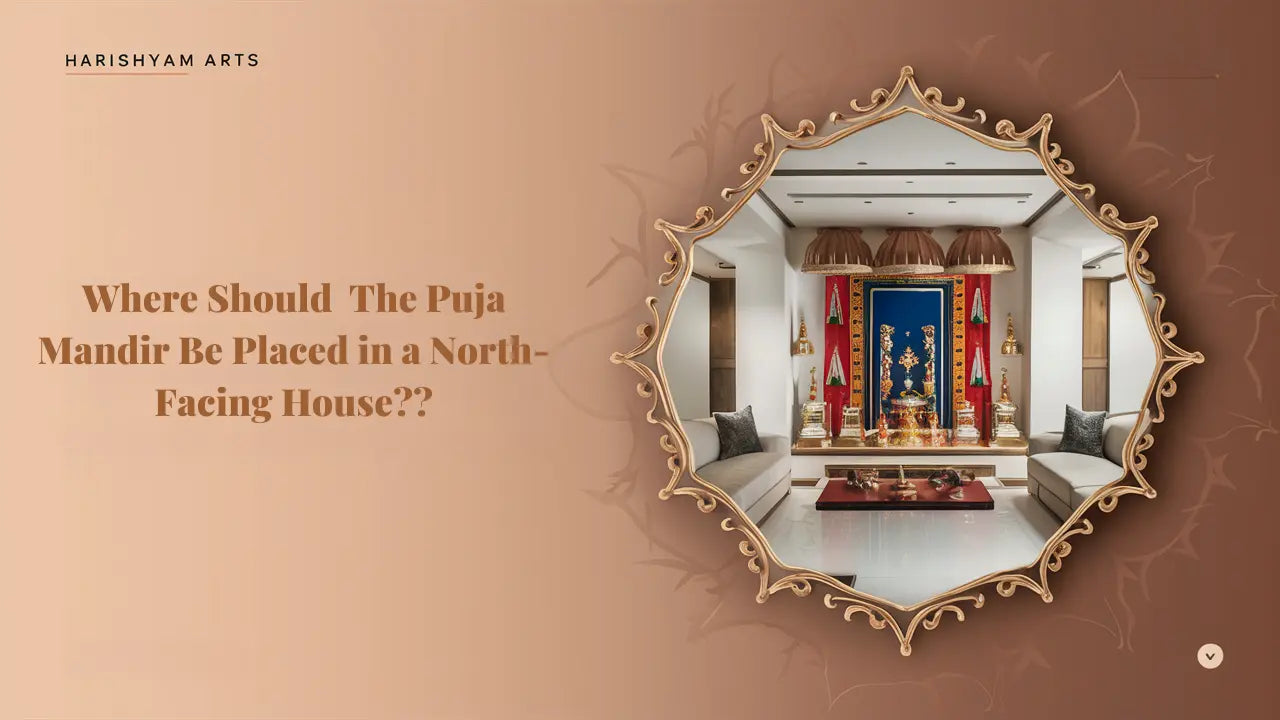
When it comes to designing a pooja room in a north-facing house, following Vastu guidelines is crucial. The direction and location of the pooja room can greatly impact the flow of energies within the house. In this document, we will explore various Vastu principles and tips for creating a harmonious and spiritually uplifting space in your home.
Is North facing pooja room good as per Vastu?
According to Vastu Shastra, positioning the pooja room in the northeast corner of a north-facing house is considered ideal. This direction harnesses positive energies from the universe and promotes spiritual growth. However, if this is not possible, you can consider placing the pooja room in the east or north directions.
Ideal Location for Pooja Rooms in North Facing Houses
The best location for a pooja room in a north-facing house is the northeast corner. This corner represents enlightenment, peace, and positivity, making it an ideal place for worship and meditation. If this is not possible, then consider placing the pooja room in the east or north directions.
Creating the Ideal Environment
To ensure the puja room becomes a sacred haven, consider the following aspects:
Adequate Illumination
Ensure that the puja room receives ample natural light during the day. Natural light not only creates a serene atmosphere but also amplifies the positive energies within the space.
Proper Ventilation
Good ventilation is essential to maintain a fresh and positive environment within the puja room. Stagnant air can lead to stagnant energies, hindering the spiritual ambiance.
Clutter-Free Space
Keep the puja room clutter-free and organized. Remove unnecessary items to allow energy to flow freely, promoting a sense of peace and serenity.
Sacred Symbols and Icons
Adorn the puja room with sacred symbols and deities that hold personal significance. These icons serve as focal points for meditation and devotion.
Color Palette
Choose soothing and spiritually uplifting colors for the puja room. Light shades like white, pastels, and shades of yellow promote a sense of purity and tranquility.
Vastu Guidelines for Pooja Room Placement
Here are some essential Vastu guidelines to follow when designing a pooja room in a north-facing house:
- The entrance of the pooja room should face towards the east or north direction.
- Avoid placing the pooja room near bathrooms, as they contain draining energies that can counteract the sanctity of the space.
- Ensure that there is a threshold at the entrance of the pooja room. This symbolizes a demarcation between the outer and inner worlds, maintaining purity.
- The pooja room should not share walls with bathrooms or kitchens. These rooms can have negative energies that can disrupt the positivity in the pooja room.
Success Stories of Vastu-Compliant Pooja Rooms in North Facing Houses
Here are some real-life examples of homeowners who have successfully implemented Vastu principles in their north-facing houses:
Example 1: The Gupta Family
The Gupta family designed their pooja room in the northeast corner of their north-facing house, adhering to Vastu principles. They experienced an increase in positivity and harmony in their household after incorporating natural light and ventilation into the sacred space. At Harishyam Arts, we have helped them creating thier wooden pooja room with perfect Vastu.
Example 2: The Sharma Family
The Sharma family struggled to find a suitable location for their pooja room in their north-facing house. They consulted a Vastu expert who recommended placing the pooja room in the east direction, which brought immense peace and prosperity into their household. They also added symbolic elements like a threshold and sacred symbols to enhance the spiritual significance of the space.
FAQ's about Pooja Rooms for North Facing Houses
Here are some common questions related to pooja rooms in north facing houses:
Q.1 Can I place my pooja room in the northwest corner?
Ans: While the northeast corner is considered ideal, consulting with a Vastu expert can help you determine the best alternative if this is not possible. Placing the pooja room in the northwest corner can also bring positive energies.
Q.2 Can I have a threshold at the entrance of my pooja room?
Ans: Yes, having a threshold at the entrance of the pooja room is beneficial as it symbolizes a demarcation between the outer and inner worlds, maintaining purity.
Q.3 Can the pooja room share a wall with the bathroom?
Ans: No. It's best to avoid sharing walls with bathrooms, as they contain draining energies that can counteract the sanctity of the pooja room.
Q.4 What if my north-facing house doesn't have a northeast corner?
Ans: If your north-facing house does not have a northeast corner, consider placing the pooja room in the east or north directions. You can also consult with a Vastu expert for personalized guidance.
Conclusion
In conclusion, having a Vastu-compliant pooja room in your north-facing house can bring peace, positivity, and spiritual growth to your home. By following these essential guidelines and incorporating them into the design of your sacred space, you can create a sanctuary for worship and meditation. Remember to consult with a Vastu expert for personalized guidance based on your specific home layout. So go ahead and create a beautiful and harmonious pooja room that aligns with Vastu principles! Let the positive energies flow into your home and uplift the spirits of all those who enter it. Namaste!
When it comes to designing a pooja room in a north-facing house, following Vastu guidelines is crucial. The direction and location of the pooja room can greatly impact the flow of energies within the house. In this document, we will explore various Vastu principles...

Lakshay Sharma
I’m Lakshay Sharma, a writer with a deep passion for Hindu mythology, Vastu Shastra, and home interiors. I enjoy exploring the rich traditions of Hindu gods and goddesses, sharing insights into Vastu principles, and offering guidance on creating sacred spaces like Puja Mandirs. Through my writing, I aim to inspire harmony and spiritual well-being, blending traditional knowledge with modern perspectives.
Harishyam Arts | Jaipur
Related Blogs

Benefits of Custom Wooden Carving in Home Decor
Lakshay Sharma | May 27, 2026
Home decor is more than just arranging furniture or choosing wall colors; it i...
Read More...
Bhagavad Gita Chapter 1 Verse 28 Meaning in Hindi and English
Lakshay Sharma | May 27, 2026
Bhagavad Gita Chapter 1 Verse 28 describes the moment when Arjuna becomes emot...
Read More...
Bhagavad Gita Chapter 1 Verse 27 Meaning in Hindi and English
Lakshay Sharma | May 27, 2026
Bhagavad Gita Chapter 1 Verse 27 describes the emotional turning point where A...
Read More...
Bhagavad Gita Chapter 1 Verse 26 Meaning in Hindi and English
Lakshay Sharma | May 27, 2026
Bhagavad Gita Chapter 1 Verse 26 describes the emotional moment when Arjuna se...
Read More...
Bhagavad Gita Chapter 1 Verse 25 Meaning in Hindi and English
Lakshay Sharma | May 27, 2026
Bhagavad Gita Chapter 1 Verse 25 describes the moment when Lord Krishna places...
Read More...
Bhagavad Gita Chapter 1 Verse 24 Meaning in Hindi and English
Lakshay Sharma | May 27, 2026
Bhagavad Gita Chapter 1 Verse 24 describes the moment when Lord Krishna respon...
Read More...
Bhagavad Gita Chapter 1 Verse 23 Meaning in Hindi and English
Lakshay Sharma | May 27, 2026
Bhagavad Gita Chapter 1 Verse 23 continues Arjuna’s thoughtful observation on ...
Read More...
Bhagavad Gita Chapter 1 Verse 22 Meaning in Hindi and English
Lakshay Sharma | May 27, 2026
Bhagavad Gita Chapter 1 Verse 22 continues the emotional and spiritual journey...
Read More...
Bhagavad Gita Chapter 1 Verse 21 Meaning in Hindi and English
Lakshay Sharma | May 26, 2026
Bhagavad Gita Chapter 1 Verse 21 marks the beginning of one of the most emotio...
Read More...
White vs Black Marble Moortis: Which One to Choose?
Lakshay Sharma | May 26, 2026
When it comes to choosing a sacred idol or moorti fo...
Read More...
Bhagavad Gita Chapter 1 Verse 20 Meaning in Hindi and English
Lakshay Sharma | May 26, 2026
Bhagavad Gita Chapter 1 Verse 20 marks a major turning point in the Mahabharat...
Read More...
Bhagavad Gita Chapter 1 Verse 19 Meaning in Hindi and English
Lakshay Sharma | May 26, 2026
Bhagavad Gita Chapter 1 Verse 19 describes the powerful effect created by the ...
Read More...
Bhagavad Gita Chapter 1 Verse 18 Meaning in Hindi and English
Lakshay Sharma | May 26, 2026
Bhagavad Gita Chapter 1 Verse 18 Meaning in Hindi and English

Bhagavad Gita Chapter 1 Verse 17 Meaning in Hindi and English
Lakshay Sharma | May 26, 2026
Bhagavad Gita Chapter 1 Verse 17 continues the description of the sacred conch...
Read More...
Bhagavad Gita Chapter 1 Verse 16 Meaning in Hindi and English
Lakshay Sharma | May 26, 2026
Bhagavad Gita Chapter 1 Verse 16 continues the powerful description of the div...
Read More...
Bhagavad Gita Chapter 1 Verse 15 Meaning in Hindi and English
Lakshay Sharma | May 26, 2026
Bhagavad Gita Chapter 1 Verse 15 describes the sacred conch shells blown by Lo...
Read More...
Bhagavad Gita Chapter 1 Verse 14 Meaning in Hindi and English
Lakshay Sharma | May 26, 2026
Bhagavad Gita Chapter 1 Verse 14 describes the divine moment when Lord Krishna...
Read More...
Bhagavad Gita Chapter 1 Verse 13 Meaning in Hindi and English
Lakshay Sharma | May 26, 2026
Bhagavad Gita Chapter 1 Verse 13 describes the powerful sounds that echoed acr...
Read More...
Bhagavad Gita Chapter 1 Verse 12 Meaning in Hindi and English
Lakshay Sharma | May 25, 2026
Bhagavad Gita Chapter 1 Verse 12 describes the powerful moment when Bhishma Pi...
Read More...
Bhagavad Gita Chapter 1 Verse 11 Meaning in Hindi and English
Lakshay Sharma | May 25, 2026
Bhagavad Gita Chapter 1 Verse 11 describes Duryodhana’s instruction to all the...
Read More...
Bhagavad Gita Chapter 1 Verse 10 Meaning in Hindi and English
Lakshay Sharma | May 25, 2026
Bhagavad Gita Chapter 1 Verse 10 describes Duryodhana’s comparison between the...
Read More...
Bhagavad Gita Chapter 1 Verse 9 Meaning in Hindi and English
Lakshay Sharma | May 25, 2026
In this article, we will understand Bhagavad Gita Chapter 1 Verse 9 in Sanskri...
Read More...
The Story of Goddess Lakshmi’s Emergence from the Ocean
Lakshay Sharma | May 24, 2026
The story of Goddess Lakshmi’s emergence from the ocean is one of the most cap...
Read More...
Bhagavad Gita Chapter 1 Verse 8 Meaning in Hindi and English
Lakshay Sharma | May 23, 2026
Bhagavad Gita 1.8 – The Great Warriors of the Kaurava Army
Read More...

Top Brass Bull Head Designs for Modern & Rustic Interiors
Lakshay Sharma | May 23, 2026
When it comes to interior décor that blends tradition, strength, and artistic ...
Read More...
Bhagavad Gita Chapter 1 Verse 7 Meaning in Hindi and English
Lakshay Sharma | May 23, 2026
Bhagavad Gita 1.7 – Duryodhana Describes the Heroes of His Own Army Read More...

Bhagavad Gita Chapter 1 Verse 6 Meaning in Hindi & English
Lakshay Sharma | May 23, 2026
Bhagavad Gita 1.6 – Powerful Maharathis in the Pandava Army
Read More...

Bhagavad Gita Chapter 1 Verse 5 Meaning in Hindi And English
Lakshay Sharma | May 22, 2026
Bhagavad Gita 1.5 – Great Heroes Standing with the Pandavas
Read More...

Bhagavad Gita Chapter 1 Verse 4 Meaning in Hindi And English
Lakshay Sharma | May 22, 2026
Bhagavad Gita 1.4 – Mighty Warriors in the Pandava Army
Read More...

Bhagavad Gita Chapter 1 Verse 3 Meaning in Hindi And English
Lakshay Sharma | May 22, 2026
Bhagavad Gita 1.3 – Duryodhana Speaks to Dronacharya
Read More...

Bhagavad Gita Chapter 1 Verse 2 Meaning in Hindi And English
Lakshay Sharma | May 22, 2026
Bhagavad Gita 1.2 – Duryodhana Observes the Pandava Army
Read More...

Bhagavad Gita Chapter 1 Verse 1 Meaning in Hindi and English
Lakshay Sharma | May 22, 2026
The opening verse of the Bhagavad Gita sets the stage for one of the most profound spiritual d...
Read More...
Indian vs Italian Marble Idols: Which is Better?
Lakshay Sharma | May 22, 2026
Marble idols have been an integral part of art, culture, and spirituality for ...
Read More...
Wooden Statue Price Guide: Factors & Cost Breakdown
Lakshay Sharma | May 21, 2026
Wooden statues have long been admired for their timeless beauty, cultural sign...
Read More...
Step-by-Step Guide to Setting Up Your First Home Temple
Lakshay Sharma | May 20, 2026
Creating a home temple is a deeply meaningful step in bringing peace, positivi...
Read More...
Why Teak Wood is the Best Material for Your Pooja Mandir
Lakshay Sharma | May 19, 2026
A pooja mandir is not just a piece of furniture; it is the spir...
Read More...
Laxmi Ganesh Marble Idols: Symbolism & Buying Tips
Lakshay Sharma | May 19, 2026
In Indian culture, the presence of divine idols in homes and workplaces is con...
Read More...
Custom Classical Carving Furniture: Design Ideas & Buying Guide
Lakshay Sharma | May 18, 2026
Furniture is more than just a functional element in a home—it reflects persona...
Read More...
The Story of Narasimha Avatar: Protection of Prahlad
Lakshay Sharma | May 17, 2026
In the rich tapestry of Hindu mythology, the story of Lord Narasimha stands as...
Read More...
What is a Brass Singing Bowl? Benefits for Meditation & Healing
Lakshay Sharma | May 16, 2026
In today’s fast-paced world, people are constantly searching for ways to recon...
Read More...
How to Choose the Perfect Brass Bull Head for Your Space
Lakshay Sharma | May 15, 2026
Brass décor has always held a timeless appeal in interior design, blending tra...
Read More...
Sandalwood Statues: Luxury Wooden Idols Explained
Lakshay Sharma | May 14, 2026
In the world of spiritual art and fine craftsmanship, sandalwood statues hold ...
Read More...
Complete Guide to Choosing Between Traditional Carved Mandir and Modern Simple Designs
Lakshay Sharma | May 13, 2026
Creating a sacred space at home is a deeply personal and spiritual decision. A...
Read More...
Ideal Marble Idols for Home vs Temple Use
Lakshay Sharma | May 12, 2026
Marble idols have been an integral part of spiritual practices for centuries, ...
Read More...
Brass Peacock Showpiece Buying Guide: Design, Size & Price
Lakshay Sharma | May 11, 2026
Peacock-themed décor has always held a special place in Indian homes due to it...
Read More...
Why Lord Hanuman is Called Sankat Mochan
Lakshay Sharma | May 10, 2026
In Indian spiritual tradition, very few divine figures are as deeply loved, wo...
Read More...
Brass Peacock Showpiece: Symbolism & Vastu Significance
Lakshay Sharma | May 09, 2026
In Indian culture, art is not just about decoration—it carries deep spiritual ...
Read More...
Modern Wooden Sculpture Trends in 2026
Lakshay Sharma | May 08, 2026
Wooden sculpture has always been a timeless expression of art, culture, and cr...
Read More...
Why Teak Wood is Best for Wooden Statues
Lakshay Sharma | May 07, 2026
When it comes to crafting wooden statues that combine beauty, durability, and ...
Read More...
How to Create a Beautiful Spiritual Corner in Your Home with Idols and Mandir
Lakshay Sharma | May 06, 2026
In today’s fast-paced world, creating a peaceful and spiritual space within yo...
Read More...


