
Harishyam Arts Blog
Why Lord Shiva is Called the Mahadeva – The Supreme God
By Lakshay Sharma | On 23 October, 2025 | Views
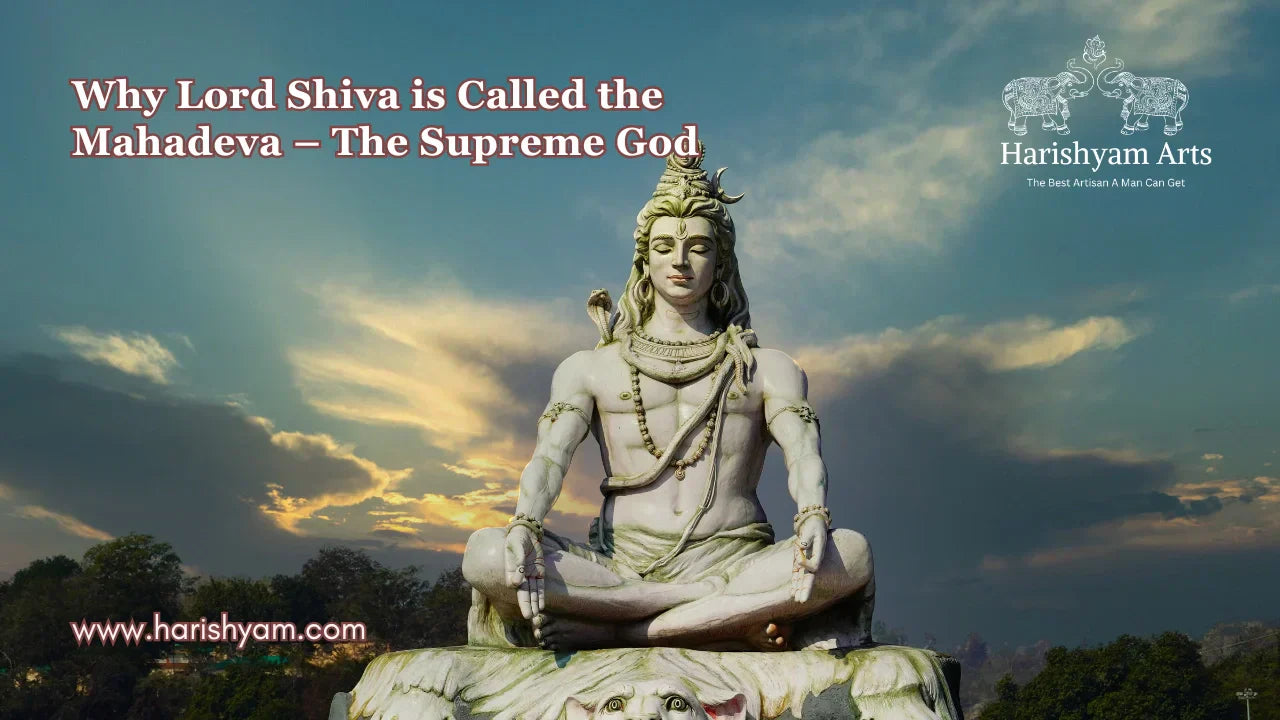
Hinduism, one of the world’s oldest religions, has a rich pantheon of deities, each representing unique aspects of life and the universe. Among them, Lord Shiva holds a special place as Mahadeva, meaning the “Great God” or Supreme God. But why exactly is Shiva called Mahadeva? Let’s explore the spiritual, philosophical, and symbolic reasons behind this revered title.
Who is Shiva?
Lord Shiva is one of the principal deities of Hinduism, revered as the destroyer and transformer within the Trimurti—the trinity that includes Brahma (creator) and Vishnu (preserver).
Shiva represents the ultimate reality, the eternal consciousness, and is often depicted in a meditative pose, symbolizing supreme control over mind and matter. He is worshipped in multiple forms:
-
Shiva Lingam – representing cosmic energy and formless divinity
-
Nataraja – the Lord of Dance, symbolizing cosmic rhythm
-
Meditative Yogi – embodying peace, asceticism, and spiritual mastery
Shiva’s devotees seek spiritual liberation, inner peace, and protection from negative energies through devotion and meditation.
What is the Meaning of Mahadeva?
The term Mahadeva comes from Sanskrit:
-
Maha – “Great” or “Supreme”
-
Deva – “God” or “Divine Being”
Thus, Mahadeva literally means “The Greatest God” or “Supreme God”. While many deities exist in Hinduism, Mahadeva represents the ultimate, all-encompassing divine force that governs creation, preservation, and destruction.
Symbolic Significance of Mahadeva
-
Supremacy and Omnipotence: Mahadeva symbolizes the absolute power over the universe. Unlike other gods, he oversees the entire cosmic cycle.
-
Transformation and Liberation: As the destroyer of ignorance, ego, and illusions, Mahadeva embodies spiritual transformation, guiding devotees toward moksha (liberation).
-
Unity of Opposites: Mahadeva represents balance—fierce yet benevolent, ascetic yet householder, meditative yet dynamic.
-
Transcendence Beyond Form: Mahadeva highlights Shiva’s supreme nature beyond human comprehension, existing in both form (Shiva) and formless consciousness.
-
Cosmic Order: With his trident, third eye, and crescent moon, Mahadeva symbolizes the harmony of creation, preservation, and destruction, the cycles of time, and the spiritual path for humanity.
Between Shiva and Mahadeva
While often used interchangeably, there is a subtle distinction:
-
Shiva: Refers to the approachable deity worshipped in temples and through rituals. He embodies qualities like compassion, asceticism, and devotion.
-
Mahadeva: Emphasizes Shiva’s supreme, cosmic, and ultimate aspect. It denotes his all-encompassing power, beyond human understanding.
In essence, Shiva is the personal god, while Mahadeva reflects the universal, infinite consciousness.
Shiva as the Lord of Destruction and Transformation
Shiva’s role as the destroyer is not negative; it represents transformation and renewal. He destroys ignorance, ego, and illusions, paving the way for spiritual growth. This transcendent power is why he is revered as Mahadeva, the Supreme God.
The Symbolism of Lord Shiva
Shiva is depicted with several symbols that reinforce his supreme status:
-
Trident (Trishul): Represents creation, preservation, and destruction.
-
Third Eye: Symbolizes spiritual knowledge and the ability to destroy evil.
-
Crescent Moon: Signifies control over time and emotions.
-
River Ganga: Denotes purity and sustenance for all life.
-
Meditative Pose: Demonstrates supreme control over mind and body.
Each attribute reflects a cosmic principle, emphasizing why Shiva is revered as Mahadeva.
Shiva in the Trinity (Trimurti)
In Hinduism, the Trimurti consists of:
-
Brahma – the Creator
-
Vishnu – the Preserver
-
Shiva – the Destroyer
While creation and preservation are temporary, destruction allows transformation and new creation. Shiva’s role in this eternal cycle highlights his supreme, transcendent nature as Mahadeva.
Devotional Significance – Why Worship Shiva as Mahadeva
Millions of devotees worship Lord Shiva for:
-
Spiritual liberation (Moksha)
-
Cleansing of sins
-
Inner strength and peace
-
Protection from negative energies
Temples, rituals, and festivals like Maha Shivaratri celebrate his supreme power and cosmic significance.
Philosophical Perspective
According to Shaivism, Shiva is not just a deity but the eternal consciousness, the formless essence from which everything originates and ultimately dissolves. This concept emphasizes why he is called Mahadeva, the absolute, limitless, and eternal principle of the universe.
FAQs – Why Shiva is Called Mahadeva
Q1: What does Mahadeva mean?
Ans:Mahadeva means “Great God” or “Supreme God,” signifying Lord Shiva’s transcendence over all deities.
Q2: Who is Shiva?
Ans: Shiva is a principal Hindu deity, known as the destroyer and transformer, worshipped for spiritual growth and protection.
Q3: What is the difference between Shiva and Mahadeva?
Ans: Shiva is the approachable deity; Mahadeva emphasizes his supreme, cosmic, and absolute nature.
Q4: Why is Shiva called the destroyer?
Ans: Shiva destroys ignorance, ego, and negative energies to allow spiritual renewal and transformation.
Q5: How is Shiva worshipped as Mahadeva?
Ans: Through rituals, prayers, meditation, and festivals like Maha Shivaratri to seek spiritual blessings.
Conclusion
Lord Shiva, the Mahadeva, represents the ultimate truth, cosmic power, and spiritual transformation. Understanding the difference between Shiva and Mahadeva helps devotees appreciate both his approachable and supreme aspects. Worshipping Shiva guides one toward inner strength, wisdom, and liberation.
Bring the divine energy of Mahadeva into your home with marble Shiva idols and statues from Harishyam Arts.
Hinduism, one of the world’s oldest religions, has a rich pantheon of deities, each representing unique aspects of life and the universe. Among them, Lord Shiva holds a special place as Mahadeva, meaning the “Great God” or Supreme God. But why exactly is Shiva called Mahadeva? Let’s explore the...

Lakshay Sharma
I’m Lakshay Sharma, a writer with a deep passion for Hindu mythology, Vastu Shastra, and home interiors. I enjoy exploring the rich traditions of Hindu gods and goddesses, sharing insights into Vastu principles, and offering guidance on creating sacred spaces like Puja Mandirs. Through my writing, I aim to inspire harmony and spiritual well-being, blending traditional knowledge with modern perspectives.
Harishyam Arts | Jaipur
Related Blogs

The Story of Lord Krishna Lifting Govardhan Hill
Lakshay Sharma | April 02, 2026
The story of Lord Krishna lifting Govardhan Hill is one of the most celebrated...
Read More...
What Are the Different Types of Wooden Pooja Mandirs Available?
Lakshay Sharma | April 01, 2026
A pooja mandir holds a sacred place in every Indian home. It is not just a pie...
Read More...
Why Brass Idols Are Considered Auspicious in Hindu Homes?
Lakshay Sharma | March 31, 2026
In Hindu tradition, the presence of divine idols in the home is more than deco...
Read More...
Custom Living Room Furniture for Heritage Homes
Lakshay Sharma | March 30, 2026
Heritage homes are more than just residences—they are living stories shaped by...
Read More...
Significance of Radha Krishna Marble Idols
Lakshay Sharma | March 29, 2026
In the world of spirituality and art, few representations are as revered and c...
Read More...
How to Select the Perfect Marble Krishna Idol for Home
Lakshay Sharma | March 28, 2026
Bringing a Marble Krishna Idol into your home is not just about décor—it is ab...
Read More...
Modern vs Traditional Mandir Design – What Should You Choose?
Lakshay Sharma | March 27, 2026
In India, a mandir is not just a structure—it is a sacred space where devotion...
Read More...
Benefits of Having a Home Temple
Lakshay Sharma | March 26, 2026
In today's fast-paced world, creating a personal sanctuary at home has become ...
Read More...
Marble Ganesh Idol for Business Success
Lakshay Sharma | March 25, 2026
In the competitive world of business, success depends not only on strategy, pl...
Read More...
Affordable Premium Wall Art for Modern Homes
Lakshay Sharma | March 24, 2026
In today’s world of evolving interiors and expressive living spaces, wall art ...
Read More...
Which Mandir Is Best for Small Apartments?
Lakshay Sharma | March 23, 2026
When designing a peaceful and spiritual corner in a compact home, one of the m...
Read More...
Rajasthani Hand-Carved Furniture Style Guide
Lakshay Sharma | March 22, 2026
When it comes to heritage craftsmanship and timeless elegance, few styles comp...
Read More...

Best Brass Idols for Gifting During Festivals
Lakshay Sharma | March 20, 2026
Festivals are a time of joy, togetherness, and celebration. They are also a wo...
Read More...
Why Marble Idols Are Ideal for Outdoor Temples
Lakshay Sharma | March 19, 2026
In the heart of every devout Hindu or Jain household, an outdoor temple serves...
Read More...
Why Marble Durga Idols Are Popular for Navratri
Lakshay Sharma | March 18, 2026
Navratri, the nine-night festival celebrating Goddess Durga's victory over evi...
Read More...
Temple Idol Installation Guide
Lakshay Sharma | March 17, 2026
Installing a temple idol is not just a decorative or architectural step — it i...
Read More...
Why Handcrafted Idols Have More Spiritual Value
Lakshay Sharma | March 16, 2026
In a world that moves at the speed of machines, where almost everything is mas...
Read More...
Which God Idol Is Best for Office?
Lakshay Sharma | March 15, 2026
In today’s fast-paced professional world, creating a positive and peaceful wor...
Read More...
How Harishyam Arts Ensures Safe Global Delivery
Lakshay Sharma | March 14, 2026
In today’s interconnected world, art is no longer limited by geography. Collec...
Read More...
Premium Wooden Mandirs for Luxury Homes
Lakshay Sharma | March 13, 2026
In a luxury home, every detail tells a story — from the flooring beneath your ...
Read More...
What are the best marble Mandir designs for home?
Lakshay Sharma | March 12, 2026
A home is not complete without a sacred space that brings peace, positivity, a...
Read More...
Wall-Mounted vs Floor-Standing Mandirs
Lakshay Sharma | March 11, 2026
A home temple is more than just a piece of furniture—it is a sacred space wher...
Read More...
Brass Buddha vs Marble Buddha – Which Is Better?
Lakshay Sharma | March 10, 2026
In the world of art and home décor, Buddha statues hold a special place. They ...
Read More...
Importance of Brass Idols in Vastu
Lakshay Sharma | March 09, 2026
In the world of interior design and spiritual practices, Vastu Sh...
Read More...
Buying Indian Marble Idols in USA, UK & Australia – Complete Guide
Lakshay Sharma | March 08, 2026
Indian marble idols are more than decorative items—they are symbols of devotio...
Read More...
Brass vs Marble Idols: Which Should You Choose?
Lakshay Sharma | March 07, 2026
Decorating your home or temple with idols is not just about aesthetics—it’s ab...
Read More...
Top 10 Popular Brass God Idols and Their Meanings
Lakshay Sharma | March 06, 2026
Brass idols have been a cornerstone of Indian art and spirituality for centuri...
Read More...
Where Can I Buy Wooden Pooja Mandir for Home Online?
Lakshay Sharma | March 05, 2026
A Wooden Pooja Mandir is more than just a beautiful ...
Read More...
Akshaya Tritiya 2026: Auspicious Timing for Buying Gold-Plated Brass Ganesha Idols
Lakshay Sharma | March 04, 2026
Akshaya Tritiya is one of the most sacred and prosperous days in the Hindu cal...
Read More...
Why Handmade Wooden Mandirs Are Better
Lakshay Sharma | March 03, 2026
Why Handmade Wooden Mandirs Are Better Than Machine-Made Alternatives<... Read More...

Antique Finish vs Polished Brass Idols
Lakshay Sharma | March 02, 2026
Antique Finish vs Polished Brass Idols: Which One Should You Choose? Read More...

Why White Marble Is Considered Sacred in Hinduism
Lakshay Sharma | March 01, 2026
In Hinduism, every material used in worship carries deep spiritual meaning. Fr...
Read More...
Which Hindu God Murti Can be Made in Black Stone?
Lakshay Sharma | February 28, 2026
In the vibrant world of Hindu idol craftsmanship, the choice of material for a...
Read More...
Does Brass Tarnish Outdoors? What Happens When a Brass Statue Is Left Outside
Lakshay Sharma | February 27, 2026
Brass statues add timeless elegance to gardens, patios, and outdoor spaces, bl...
Read More...
Pooja Mandir Trends 2026: Modern Designs, Materials, and Styles for Home
Lakshay Sharma | February 26, 2026
In the hustle of modern life, the Pooja Mandir remains a sacred cornerstone of...
Read More...
Experiencing Gangaur Festival in Jaipur: Dates, Traditions, and Travel Tips
Lakshay Sharma | February 25, 2026
Jaipur, the Pink City, bursts into a kaleidoscope of colors, devotion, and art...
Read More...
When and Why You Should Repaint Marble Murtis?
Lakshay Sharma | February 24, 2026
Marble murtis—those stunning, timeless idols carved from pristine white or col...
Read More...
Where can I find custom-made white marble god statues in India?
Lakshay Sharma | February 23, 2026
White marble god statues hold a sacred place in Indian homes, temples, and off...
Read More...
Can You Gift a Puja Mandir to Someone?
Lakshay Sharma | February 22, 2026
In Hindu tradition, the puja mandir—also known as a prayer altar or home templ...
Read More...
What Are the Key Factors to Consider When Buying Sandstone?
Lakshay Sharma | February 21, 2026
Sandstone is one of the most widely used natural stones in architecture, const...
Read More...
Are Wooden Idols Worth Buying?
Lakshay Sharma | February 20, 2026
Choosing an idol for your home or sacred space is a deeply personal decision. ...
Read More...
Who is the best corian Mandir manufacturer in India?
Lakshay Sharma | February 19, 2026
In Indian culture, a mandir is more than just a physical structure—it is the s...
Read More...
When Is Gangaur in 2026? Date, Meaning, Story, Vrat Katha, and Puja Vidhi Explained
Lakshay Sharma | February 18, 2026
Gangaur is one of the most significant and beloved festivals of Rajasthan, cel...
Read More...
Sai Baba Statue Significance: Symbolism, Benefits, and Worship Beliefs
Lakshay Sharma | February 17, 2026
In the heart of spiritual India, few icons inspire as much devotion as Sai Bab...
Read More...
What are the 5 benefits of choosing marble god idols for a home temple?
Lakshay Sharma | February 16, 2026
In the heart of every Indian home lies a sacred space—a home temple where devo...
Read More...
Can a mandir be placed in a former washroom area?
Lakshay Sharma | February 15, 2026
In the heart of every Hindu home lies a sacred space—the mandir or puja room—w...
Read More...
What are the unique feature of Tanjore paintings?
Lakshay Sharma | February 14, 2026
Tanjore paintings, also known as Thanjavur paintings, are one of India’s most ...
Read More...
Where to buy antique brass statues online in India?
Lakshay Sharma | February 13, 2026
Antique brass statues have always held a special place in Indian culture and h...
Read More...
Why should you choose a marble Mandir for home, and where can you buy the best one?
Lakshay Sharma | February 12, 2026
In the heart of every Indian home lies a sacred space—a Mandir that invites pe...
Read More...


