
Harishyam Arts Blog
#10 Different Types of Mandir Jali Design for Home
By Lakshay Sharma | On 05 September, 2024 | Views
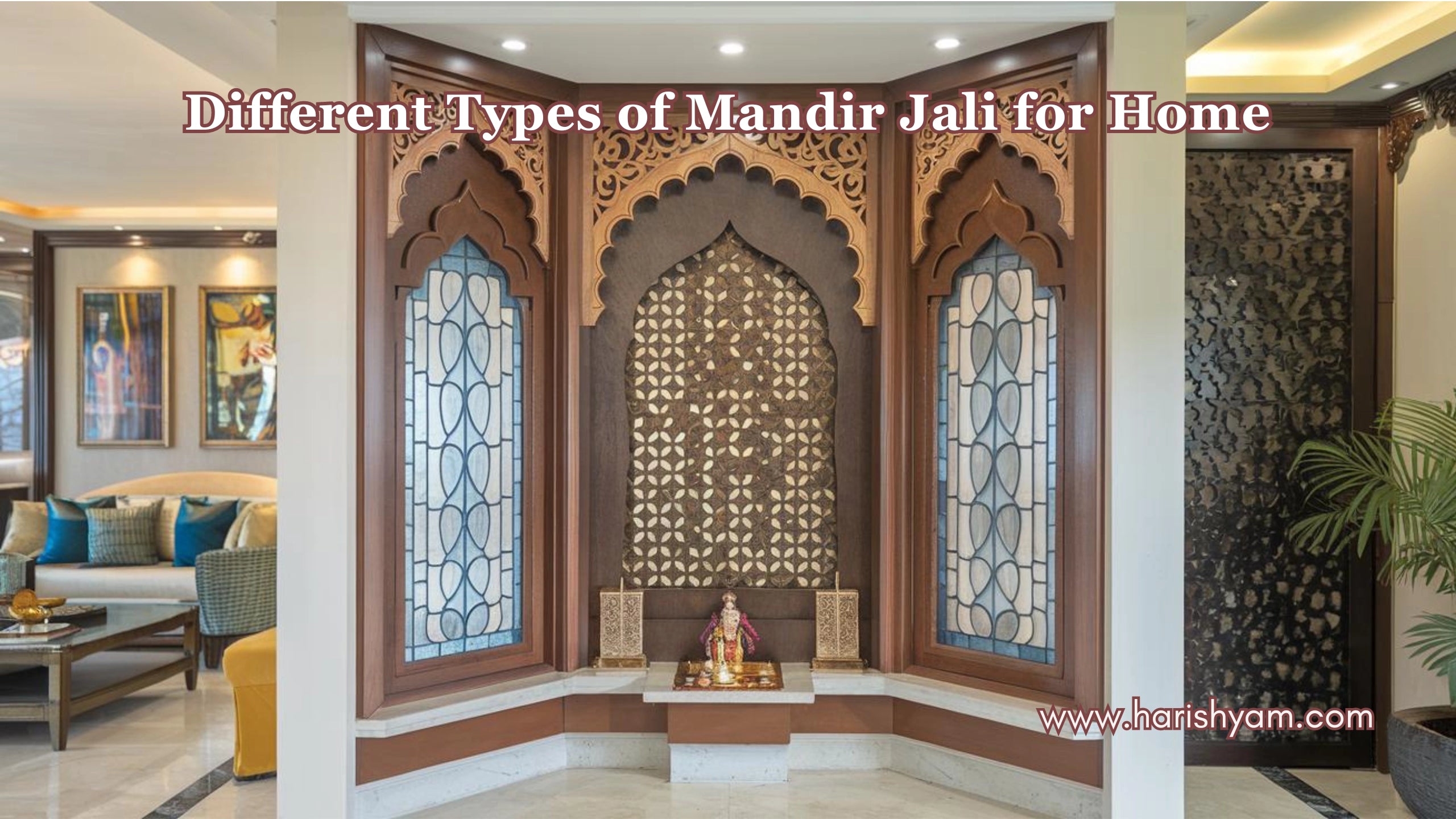
Mandir jali, or the intricate latticework often used in Pooja Mandirs, is not only a functional element but also an artistic one. This decorative feature plays a significant role in Indian temple architecture and home décor, providing a delicate balance of privacy, ventilation, and beauty. With various designs and materials available, Mandir jali can enhance both traditional and modern homes.
In this blog, we'll explore the different types of Mandir jali for home, focusing on their unique features, cultural significance, and practical applications.
1. Wooden Mandir Jali
Material: High-quality teak wood
Design Features: Wooden Mandir jali is renowned for its intricate carvings and traditional motifs. Wooden mandir jali design often include elaborate floral patterns, geometric shapes, and religious symbols. The wood's natural grain adds warmth and character to the mandir.
Best Suited For: Ideal for traditional homes or Pooja Mandirs crafted from wood. The classic look of wood complements traditional and rustic interiors beautifully.
Maintenance Tips: To maintain its rich appearance, regularly polish the wooden jali to protect it from moisture and dust. Avoid exposure to high humidity to prevent warping or cracking.

2. Marble Mandir Jali
Material: White Makrana marble or other variants.
Design Features: Marble Mandir jali is known for its elegance and understated beauty. Common designs include subtle floral patterns or religious motifs, which enhance the marble mandir’s luxury feel. Marble's smooth surface adds a touch of refinement.
Best Suited For: Perfect for modern or luxury homes, especially those with marble Pooja Mandirs. Its clean and classic look aligns well with sophisticated interiors.
Maintenance Tips: Clean marble jali with a damp cloth and avoid abrasive cleaners that could scratch the surface. Regular gentle cleaning helps maintain its pristine look.

3. Brass Mandir Jali
Material: Brass, recognized for its golden hue and durability.
Design Features: Brass Mandir jali often features detailed and intricate designs with a vintage finish. The golden shine of brass adds a regal touch to the Pooja space, reflecting traditional craftsmanship.
Best Suited For: Ideal for homes with a traditional or royal theme. The opulent look of brass complements rich and elaborate home décor.
Maintenance Tips: Regular polishing is needed to maintain its shine and prevent tarnishing. Use brass polish and a soft cloth to keep the jali looking its best.

4. Copper Mandir Jali
Material: Copper, known for its reddish-brown color and cultural significance.
Design Features: Copper jali offers earthy and rich designs with a natural, rustic appearance. It often features traditional religious motifs, adding a spiritual and culturally significant touch to the mandir.
Best Suited For: Suited for ethnic and traditional homes, especially those incorporating other copper or brass elements in their décor.
Maintenance Tips: Occasional cleaning is required to prevent oxidation. Use a copper cleaner or a mixture of lemon juice and baking soda to maintain its sheen.

5. Steel Mandir Jali
Material: Stainless steel, known for its strength and modern look.
Design Features: Steel Mandir jali is characterized by sleek, minimalist designs with clean lines. Its modern aesthetic suits contemporary and industrial-style homes.
Best Suited For: Perfect for homes with a minimalist or modern décor. Its durability and sleek appearance make it a popular choice for contemporary interiors.
Maintenance Tips: Stainless steel is resistant to rust and easy to clean. Wipe with a soft cloth to remove dust and fingerprints, and avoid harsh chemicals that could damage the surface.

6. Corian Mandir Jali
Material: Corian (acrylic polymer and stone blend).
Design Features: Corian jali is known for its customizable nature and smooth surface. It can be laser-cut into precise patterns, offering a modern and sleek look.
Best Suited For: Modern homes with Corian Mandirs, where customization and durability are essential. It can be tailored to match any contemporary design preference.
Maintenance Tips: Corian is easy to clean with just a damp cloth. It is highly durable and resistant to stains, making it a practical choice for everyday use.

7. Glass Mandir Jali
Material: Tempered or frosted glass.
Design Features: Glass Mandir jali provides a modern and airy feel with etched or frosted designs. It adds a transparent and elegant touch to the mandir, allowing light to pass through while maintaining privacy.
Best Suited For: Ideal for modern or minimalist mandirs. Glass jali enhances the lightness of the space and works well with contemporary décor.
Maintenance Tips: Regular cleaning with a glass cleaner helps prevent stains and maintain clarity. Be cautious with handling to avoid breakage.

8. Composite Jali
Material: MDF, plywood, or fiber-reinforced materials.
Design Features: Composite jali offers a budget-friendly option with a variety of patterns. It can mimic the appearance of more expensive materials like wood or marble.
Best Suited For: Suitable for affordable mandir setups or temporary Pooja spaces. It is a versatile option for those looking for Modern MDF jali design for mandir to enhance their space without a significant investment.
Maintenance Tips: Keep composite jali away from moisture to prevent warping. Regular dusting is sufficient for maintenance.

9. Acrylic Mandir Jali
Material: Acrylic.
Design Features: Acrylic jali is known for its versatility and smooth finish. It can be laser-cut into intricate designs and is available in a range of customizable patterns.
Best Suited For: Modern homes with eclectic décor. Acrylic jali is adaptable and can be tailored to fit various design preferences.
Maintenance Tips: Easy to clean with a damp cloth. Avoid using harsh chemicals to prevent discoloration.

10. Customized Jali Designs
Personalization: Custom jali designs allow you to incorporate specific religious symbols, sacred patterns, or personal preferences. Popular customizations include depictions of Hindu deities, sacred symbols like Om and Swastika, or unique patterns that match your home décor.
Popular Custom Designs: Customized jali designs from Harishyam Arts can include detailed laser-cut patterns, traditional motifs, and personalized religious symbols.
Harishyam Arts Customization: At Harishyam Arts, you can get Mandir jali design for home to your specific needs. Whether you require intricate designs or a unique material choice, we offer tailored solutions to enhance your Pooja space. Contact us at +91-9782397360 or visit our 'Customize a Mandir' page for more information.

Choosing the Right jali for Your Home
When selecting a Mandir jali for your home, consider the following factors:
- Material Preference: Choose a material that complements your home’s décor and meets your durability needs.
- Aesthetic Appeal: Select a design that enhances the spiritual ambiance and fits your style.
- Ventilation & Privacy: Ensure the jali provides adequate airflow while maintaining the desired level of privacy.
- Durability: Opt for a material that suits your lifestyle and is easy to maintain.
Conclusion
Mandir jali designs are more than just decorative elements; they play a crucial role in enhancing the spiritual and aesthetic qualities of your home temple. From traditional wooden designs to modern acrylic options to Mandir jali design simple, there’s a jali to suit every taste and décor style. By choosing the right type of Mandir jali, you can create a Pooja space that is both beautiful and functional.
Explore modern MDF jali designs for mandir, browse through different types of mandir jali for home images, and find the perfect mandir jali design for home to elevate your spiritual space. For a truly unique touch, consider customized Mandir jalis from Harishyam Arts, designed to fit your specific needs and preferences.

Lakshay Sharma
I’m Lakshay Sharma, a writer with a deep passion for Hindu mythology, Vastu Shastra, and home interiors. I enjoy exploring the rich traditions of Hindu gods and goddesses, sharing insights into Vastu principles, and offering guidance on creating sacred spaces like Puja Mandirs. Through my writing, I aim to inspire harmony and spiritual well-being, blending traditional knowledge with modern perspectives.
Harishyam Arts | Jaipur
Related Blogs

Smoke, Oil, and Incense: A 5-Year Maintenance Guide for Keeping Corian Mandirs Pristine White
Lakshay Sharma | October 08, 2026
A Corian mandir brings a clean, contemporary look to a home prayer space. Its ...
Read More...
Alkaline Water & Natural Minerals: The Wellness Benefits of Storing Water in Habur Stone
Lakshay Sharma | October 08, 2026
Water storage has been an important part of Indian household traditions for ce...
Read More...
Wall-Mounted Wooden Reliefs & Panels: Creating Dramatic Focal Walls
Lakshay Sharma | October 08, 2026
A well-designed wall can completely change the character of a room. While pain...
Read More...
Sacred Lighting Schemes: Layering Ambient, Accent, and Focal Light in Your Pooja Corner
Lakshay Sharma | October 08, 2026
A pooja corner is more than a designated space for prayer. It is a peaceful pa...
Read More...
Sagwan (Teak) vs. Sheesham vs. Mango Wood: Which Timber Belongs in Your Sacred Mandir?
Lakshay Sharma | October 07, 2026
A sacred mandir is more than a piece of furniture. It is a dedicated space for...
Read More...
Panchdhatu vs. Brass: Understanding Sacred Metal Alloys for Home Temples
Lakshay Sharma | October 06, 2026
Choosing a sacred metal idol for a home temple involves more than selecting a ...
Read More...
Combining Warm Teakwood and Pure White Corian for the Ultimate Dual-Tone Mandir
Lakshay Sharma | October 05, 2026
A home mandir is a deeply meaningful space where spirituality, tradition, and ...
Read More...
Solid Brass vs. Resin Replicas: How to Spot Genuine Sand-Cast Metal Handicrafts
Lakshay Sharma | October 04, 2026
Traditional Indian handicrafts are admired for their craftsmanship, heritage, ...
Read More...
Engineering & Weight Safety: How to Safely Install a Ceiling-Hung Wooden Jhula
Lakshay Sharma | October 04, 2026
A ceiling-hung wooden jhula, or traditional indoor swing, can become a beautif...
Read More...
The Chemistry of Shine: Safe Ways to Clean Brass Idols Without Damaging Their Antique Patina
Lakshay Sharma | October 03, 2026
Brass idols have a distinctive beauty that comes from their warm golden tones,...
Read More...
Marble Care Through the Seasons: How to Protect Idols During Abhishekam and Festivals
Lakshay Sharma | October 01, 2026
Marble idols are admired for their purity, elegance, and timeless beauty. Whet...
Read More...
The Beauty of Brass Chains: Choosing Antique Brass Figures and Heavy-Duty Links for Wooden Jhula
Lakshay Sharma | October 01, 2026
A traditional wooden jhula is more than a piece of furniture. It is a beautifu...
Read More...
The Ergonomics of Prayer: Designing Mandirs for Sitting vs. Standing Worship
Lakshay Sharma | September 30, 2026
A home mandir is more than a decorative corner. It is a dedicated space for pr...
Read More...
Light and Shadow: How Architectural Lighting Transforms Marble Idols
Lakshay Sharma | September 28, 2026
Marble idols have a timeless beauty that comes from their material, craftsmans...
Read More...
Coffee Table Artifacts: Transforming Minimalist Living Rooms with Handcrafted Showpieces
Lakshay Sharma | September 26, 2026
Minimalist living rooms are celebrated for their clean lines, uncluttered spac...
Read More...
The Open-Concept Mandir: Using Marble Jali Screens to Create Sacred Boundaries Without Walls
Lakshay Sharma | September 25, 2026
Modern homes increasingly favor open floor plans, spacious interiors, and flex...
Read More...
Pietra Dura in the Temple: The Timeless Art of Inlaying Semi-Precious Stones into Marble Mandir Walls
Lakshay Sharma | September 24, 2026
A beautifully crafted marble mandir is more than a place of worship. It can al...
Read More...
Fire Safety and Smoke Management in Indoor Home Temples
Lakshay Sharma | September 22, 2026
A home temple, or puja mandir, is a peaceful and spi...
Read More...
The Royal Living Room: How to Style a Grand Hand-Carved Sofa Set with Antique Finishes
Lakshay Sharma | September 22, 2026
A living room is more than just a place to sit. It is often the heart of a hom...
Read More...
Kadam Wood vs. Sandalwood vs. Teak: Choosing the Right Timber for Carved Statues
Lakshay Sharma | September 20, 2026
Wooden statues have a timeless beauty. From traditional Indian deities to deco...
Read More...
Water, Chaas, and Lassi: How Habur Stone Vessels Naturally Cool and Mineralize Drinks
Lakshay Sharma | September 18, 2026
In Rajasthan, where summers can be intense and temperatures can rise dramatica...
Read More...
Hallway, Living Room, or Bedroom? Finding the Right Spot for Your Mandir When You Don't Have a Dedicated Pooja Room
Lakshay Sharma | September 16, 2026
Hallway, Living Room, or Bedroom? Finding the Right Spot for Your Mandir Read More...

Myth vs. Reality: Debunking Common Taboos and Rules During Pitru Paksha
Lakshay Sharma | September 14, 2026
Pitru Paksha is one of the most meaningful periods in the Hindu calendar, trad...
Read More...
What is Sarva Pitru Amavasya (Mahalaya)? Significance for Forgotten Ancestors
Lakshay Sharma | September 14, 2026
Sarva Pitru Amavasya, also known as Mahalaya Amavasy...
Read More...
Step-by-Step Guide to Performing Tarpan, Pind Daan, and Anna Daan at Home
Lakshay Sharma | September 14, 2026
In Hindu tradition, remembering and honoring our ancestors is considered an im...
Read More...
Beyond Rituals: The True Scientific and Spiritual Significance of Honoring Ancestors
Lakshay Sharma | September 14, 2026
In many Indian households, remembering and honoring ancestors is a deeply root...
Read More...
Understanding Pitru Paksha 2026: Complete Shradh Tithi Calendar and Key Dates
Lakshay Sharma | September 14, 2026
Pitru Paksha is one of the most important periods in the Hindu calendar for re...
Read More...
Black Bheslana vs. White Makrana: Choosing the Right Marble for Your Deity & Vastu
Lakshay Sharma | September 14, 2026
Choosing the right marble for a deity statue is more than a matter of colour a...
Read More...
The Statement Foyer: How to Style Entryway Consoles with Brass, Marble, and Wooden Handicrafts
Lakshay Sharma | September 12, 2026
The foyer is the first glimpse guests receive of your home. It creates an imme...
Read More...
Long Weekend Planner: Maximizing Holidays Around Diwali 2026
Lakshay Sharma | September 11, 2026
Diwali is one of the most awaited festivals in India—a time of lights, celebra...
Read More...
Preparing Your Home for Diwali 2026: Deep Cleaning and Vastu Tips
Lakshay Sharma | September 11, 2026
Diwali is more than just a festival of lights. It is a time to welcome happine...
Read More...
Bhai Dooj 2026: Auspicious Timings, Tilak Muhurat & Gift Ideas
Lakshay Sharma | September 11, 2026
Bhai Dooj is one of the most beautiful Hindu festivals celebrating the special...
Read More...
Govardhan Puja and Annakut 2026: Traditions, Date, and Recipe Ideas
Lakshay Sharma | September 11, 2026
Govardhan Puja is one of the most beautiful festivals celebrated during the Di...
Read More...
Choti Diwali & Naraka Chaturdashi 2026: History, Abhyang Snan & Significance
Lakshay Sharma | September 11, 2026
Diwali is one of the most auspicious and widely celebrated festivals in India. The festival of...
Read More...
Dhanteras 2026 Shopping Guide: What to Buy (and Avoid) for Good Luck
Lakshay Sharma | September 11, 2026
Dhanteras is one of the most auspicious days of the Diwali festival and is tra...
Read More...
Complete Step-by-Step Lakshmi-Ganesha Puja Vidhi for Diwali 2026
Lakshay Sharma | September 11, 2026
Diwali is one of the most auspicious and joyous festivals celebrated across In...
Read More...
Lakshmi Puja Muhurat 2026: City-Wise Timings and Auspicious Windows
Lakshay Sharma | September 11, 2026
Diwali is one of the most celebrated festivals in India, symbolizing the victo...
Read More...
The 5-Day Diwali Festival 2026: Day-by-Day Significance and Rituals
Lakshay Sharma | September 11, 2026
Diwali, also known as the Festival of Lights, is one...
Read More...
Diwali 2026 Complete Date Guide: Calendar, Tithis & Festival Schedule
Lakshay Sharma | September 11, 2026
Diwali 2026: Complete Date and Festival Guide
...
Read More...
Navratri Havan at Home: Essential Samagri List, Vidhi, and Clean-Up Tips
Lakshay Sharma | September 10, 2026
Navratri is one of the most auspicious Hindu festivals dedicated to the worshi...
Read More...
Kanya Pujan Guide: Significance, Prasad Menu Ideas, and Traditional Setup
Lakshay Sharma | September 10, 2026
Kanya Pujan is one of the most cherished traditions observed during

Bold Interior Trends: Styling Dark Wood, Charcoal Accents, and Luminous Metals
Lakshay Sharma | September 10, 2026
Interior design is moving beyond light, neutral palettes and predictable décor...
Read More...
Investment Pieces for Your Home: Why Hand-Carved Wooden Mandirs & Stone Sculptures Last Generations
Lakshay Sharma | September 10, 2026
A beautiful home is more than just a collection of furniture and décor. The mo...
Read More...
DIY Navratri Decorations: Creative Craft Ideas to Involve Kids and Family
Lakshay Sharma | September 10, 2026
Navratri is a festival of devotion, celebration, creativity, and togetherness....
Read More...
Festive Color Palettes: Warm Earthy Tones and Golden Accents to Transform Your Living Room
Lakshay Sharma | September 10, 2026
Festivals are the perfect time to refresh your home and create a warm, welcomi...
Read More...
Pooja Room Lighting Ideas: How to Use Backlighting, Brass Lamps, and Diyas for Festive Ambiance
Lakshay Sharma | September 10, 2026
The pooja room is one of the most peaceful and sacred spaces in an Indian home...
Read More...
Minimalist Pooja Room Designs: How to Create a Serene Meditation Space
Lakshay Sharma | September 10, 2026
A pooja room is more than just a dedicated corner for prayer. It is a place wh...
Read More...
How to Setup Ghatasthapana at Home: Step-by-Step Kalash Sthapana Vidhi & Decor Ideas
Lakshay Sharma | September 10, 2026
Ghatasthapana, also known as Kalash Sthapana, is one...
Read More...
Matte, PU, or Traditional Polish: Choosing the Right Protective Finish for Teak Mandirs
Lakshay Sharma | September 10, 2026
A beautifully handcrafted teak wood mandir is more than a place of worship. It...
Read More...
Aaj Ka Panchang 31 October 2026: Tithi, Nakshatra, Rahu Kaal, Shubh Muhurat & Choghadiya
Lakshay Sharma | September 09, 2026
Aaj Ka Panchang — Saturday, 31 October 2026
Welc...
Read More...


