
Harishyam Arts Blog
Habur Stone: The Magical Stone From Jaisalmer
By Lakshay Sharma | On 14 March, 2024 | Views
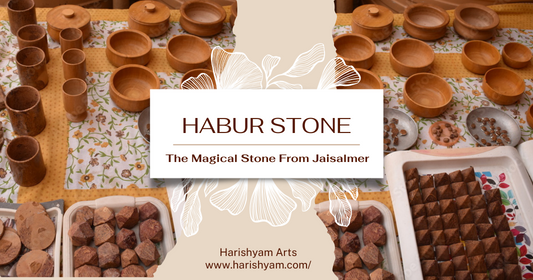
Nestled within the golden sands of Rajasthan lies a hidden gem, not of the usual kind, but a mystical stone steeped in folklore and tradition. Known as the Habur Stone, or locally as Haburia Bhata, this enigmatic rock hails from the ancient city of Jaisalmer, carrying with it tales of wonder and magic.
What is Habur Stone?
The Habur Stone, also known as Haburia Bhata, originates from Rajasthan, particularly the region of Jaisalmer. It holds cultural and historical significance due to its unique properties and alleged mystical qualities.
Composition
The Habur Stone contains fossil remnants, adding to its charm and enigmatic nature.It is also rich in naturally-occurring minerals that contribute to its distinct characteristics.
Magical Properties
This stone is believed to have special powers that aid in the process of making curd. While the specifics of these magical properties are not clearly defined, they have sparked intrigue and curiosity among those familiar with the stone.
Cultural Heritage
The Habur Stone is an integral part of the cultural heritage of Rajasthan, showcasing the region's deep connections to natural elements and traditions. Its association with traditional practices like curd making adds depth to its cultural significance.
Research and Exploration
Despite its long-standing reputation, the scientific basis for the stone's magical properties remains largely unexplored. Further research and study could unlock valuable insights into the geological and biochemical aspects of the Habur Stone.
In essence, the Habur Stone embodies a blend of history, mystery, and traditional beliefs, making it a captivating subject for exploration and discovery. Its role in the habur stone curd making process highlights the harmonious relationship between nature and cultural practices in the context of Rajasthan's rich heritage.
Why is Habur Stone So Popular?
The popularity of the Habur Stone can be attributed to several compelling factors:
- Mystique and Tradition: The stone's association with Rajasthan's rich cultural heritage and traditional practices, particularly in the context of curd making, contributes to its allure.
- Historical Significance: It bears fossil remnants, adding a historical and geological dimension, capturing the interest of historians, geologists, and enthusiasts alike.
- Unique Properties: The belief in its mystical or magical properties related to the curd making process sparks intrigue and fascination, leading to its widespread recognition.
- Cultural Identity: The Habur Stone symbolizes a deep-rooted connection to nature, tradition, and local customs within Rajasthan, resonating with individuals who cherish and value these aspects.
- Potential Practical Applications: The stone's perceived influence on the curd making process could have practical implications, appealing to those interested in traditional culinary practices or natural additives.
- Research Interest: Its enigmatic qualities have caught the attention of researchers and scholars, encouraging further exploration and investigation into its geological, biochemical, and cultural significance.
- Tourism and Souvenirs: The stone's reputation has likely contributed to its popularity as a notable item for tourists seeking unique souvenirs representing Rajasthan's heritage and mystique.
Overall, the multifaceted appeal of the Habur Stone, spanning cultural, historical, traditional, and potential practical aspects, has contributed to its widespread popularity and recognition.
What are the benefits of habur stone?
Some of habur stone medicinal benefits are:
- Digestive Health: The Habur Stone is believed to aid in digestion by promoting healthy gut flora and enhancing digestive functions, potentially alleviating digestive issues.
- Mineral Absorption: Due to its naturally-occurring mineral content, the stone may help improve mineral absorption in the body, supporting overall health and well-being.
- Detoxification: Some suggest that the Habur Stone could have detoxifying properties, assisting the body in eliminating toxins and impurities, thus supporting detox processes.
- Immune System Support: The minerals present in the stone may bolster the immune system, potentially enhancing immunity and supporting the body's defense mechanisms against illnesses.
- Joint Health: It is claimed that the Habur Stone may aid in maintaining joint health and mobility, potentially alleviating joint discomfort and promoting overall joint wellness.
- Skin Conditions: Some proponents believe that the stone's properties could have benefits for skin health, potentially helping to improve certain skin conditions or promote skin rejuvenation.
- Stress Relief: The use of the Habur Stone is also associated with stress relief and relaxation, with its properties believed to have a calming effect on the mind and body.
While the habur stone benefits traditionally recognized, it is essential to approach these claims with cautious skepticism and consult healthcare professionals before incorporating it into any medical treatment or regimen. Further scientific research is warranted to validate these purported benefits fully.
Kinds of Habur Stone Jaisalmer Products
Habur Stone, found near Jaisalmer, Rajasthan, is known for its natural cooling, energy balancing, and healing properties. Artisans skillfully shape this stone into various functional and spiritual items.
1. Habur Stone Utensils
Traditional and eco-friendly, these stone utensils are known for their health benefits and natural cooling qualities.
-
-
Curd Enhancer Bowl
-
Keeps curd naturally cool and thick.
-
Believed to enhance taste and texture without refrigeration.
-
-
Habur Stone Glass
-
Keeps water cool for longer durations.
-
Ideal for summer and Ayurvedic drinking practices.
-
-
Habur Stone Bottle
-
Maintains natural coolness of water.
-
Used as an alternative to copper or plastic bottles.
-
-
Cowl with Lid (Stone Pot)
-
Ideal for storing ghee, butter, pickles, and herbal products.
-
Retains freshness and adds mild alkaline properties to contents.
-
-
2. Decorative Items:
Due to its unique appearance and cultural significance, the Habur Stone is often used to craft decorative items such as paperweights, figurines, or ornamental pieces. These products not only showcase the beauty of the stone but also serve as souvenirs or gifts for visitors.
3. Health and Wellness Products:
Some artisans create health and wellness products incorporating the Habur Stone, such as massage tools or aromatherapy diffusers. These items are believed to harness the stone's purported healing properties and are sought after for their holistic benefits.
4. Home Décor:
The natural aesthetic of the Habur Stone makes it a popular choice for home décor items like coasters, candle holders, or table accents. Its earthy tones and rustic appeal add a touch of authenticity to any interior space.
5. Jewelry:
In recent years, jewelry designers have begun incorporating Habur Stones into their creations, crafting unique pieces such as pendants, earrings, or bracelets. These jewelry items not only showcase the beauty of the stone but also carry with them the allure of its mystical reputation.
These are just a few examples of the diverse range of products associated with the Habur Stone from Jaisalmer. Whether used for culinary purposes, decorative accents, or holistic wellness, the Habur Stone continues to captivate and inspire with its timeless charm and enigmatic qualities.
Winding Up:
In conclusion, the allure of the Habur Stone from Jaisalmer, with its rich cultural heritage and mystical reputation, continues to captivate enthusiasts and visitors alike. Its association with traditional practices such as curd making, along with its unique composition and alleged magical properties, adds to its timeless charm.
From enhancing digestive health to potential benefits in skincare and stress relief, the Habur Stone holds promise across various facets of wellness. Whether sought after for its decorative appeal in artisanal crafts or incorporated into jewelry and home décor, the Habur Stone remains a symbol of Rajasthan's cultural identity and natural splendor.
While its price may vary depending on its form and usage, the value it carries transcends monetary worth, resonating with those who cherish the traditions and mystique of Jaisalmer. Reviews of the stone's efficacy in curd making and its role in culinary practices further underscore its significance in both cultural and practical contexts. As the legacy of the Habur Stone endures, it continues to inspire exploration, appreciation, and wonder for generations to come.

Lakshay Sharma
I’m Lakshay Sharma, a writer with a deep passion for Hindu mythology, Vastu Shastra, and home interiors. I enjoy exploring the rich traditions of Hindu gods and goddesses, sharing insights into Vastu principles, and offering guidance on creating sacred spaces like Puja Mandirs. Through my writing, I aim to inspire harmony and spiritual well-being, blending traditional knowledge with modern perspectives.
Harishyam Arts | Jaipur
Related Blogs

Bhagavad Gita Chapter 4 Verse 42 Meaning in Hindi and English
Lakshay Sharma | June 16, 2026
Bhagavad Gita Chapter 4 Verse 42 is the concluding verse of Chapt...
Read More...
Bhagavad Gita Chapter 4 Verse 41 Meaning in Hindi and English
Lakshay Sharma | June 16, 2026
Bhagavad Gita Chapter 4 Verse 41 reveals the state of a person who has attaine...
Read More...
Bhagavad Gita Chapter 4 Verse 39 Meaning in Hindi and English
Lakshay Sharma | June 16, 2026
Bhagavad Gita Chapter 4 Verse 39 beautifully explains the qualiti...
Read More...
Bhagavad Gita Chapter 4 Verse 38 Meaning in Hindi and English
Lakshay Sharma | June 16, 2026
Bhagavad Gita Chapter 4 Verse 38 is one of the most celebrated verses on the g...
Read More...
Bhagavad Gita Chapter 4 Verse 37 Meaning in Hindi and English
Lakshay Sharma | June 16, 2026
Bhagavad Gita Chapter 4 Verse 37 uses a powerful metaphor to describe the tran...
Read More...
Bhagavad Gita Chapter 4 Verse 36 Meaning in Hindi and English
Lakshay Sharma | June 16, 2026
Bhagavad Gita Chapter 4 Verse 36 is one of the most reassuring verses in the G...
Read More...
Powerful Lord Ganesha Mantras to Remove Obstacles in Life
Lakshay Sharma | June 15, 2026
In Hindu spirituality, Lord Ganesha is worshipped as the remover of obstacles,...
Read More...
Bhagavad Gita Chapter 4 Verse 40 Meaning in Hindi and English
Lakshay Sharma | June 15, 2026
Bhagavad Gita Chapter 4 Verse 40 serves as a profound warning about the obstac...
Read More...
Why White Marble Mandirs Are Associated with Purity, Peace, and Divine Energy
Lakshay Sharma | June 14, 2026
In Indian culture and spiritual traditions, temples are not just places of wor...
Read More...
Bhagavad Gita Chapter 4 Verse 35 Meaning in Hindi and English
Lakshay Sharma | June 13, 2026
Bhagavad Gita Chapter 4 Verse 35 reveals the transformative power...
Read More...
Bhagavad Gita Chapter 4 Verse 34 Meaning in Hindi and English
Lakshay Sharma | June 13, 2026
Bhagavad Gita Chapter 4 Verse 34 is one of the most influential verses on the ...
Read More...
Bhagavad Gita Chapter 4 Verse 33 Meaning in Hindi and English
Lakshay Sharma | June 13, 2026
Bhagavad Gita Chapter 4 Verse 33 marks a turning point in Lord Krishna’s teach...
Read More...
Bhagavad Gita Chapter 4 Verse 32 Meaning in Hindi and English
Lakshay Sharma | June 13, 2026
Bhagavad Gita Chapter 4 Verse 32 concludes Lord Krishna’s discussion on the va...
Read More...
Bhagavad Gita Chapter 4 Verse 31 Meaning in Hindi and English
Lakshay Sharma | June 12, 2026
Bhagavad Gita Chapter 4 Verse 31 highlights the immense importance of <...
Read More...
Bhagavad Gita Chapter 4 Verse 30 Meaning in Hindi and English
Lakshay Sharma | June 12, 2026
Bhagavad Gita Chapter 4 Verse 30 continues Lord Krishna’s discussion on the di...
Read More...
Bhagavad Gita Chapter 4 Verse 29 Meaning in Hindi and English
Lakshay Sharma | June 12, 2026
Bhagavad Gita Chapter 4 Verse 29 continues Lord Krishna’s explanation of the d...
Read More...
Bhagavad Gita Chapter 4 Verse 28 Meaning in Hindi and English
Lakshay Sharma | June 12, 2026
Bhagavad Gita Chapter 4 Verse 28 continues Lord Krishna’s explanation of the m...
Read More...
Bhagavad Gita Chapter 4 Verse 27 Meaning in Hindi and English
Lakshay Sharma | June 12, 2026
Bhagavad Gita Chapter 4 Verse 27 continues Lord Krishna’s discourse on the var...
Read More...
Bhagavad Gita Chapter 4 Verse 25 Meaning in Hindi & English
Lakshay Sharma | June 12, 2026
Bhagavad Gita Chapter 4 Verse 25 marks the beginning of Lord Krishna's detaile...
Read More...
Bhagavad Gita Chapter 4 Verse 24 Meaning in Hindi & English
Lakshay Sharma | June 12, 2026
Bhagavad Gita Chapter 4 Verse 24 is one of the most profound and philosophical...
Read More...
Bhagavad Gita Chapter 4 Verse 23 Meaning in Hindi & English
Lakshay Sharma | June 12, 2026
Bhagavad Gita Chapter 4 Verse 23 continues Lord Krishna's profound teachings o...
Read More...
Bhagavad Gita Chapter 4 Verse 22 Meaning in Hindi & English
Lakshay Sharma | June 12, 2026
Bhagavad Gita Chapter 4 Verse 22 presents one of the clearest descriptions of ...
Read More...
Bhagavad Gita Chapter 4 Verse 21 Meaning in Hindi and English
Lakshay Sharma | June 12, 2026
Bhagavad Gita Chapter 4 Verse 21 further elaborates on the qualities of a true...
Read More...
Bhagavad Gita Chapter 4 Verse 20 Meaning in Hindi and English
Lakshay Sharma | June 12, 2026
Bhagavad Gita Chapter 4 Verse 20 continues Lord Krishna’s profound explanation...
Read More...
Bhagavad Gita Chapter 4 Verse 19 Meaning in Hindi and English
Lakshay Sharma | June 12, 2026
Bhagavad Gita Chapter 4 Verse 19 describes the qualities of a truly enlightene...
Read More...
Bhagavad Gita Chapter 4 Verse 18 Meaning in Hindi and English
Lakshay Sharma | June 12, 2026
Bhagavad Gita Chapter 4 Verse 18 presents one of the most profound and paradox...
Read More...
Bhagavad Gita Chapter 4 Verse 17 Meaning in Hindi and English
Lakshay Sharma | June 12, 2026
Bhagavad Gita Chapter 4 Verse 17 continues Lord Krishna’s profound teaching on...
Read More...
Bhagavad Gita Chapter 4 Verse 15 Meaning in Hindi & English
Lakshay Sharma | June 12, 2026
Bhagavad Gita Chapter 4 Verse 15 builds upon Krishna's teaching about detached...
Read More...
Bhagavad Gita Chapter 4 Verse 14 Meaning in Hindi & English
Lakshay Sharma | June 12, 2026
Bhagavad Gita Chapter 4 Verse 14 continues Lord Krishna's explanation of His d...
Read More...
Bhagavad Gita Chapter 4 Verse 13 Meaning in Hindi & English
Lakshay Sharma | June 12, 2026
Bhagavad Gita Chapter 4 Verse 13 is one of the most discussed verses in the Bh...
Read More...
Bhagavad Gita Chapter 4 Verse 12 Meaning in Hindi & English
Lakshay Sharma | June 12, 2026
Bhagavad Gita Chapter 4 Verse 12 explains why many people worship various deit...
Read More...
Bhagavad Gita Chapter 4 Verse 11 Meaning in Hindi & English
Lakshay Sharma | June 12, 2026
Bhagavad Gita Chapter 4 Verse 11 is one of the most inclusive and universal te...
Read More...
Bhagavad Gita Chapter 4 Verse 10 Meaning in Hindi & English
Lakshay Sharma | June 12, 2026
Bhagavad Gita Chapter 4 Verse 10 reveals the qualities and spiritual practices...
Read More...
Shankh, Chakra & Tilak in Mandir: Their Significance, Placement, and Benefits Explained
Lakshay Sharma | June 12, 2026
Indian temples are not just places of worship; they are centers of spiritual e...
Read More...
Bhagavad Gita Chapter 4 Verse 9 Meaning in Hindi & English
Lakshay Sharma | June 11, 2026
Bhagavad Gita Chapter 4 Verse 9 is one of the most celebrated verses in the Bh...
Read More...
Bhagavad Gita Chapter 4 Verse 8 Meaning in Hindi and English
Lakshay Sharma | June 11, 2026
Bhagavad Gita Chapter 4 Verse 8 is the continuation of Lord Krishna's declarat...
Read More...
Bhagavad Gita Chapter 4 Verse 7 Meaning in Hindi and English
Lakshay Sharma | June 11, 2026
Bhagavad Gita Chapter 4 Verse 7 is one of the most famous and widely quoted ve...
Read More...
Bhagavad Gita Chapter 4 Verse 6 Meaning in Hindi and English
Lakshay Sharma | June 11, 2026
Bhagavad Gita Chapter 4 Verse 6 is one of the most profound...
Read More...
Bhagavad Gita Chapter 4 Verse 5 Meaning in Hindi and English
Lakshay Sharma | June 11, 2026
Bhagavad Gita Chapter 4 Verse 5 contains Lord Krishna's response to Arjuna's q...
Read More...
Bhagavad Gita Chapter 4 Verse 4 Meaning in Hindi and English
Lakshay Sharma | June 11, 2026
Bhagavad Gita Chapter 4 Verse 4 presents an important question from Arjuna. Af...
Read More...
Bhagavad Gita Chapter 4 Verse 3 Meaning in Hindi and English
Lakshay Sharma | June 11, 2026
Bhagavad Gita Chapter 4 Verse 3 is a significant verse where Lord Krishna reve...
Read More...
Bhagavad Gita Chapter 4 Verse 2 Meaning in Hindi and English
Lakshay Sharma | June 11, 2026
Bhagavad Gita Chapter 4 Verse 2 continues Lord Krishna's explanation of the an...
Read More...
Bhagavad Gita Chapter 4 Verse 1 Meaning in Hindi and English
Lakshay Sharma | June 11, 2026
Bhagavad Gita Chapter 4 Verse 1 marks the beginning of the fourth chapter, kno...
Read More...
Bhagavad Gita Chapter 3 Verse 43 Meaning in Hindi & English
Lakshay Sharma | June 11, 2026
Bhagavad Gita Chapter 3 Verse 43 is the concluding verse of Chapter 3 (Karma Y...
Read More...
Bhagavad Gita Chapter 3 Verse 42 Meaning in Hindi & English
Lakshay Sharma | June 11, 2026
Bhagavad Gita Chapter 3 Verse 42 is one of the most profound verses in the Bha...
Read More...
Bhagavad Gita Chapter 3 Verse 33 Meaning in Hindi & English
Lakshay Sharma | June 11, 2026
Bhagavad Gita Chapter 3 Verse 33 addresses a fundamental aspect of human behav...
Read More...
Bhagavad Gita Chapter 3 Verse 32 Meaning in Hindi & English
Lakshay Sharma | June 11, 2026
Bhagavad Gita Chapter 3 Verse 32 serves as a warning from Lord Krishna about t...
Read More...
Bhagavad Gita Chapter 3 Verse 31 Meaning in Hindi & English
Lakshay Sharma | June 11, 2026
Bhagavad Gita Chapter 3 Verse 31 highlights the importance of fai...
Read More...
Bhagavad Gita Chapter 3 Verse 30 Meaning in Hindi & English
Lakshay Sharma | June 11, 2026
Bhagavad Gita Chapter 3 Verse 30 is one of the most powerful teachings on Read More...

Bhagavad Gita Chapter 3 Verse 29 Meaning in Hindi & English
Lakshay Sharma | June 11, 2026
Bhagavad Gita Chapter 3 Verse 29 continues Lord Krishna's discussion about the...
Read More...


