
Harishyam Arts Blog
How to Clean Brass Statues at Home?
By Lakshay Sharma | On 12 October, 2025 | Views
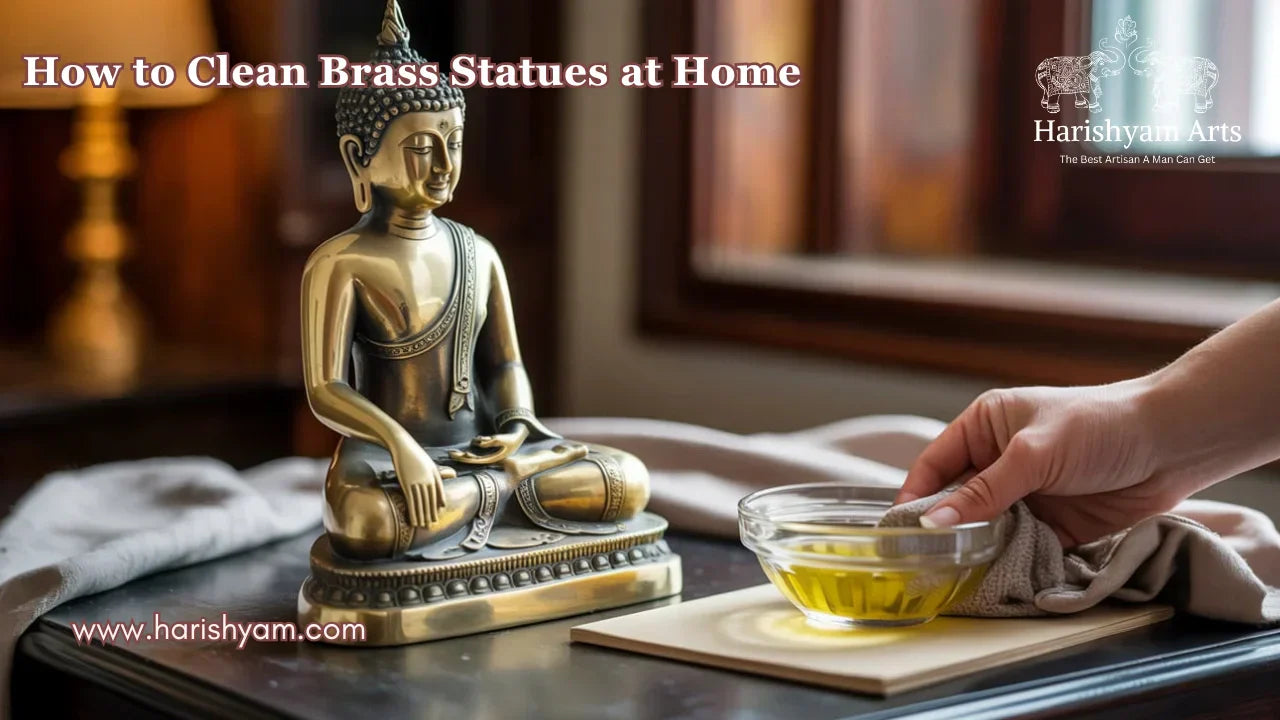
Brass statues add a touch of elegance and spirituality to any home. At Harishyam Arts, we offer a wide range of brass, marble, and wooden statues that enhance your living space. Over time, brass statues can lose their shine due to dust, moisture, and natural oxidation. Proper cleaning and maintenance are essential to keep your brass idols looking radiant and vibrant. In this guide, we’ll walk you through effective methods to clean brass statues safely at home.
Why Clean Brass Statues?
Brass, an alloy of copper and zinc, naturally develops a patina over time. While some collectors appreciate this antique look, most homeowners prefer their brass statues shiny and polished. Regular cleaning not only enhances the beauty of the statue but also preserves it for generations. Explore our brass deity collection for inspiration and ideas.
Materials You Will Need To Clean Brass Statue
Before you start cleaning, gather all the necessary materials to ensure a safe and effective process. Using the right items protects your statue from scratches or damage. Here’s what you’ll need:
-
Soft Microfiber Cloths – For dusting and polishing without scratching the surface.
-
Mild Soap or Dishwashing Liquid – Gentle cleaning solution for removing dirt and grime.
-
Warm Water – To mix with soap for washing the statue.
-
Lemon or Lemon Juice – Natural acid that helps remove tarnish.
-
Baking Soda – Works with lemon to create a gentle scrubbing paste for tough stains.
-
White Vinegar – Effective natural cleaner for heavier tarnish areas.
-
Soft-Bristled Toothbrush – To reach crevices and detailed carvings without damaging them.
-
Gloves (Optional) – Protect your hands from prolonged exposure to cleaning agents.
-
Cotton Swabs (Optional) – Ideal for cleaning intricate patterns and small corners.
Having these materials ready ensures that cleaning your brass statues is smooth, safe, and efficient.
Dos and Don’ts
Do:
-
Use natural cleaning agents like lemon and vinegar.
-
Dry the statue completely to prevent water stains.
Don’t:
-
Use abrasive scrubbing pads or metal brushes.
-
Soak your brass statues in water for long periods.
Step-by-Step Guide: How to Clean Brass Statues at Your Home
Cleaning brass statues at home is easy if you follow these simple steps carefully:
Step 1: Dust the Statue
Use a soft microfiber cloth to remove surface dust and dirt. For intricate carvings, gently use a soft-bristled toothbrush to reach small crevices.
Step 2: Prepare a Cleaning Solution
Mix mild soap or dishwashing liquid with warm water. For a natural alternative, you can use lemon juice or vinegar mixed with a little baking soda to create a gentle cleaning paste.
Step 3: Apply the Solution
Dampen a soft cloth with the cleaning solution and gently wipe the statue. For detailed areas, use a soft brush or cotton swabs. Avoid soaking the statue in water.
Step 4: Rinse Thoroughly
After cleaning, wipe the statue with a cloth dampened in clean water to remove any soap or cleaning residue.
Step 5: Dry Completely
Use a soft, dry cloth to dry the statue thoroughly. Make sure no moisture remains, especially in small crevices, to prevent tarnishing.
Step 6: Optional Polishing
For extra shine, you can apply a small amount of brass polish or a thin layer of natural wax. Buff gently with a soft cloth.
Step 7: Regular Maintenance
Dust your brass statue weekly and perform deeper cleaning every 3–6 months. This keeps the statue shiny and prevents heavy tarnish from forming.
FAQs
Q1: How often should I clean my brass statues?
Ans: Light dusting weekly and deep cleaning every 3–6 months is ideal.
Q2: How do I clean big brass idols?
Ans: For large brass idols, use a soft cloth and mild cleaning solution. Work in sections and use a soft brush to reach intricate details. Avoid soaking the idol in water, and always dry each section thoroughly before moving to the next.
Q3: How do I clean god idols at home safely?
Ans: Use gentle materials like a microfiber cloth, mild soap, lemon juice, or vinegar for natural cleaning. Avoid harsh chemicals, abrasive scrubbers, and prolonged water exposure to protect the finish. Regular dusting helps reduce the need for intensive cleaning.
Q4: Can I use vinegar instead of lemon juice?
Ans: Yes, vinegar is a natural alternative to lemon juice and works effectively to remove tarnish. Mix it with salt or baking soda to create a gentle cleaning paste, then rinse thoroughly and dry the statue completely.
Q5: Can I get brass statues delivered outside India?
Ans: Many online stores, including Harishyam Arts, offer international shipping to countries like the USA, UK, Canada, and more.
Conclusion
Cleaning and maintaining brass statues at home is both simple and rewarding when done with care. By using gentle, natural cleaning methods and regularly dusting your statues, you can preserve their shine and intricate details for years to come. Whether it’s a small decorative piece or a sacred deity on your home altar, proper cleaning ensures your brass statues remain visually stunning and spiritually vibrant. With the right materials, step-by-step care, and mindful handling, your brass idols will continue to enhance the beauty and sanctity of your home for generations.

Lakshay Sharma
I’m Lakshay Sharma, a writer with a deep passion for Hindu mythology, Vastu Shastra, and home interiors. I enjoy exploring the rich traditions of Hindu gods and goddesses, sharing insights into Vastu principles, and offering guidance on creating sacred spaces like Puja Mandirs. Through my writing, I aim to inspire harmony and spiritual well-being, blending traditional knowledge with modern perspectives.
Harishyam Arts | Jaipur
Related Blogs

Solid Brass vs. Resin Replicas: How to Spot Genuine Sand-Cast Metal Handicrafts
Lakshay Sharma | October 04, 2026
Traditional Indian handicrafts are admired for their craftsmanship, heritage, ...
Read More...
Sacred Lighting Schemes: Layering Ambient, Accent, and Focal Light in Your Pooja Corner
Lakshay Sharma | October 03, 2026
A pooja corner is more than a designated space for prayer. It is a peaceful pa...
Read More...
Engineering & Weight Safety: How to Safely Install a Ceiling-Hung Wooden Jhula
Lakshay Sharma | October 02, 2026
A ceiling-hung wooden jhula, or traditional indoor swing, can become a beautif...
Read More...
Marble Care Through the Seasons: How to Protect Idols During Abhishekam and Festivals
Lakshay Sharma | October 01, 2026
Marble idols are admired for their purity, elegance, and timeless beauty. Whet...
Read More...
How High-Definition 3D CNC Router Carving Elevates Corian Temple Walls
Lakshay Sharma | September 30, 2026
Temple interiors have always been spaces where art, spirituality, craftsmanshi...
Read More...
Acoustic Serenity: Soundproofing and Sound Design for a Meditative Home Sanctuary
Lakshay Sharma | September 29, 2026
Acoustic Serenity: Soundproofing and Sound Design for a Meditative Home Sanct... Read More...

The Anatomy of Armor & Ornaments: Deconstructing the Fine Detail in Divine Statuary
Lakshay Sharma | September 28, 2026
The Anatomy of Royal Carving: Hand-Chiseled Reliefs vs. CNC Machine Reproduct... Read More...

Festival-Ready Spaces: Decorating with Brass Urlis, Floating Diya Sets, and Stone Accents
Lakshay Sharma | September 27, 2026
Festivals are a time when homes come alive with warmth, light, color, and toge...
Read More...
Integrating Backlit Onyx Marble into White Stone Shrines
Lakshay Sharma | September 26, 2026
A shrine is more than a place of worship. It is a space designed to create pea...
Read More...
The Open-Concept Mandir: Using Marble Jali Screens to Create Sacred Boundaries Without Walls
Lakshay Sharma | September 25, 2026
Modern homes increasingly favor open floor plans, spacious interiors, and flex...
Read More...
The Anatomy of Royal Carving: Hand-Chiseled Reliefs vs. CNC Machine Reproductions
Lakshay Sharma | September 25, 2026
Royal carving has long been associated with grandeur, craftsmanship, and archi...
Read More...
Single-Block Carving (Monolithic) vs. Joined Wood: Evaluating the Quality of a Wooden Statue
Lakshay Sharma | September 24, 2026
When choosing a handcrafted wooden statue, appearance is only one part of the ...
Read More...
125 Million Years in the Making: The Geological Mystery of Jaisalmer’s Habur Fossil Stone
Lakshay Sharma | September 23, 2026
Deep in the golden landscape of Rajasthan’s Thar Desert lies a remarkable remi...
Read More...
Fire Safety and Smoke Management in Indoor Home Temples
Lakshay Sharma | September 22, 2026
A home temple, or puja mandir, is a peaceful and spi...
Read More...
Sizing the Sacred: How to Scale a Marble Murti for Your Specific Room Dimensions
Lakshay Sharma | September 21, 2026
A marble murti is more than a beautiful piece of art. For many homes and templ...
Read More...
Sizing the Sacred: How to Scale a Marble Murti for Your Specific Room Dimensions
Lakshay Sharma | September 21, 2026
A marble murti is more than a beautiful piece of art. For many homes and templ...
Read More...
The Return to Authenticity: Why Handcrafted Artifacts Are Replacing Mass-Produced Corporate Gifts
Lakshay Sharma | September 20, 2026
Corporate gifting has traditionally been associated with practical items, bran...
Read More...
Sagwan (Teak) vs. Sheesham vs. Mango Wood: Which Timber Belongs in Your Sacred Mandir?
Lakshay Sharma | September 19, 2026
A sacred mandir is more than a piece of furniture. It is a dedicated space for...
Read More...
Combining Warm Teakwood and Pure White Corian for the Ultimate Dual-Tone Mandir
Lakshay Sharma | September 18, 2026
A home mandir is a deeply meaningful space where spirituality, tradition, and ...
Read More...
The Chemistry of Shine: Safe Ways to Clean Brass Idols Without Damaging Their Antique Patina
Lakshay Sharma | September 17, 2026
Brass idols have a distinctive beauty that comes from their warm golden tones,...
Read More...
The Beauty of Brass Chains: Choosing Antique Brass Figures and Heavy-Duty Links for Wooden Jhula
Lakshay Sharma | September 16, 2026
A traditional wooden jhula is more than a piece of furniture. It is a beautifu...
Read More...
The Ergonomics of Prayer: Designing Mandirs for Sitting vs. Standing Worship
Lakshay Sharma | September 15, 2026
A home mandir is more than a decorative corner. It is a dedicated space for pr...
Read More...
Myth vs. Reality: Debunking Common Taboos and Rules During Pitru Paksha
Lakshay Sharma | September 14, 2026
Pitru Paksha is one of the most meaningful periods in the Hindu calendar, trad...
Read More...
What is Sarva Pitru Amavasya (Mahalaya)? Significance for Forgotten Ancestors
Lakshay Sharma | September 14, 2026
Sarva Pitru Amavasya, also known as Mahalaya Amavasy...
Read More...
Step-by-Step Guide to Performing Tarpan, Pind Daan, and Anna Daan at Home
Lakshay Sharma | September 14, 2026
In Hindu tradition, remembering and honoring our ancestors is considered an im...
Read More...
Beyond Rituals: The True Scientific and Spiritual Significance of Honoring Ancestors
Lakshay Sharma | September 14, 2026
In many Indian households, remembering and honoring ancestors is a deeply root...
Read More...
Understanding Pitru Paksha 2026: Complete Shradh Tithi Calendar and Key Dates
Lakshay Sharma | September 14, 2026
Pitru Paksha is one of the most important periods in the Hindu calendar for re...
Read More...
Light and Shadow: How Architectural Lighting Transforms Marble Idols
Lakshay Sharma | September 14, 2026
Marble idols have a timeless beauty that comes from their material, craftsmans...
Read More...
Coffee Table Artifacts: Transforming Minimalist Living Rooms with Handcrafted Showpieces
Lakshay Sharma | September 13, 2026
Minimalist living rooms are celebrated for their clean lines, uncluttered spac...
Read More...
Pietra Dura in the Temple: The Timeless Art of Inlaying Semi-Precious Stones into Marble Mandir Walls
Lakshay Sharma | September 12, 2026
A beautifully crafted marble mandir is more than a place of worship. It can al...
Read More...
The Royal Living Room: How to Style a Grand Hand-Carved Sofa Set with Antique Finishes
Lakshay Sharma | September 11, 2026
A living room is more than just a place to sit. It is often the heart of a hom...
Read More...
Long Weekend Planner: Maximizing Holidays Around Diwali 2026
Lakshay Sharma | September 11, 2026
Diwali is one of the most awaited festivals in India—a time of lights, celebra...
Read More...
Preparing Your Home for Diwali 2026: Deep Cleaning and Vastu Tips
Lakshay Sharma | September 11, 2026
Diwali is more than just a festival of lights. It is a time to welcome happine...
Read More...
Bhai Dooj 2026: Auspicious Timings, Tilak Muhurat & Gift Ideas
Lakshay Sharma | September 11, 2026
Bhai Dooj is one of the most beautiful Hindu festivals celebrating the special...
Read More...
Govardhan Puja and Annakut 2026: Traditions, Date, and Recipe Ideas
Lakshay Sharma | September 11, 2026
Govardhan Puja is one of the most beautiful festivals celebrated during the Di...
Read More...
Choti Diwali & Naraka Chaturdashi 2026: History, Abhyang Snan & Significance
Lakshay Sharma | September 11, 2026
Diwali is one of the most auspicious and widely celebrated festivals in India. The festival of...
Read More...
Dhanteras 2026 Shopping Guide: What to Buy (and Avoid) for Good Luck
Lakshay Sharma | September 11, 2026
Dhanteras is one of the most auspicious days of the Diwali festival and is tra...
Read More...
Complete Step-by-Step Lakshmi-Ganesha Puja Vidhi for Diwali 2026
Lakshay Sharma | September 11, 2026
Diwali is one of the most auspicious and joyous festivals celebrated across In...
Read More...
Lakshmi Puja Muhurat 2026: City-Wise Timings and Auspicious Windows
Lakshay Sharma | September 11, 2026
Diwali is one of the most celebrated festivals in India, symbolizing the victo...
Read More...
The 5-Day Diwali Festival 2026: Day-by-Day Significance and Rituals
Lakshay Sharma | September 11, 2026
Diwali, also known as the Festival of Lights, is one...
Read More...
Diwali 2026 Complete Date Guide: Calendar, Tithis & Festival Schedule
Lakshay Sharma | September 11, 2026
Diwali 2026: Complete Date and Festival Guide
...
Read More...
Kadam Wood vs. Sandalwood vs. Teak: Choosing the Right Timber for Carved Statues
Lakshay Sharma | September 10, 2026
Wooden statues have a timeless beauty. From traditional Indian deities to deco...
Read More...
Navratri Havan at Home: Essential Samagri List, Vidhi, and Clean-Up Tips
Lakshay Sharma | September 10, 2026
Navratri is one of the most auspicious Hindu festivals dedicated to the worshi...
Read More...
Kanya Pujan Guide: Significance, Prasad Menu Ideas, and Traditional Setup
Lakshay Sharma | September 10, 2026
Kanya Pujan is one of the most cherished traditions observed during

Bold Interior Trends: Styling Dark Wood, Charcoal Accents, and Luminous Metals
Lakshay Sharma | September 10, 2026
Interior design is moving beyond light, neutral palettes and predictable décor...
Read More...
Investment Pieces for Your Home: Why Hand-Carved Wooden Mandirs & Stone Sculptures Last Generations
Lakshay Sharma | September 10, 2026
A beautiful home is more than just a collection of furniture and décor. The mo...
Read More...
DIY Navratri Decorations: Creative Craft Ideas to Involve Kids and Family
Lakshay Sharma | September 10, 2026
Navratri is a festival of devotion, celebration, creativity, and togetherness....
Read More...
Festive Color Palettes: Warm Earthy Tones and Golden Accents to Transform Your Living Room
Lakshay Sharma | September 10, 2026
Festivals are the perfect time to refresh your home and create a warm, welcomi...
Read More...
Pooja Room Lighting Ideas: How to Use Backlighting, Brass Lamps, and Diyas for Festive Ambiance
Lakshay Sharma | September 10, 2026
The pooja room is one of the most peaceful and sacred spaces in an Indian home...
Read More...
Minimalist Pooja Room Designs: How to Create a Serene Meditation Space
Lakshay Sharma | September 10, 2026
A pooja room is more than just a dedicated corner for prayer. It is a place wh...
Read More...


