
Harishyam Arts Blog
South Indian vs. North Indian Temple Styles: Carving Traditions in Teak Wood
By Lakshay Sharma | On 30 October, 2026 | Views

Indian temple architecture is a beautiful expression of devotion, craftsmanship, symbolism, and regional culture. Although temples across India share spiritual foundations, their architectural details can vary significantly from one region to another. This distinction becomes especially interesting when traditional temple styles are recreated in wood for home prayer spaces.
Among the most popular materials for traditional wooden temples, teak wood is valued for its strength, durability, natural grain, and ability to hold intricate carvings. When used for a home mandir, teak can be shaped into designs inspired by both South Indian and North Indian temple traditions.
Understanding the differences between these carving traditions can help homeowners choose a wooden pooja mandir that reflects their preferred architectural style while maintaining a meaningful connection with Indian craftsmanship.
The Importance of Teak Wood in Temple Craftsmanship
Teak wood has been used in Indian furniture and architectural craftsmanship for generations. Its natural durability and resistance to everyday wear make it suitable for detailed carved structures. It also provides a warm appearance that complements traditional prayer spaces.
For wooden mandirs, artisans can carve pillars, arches, domes, brackets, panels, floral motifs, and deity-inspired decorative elements directly into the wood. The final appearance depends not only on the material but also on the regional carving vocabulary used by the craftsman.
South Indian and North Indian temple-inspired designs therefore offer two distinctly different visual approaches to teak wood temple craftsmanship.
South Indian Temple Style: Rich, Layered and Sculptural
South Indian temple architecture is widely recognized for its elaborate ornamentation and strong sculptural character. Historic temples in regions such as Tamil Nadu, Karnataka, Kerala, and Andhra Pradesh display highly detailed architectural elements.
One of the most recognizable features associated with South Indian temple architecture is the use of richly decorated vertical structures. In wooden mandir designs, this influence can appear through carved pillars, ornamental brackets, layered roof structures, and detailed panels.
Intricate Pillars and Brackets
South Indian-inspired teak temples often feature heavily carved pillars. These may include floral patterns, geometric details, mythological figures, or traditional ornamental compositions.
Brackets are another important decorative feature. In a wooden mandir, carved brackets can connect pillars to the upper structure while also creating an impressive visual transition between different architectural sections.
Layered Roof Design
Traditional South Indian temple forms often emphasize multiple architectural levels. When adapted into a home mandir, this can translate into a layered wooden roof or tiered canopy.
The layered structure creates a sense of height and visual richness, making the mandir appear like a miniature architectural shrine rather than simply a prayer cabinet.
Sculptural Detailing
South Indian-inspired carving tends to give considerable attention to three-dimensional ornamentation. Deity figures, traditional motifs, floral elements, and decorative borders can be carved with varying depths to create shadows and texture.
This makes teak particularly useful because its workable surface allows skilled artisans to develop detailed relief carving.
North Indian Temple Style: Balanced, Elegant and Symbolic
North Indian temple architecture encompasses a wide range of regional traditions, including styles associated with Rajasthan, Gujarat, Uttar Pradesh, Madhya Pradesh, and other parts of northern India.
Compared with the highly layered visual character often associated with South Indian temple designs, North Indian-inspired wooden mandirs can emphasize balanced proportions, arches, domed or shikhara-inspired forms, ornamental borders, and refined detailing.
Shikhara-Inspired Structures
The shikhara is one of the defining visual elements associated with many North Indian temple traditions. In a wooden home mandir, artisans may interpret this architectural form as a carved or tiered upper structure above the sanctum.
A teak mandir with a shikhara-inspired top can provide a distinctly traditional North Indian appearance while being scaled appropriately for a residential prayer room.
Arches and Decorative Panels
Carved arches are another popular element in North Indian-inspired wooden temple designs. These arches can frame the deity area and create a clear visual focal point.
Decorative panels may feature floral patterns, traditional motifs, geometric borders, or symbolic elements. The carving can range from relatively subtle detailing to highly ornamental craftsmanship.
Symmetry and Proportion
North Indian-inspired mandirs often place strong emphasis on symmetry. Balanced pillars, evenly distributed decorative elements, and proportionate architectural sections help create a composed appearance.
This makes the style suitable for homeowners who prefer a traditional mandir that feels detailed without appearing excessively dense.
Key Differences Between South and North Indian Wooden Temple Styles
While both traditions can be recreated beautifully in teak wood, their visual characteristics differ.
South Indian-inspired teak temples commonly emphasize:
-
Heavily carved pillars
-
Detailed brackets
-
Layered roof structures
-
Sculptural ornamentation
-
Rich three-dimensional carving
-
Strong architectural detailing
North Indian-inspired teak temples commonly emphasize:
-
Shikhara-inspired tops
-
Decorative arches
-
Symmetrical proportions
-
Floral and geometric borders
-
Refined ornamental carving
-
Balanced architectural compositions
These are broad stylistic characteristics rather than strict rules. Indian temple architecture is extremely diverse, and artisans often combine elements from different regional traditions to create customized designs.
Choosing Between the Two Styles for a Home Mandir
The choice between South Indian and North Indian carving traditions ultimately depends on the visual character you want for your prayer space.
A South Indian-inspired teak mandir can work well when you prefer an elaborate, sculptural appearance with prominent pillars and layered detailing. Its rich ornamentation can make the mandir a strong architectural focal point.
A North Indian-inspired design may appeal to those who prefer symmetrical forms, carved arches, shikhara-inspired structures, and a more balanced ornamental composition.
Room size should also be considered. A highly detailed temple with large pillars and multiple carved levels may require more visual and physical space. For compact apartments, a simpler interpretation of either tradition can provide the desired character without overwhelming the room.
Combining Traditional Styles with Modern Homes
Traditional carving does not necessarily mean that a mandir must look outdated. Skilled artisans can reinterpret regional temple features for contemporary interiors.
For example, a teak wood mandir can incorporate traditional carved pillars while maintaining clean proportions. Similarly, a shikhara-inspired design can be simplified to suit a modern apartment without losing its traditional identity.
Lighting can further highlight carved details. Warm lighting placed inside or around the prayer area can create shadows across the carved surfaces, making floral patterns, pillars, and architectural borders more visible.
The result is a prayer space that connects traditional Indian craftsmanship with modern interior design.
Custom Teak Wood Mandirs by Harishyam Arts
At Harishyam Arts, traditional craftsmanship can be adapted to suit individual requirements. A custom teak wood mandir can be developed according to available space, preferred architectural details, deity placement, dimensions, and decorative preferences.
Whether you prefer the sculptural richness of South Indian-inspired carving or the balanced elegance of North Indian temple architecture, customization allows traditional elements to be incorporated into a mandir designed specifically for your home.
Teak wood also offers a warm, natural appearance that complements both classic and contemporary interiors. With appropriate craftsmanship, details such as carved pillars, arches, brackets, panels, and traditional motifs can become integral parts of the overall temple design.
Frequently Asked Questions
Q1. What is the main difference between South Indian and North Indian teak wood temple styles?
Ans: South Indian-inspired teak wood temples generally feature elaborate pillars, carved brackets, layered roof structures, and detailed sculptural motifs. North Indian-inspired designs commonly emphasize shikhara-inspired tops, decorative arches, symmetrical proportions, and refined ornamental borders. These are broad stylistic distinctions, and modern wooden mandirs can combine elements from both traditions according to individual preferences.
Q2. Why is teak wood suitable for making traditional home temples?
Ans: Teak is valued for its durability, strength, natural grain, and suitability for detailed woodworking. These qualities make it a popular choice for handcrafted wooden mandirs. Skilled artisans can carve pillars, arches, panels, brackets, floral motifs, and other decorative elements while retaining the natural warmth and character of the wood.
Q3. Can I customize a teak wood mandir in a South Indian or North Indian temple style?
Ans: Yes. A teak wood mandir can be customized according to your preferred architectural style, available space, dimensions, deity placement, carving details, and decorative elements. Harishyam Arts can create customized wooden temple designs inspired by regional Indian traditions. For customized mandir requirements, you can contact Harishyam Arts at +91-9782397360.
Q4. Can traditional teak wood temple designs be made suitable for modern homes?
Ans: Yes. Traditional architectural elements can be adapted to suit contemporary interiors. For example, intricate pillars, carved arches, shikhara-inspired tops, or decorative panels can be incorporated into a compact design with cleaner proportions. Custom sizing also allows the mandir to fit apartments, dedicated prayer rooms, living areas, or larger residential spaces.
Q5. Does Harishyam Arts offer international delivery for teak wood mandirs?
Ans: Yes, Harishyam Arts offers worldwide shipping for handcrafted temple and mandir designs, including deliveries to the USA, UK, Canada, Dubai, Australia, Mauritius, Singapore, and other international destinations. Shipping arrangements may vary depending on the mandir's size, destination, packaging requirements, and applicable customs regulations.
Preserving India's Wooden Temple Craft
The comparison between South Indian and North Indian temple styles demonstrates the remarkable diversity of Indian architectural traditions. Each region has developed its own approach to proportion, ornamentation, symbolism, and craftsmanship.
When these traditions are translated into teak wood, artisans preserve more than decorative patterns. They carry forward techniques and visual languages that have been shaped by generations of Indian craftsmanship.
A handcrafted wooden mandir therefore serves both a practical and cultural purpose. It provides a dedicated space for prayer while bringing traditional architectural artistry into the home.
Whether inspired by the elaborate carving traditions of South India or the elegant architectural forms of North India, a teak wood mandir can become a meaningful centerpiece of a home prayer space. With thoughtful design and skilled craftsmanship, regional temple traditions can continue to thrive in modern homes while retaining their connection to India's rich artistic heritage.

Lakshay Sharma
I’m Lakshay Sharma, a writer with a deep passion for Hindu mythology, Vastu Shastra, and home interiors. I enjoy exploring the rich traditions of Hindu gods and goddesses, sharing insights into Vastu principles, and offering guidance on creating sacred spaces like Puja Mandirs. Through my writing, I aim to inspire harmony and spiritual well-being, blending traditional knowledge with modern perspectives.
Harishyam Arts | Jaipur
Related Blogs

What is Corian Mandir? Material, Benefits, and Perfect Fit for Your Home
Lakshay Sharma | October 30, 2026
A Corian Mandir is a modern-day solution for those seeking a blend of tradition and contempora...
Read More...
Which Direction Should a Mandir in Home Face? Exploring Vastu Guidelines
Lakshay Sharma | October 30, 2026
Read More...

Makrana White vs. Ambaji vs. Vietnam Marble: Which Stone Truly Belongs in Your Home Mandir?
Lakshay Sharma | October 30, 2026
A home mandir is not just a place for daily prayers; it is a sacred corner tha...
Read More...
Where to Buy Pooja Mandir for Home in USA?
Lakshay Sharma | October 30, 2026
A pooja mandir is more than just a piece of furniture. It is a sacred space th...
Read More...
How to Customize a Pooja Mandir Design Based on Your Home Interior Style
Lakshay Sharma | October 30, 2026
In today's homes, the pooja mandir isn't just a sacred space—it's a stunning f...
Read More...
Why Jaipur is Famous for Marble Moorti Manufacturing
Lakshay Sharma | October 30, 2026
Jaipur, the vibrant Pink City of Rajasthan, isn't just a tourist hotspot—it's ...
Read More...
Wall-Mounted vs Floor-Standing Mandirs
Lakshay Sharma | October 30, 2026
A home temple is more than just a piece of furniture—it is a sacred space wher...
Read More...
When to buy a new mandir for home?
Lakshay Sharma | October 30, 2026
The home mandir is more than decor—it's a spiritual anchor in Indian household...
Read More...
Is it ok to buy a second-hand temple for the home?
Lakshay Sharma | October 30, 2026
In Indian culture, a home temple (mandir) is much mo...
Read More...
Top Marble Moorti Manufacturers in Jaipur and How to Choose the Right One
Lakshay Sharma | October 30, 2026
Jaipur, the royal Pink City of India, has long been ...
Read More...
Where to Buy Custom Home Temples in Rajasthan: Designs, Prices and Options
Lakshay Sharma | October 30, 2026
A home temple, also called a mandir or pooja ghar, is often the spiritual hear...
Read More...
How to Choose the Ideal Pooja Mandir for Your Home: Material, Size, and Style
Lakshay Sharma | October 30, 2026
A pooja mandir is the sacred heart of every Indian home, where spirituality me...
Read More...
8 Guidelines for Setting Up Your Home Mandir with Wooden Murtis: Location, Selection, and Maintenance.
Lakshay Sharma | October 30, 2026
Introduction: The Divine Mother of Strength and Compassion

How long do Corian temples last?
Lakshay Sharma | October 30, 2026
Choosing the right material for a temple at home is important for both aesthet...
Read More...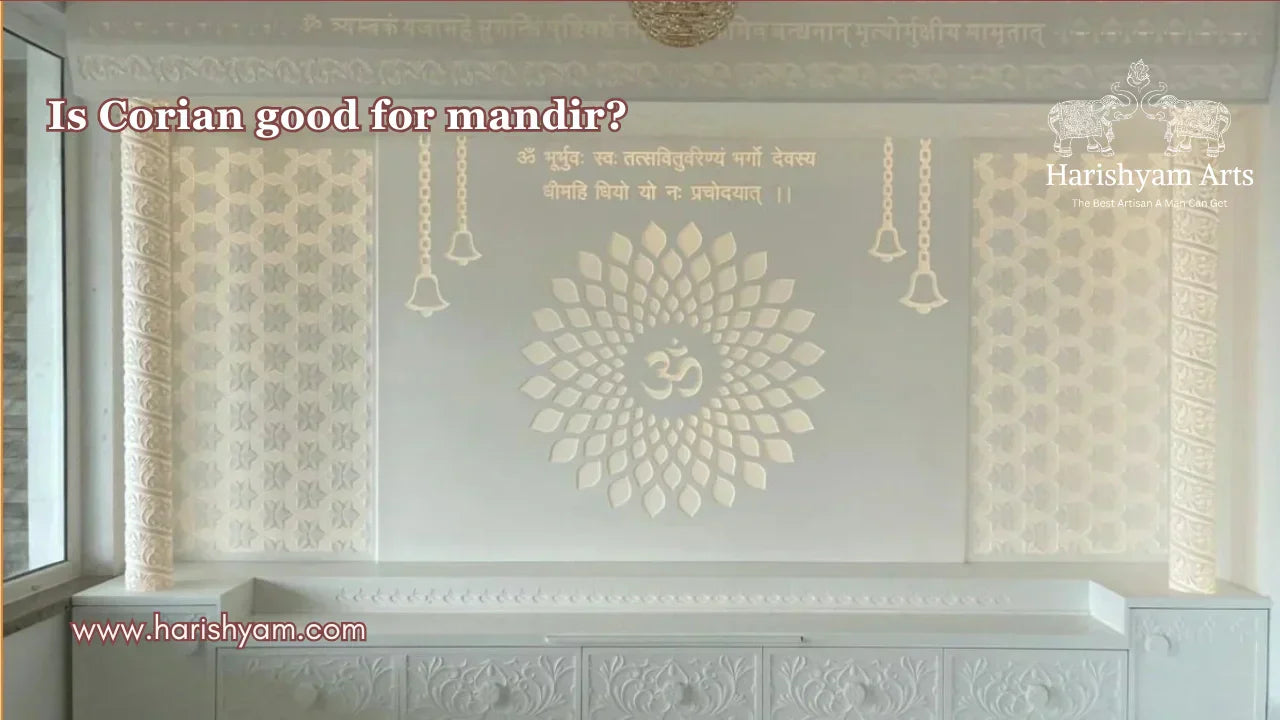
Is Corian Good for Mandir? A Complete Guide
Lakshay Sharma | October 30, 2026
When it comes to designing a home mandir, choosing t...
Read More...
South Indian vs. North Indian Temple Styles: Carving Traditions in Teak Wood
Lakshay Sharma | October 30, 2026
Indian temple architecture is a beautiful expression of devotion, craftsmanshi...
Read More...


