
Harishyam Arts Blog
How to Make Curd Using Habur Stone
By Lakshay Sharma | On 31 May, 2025 | Views
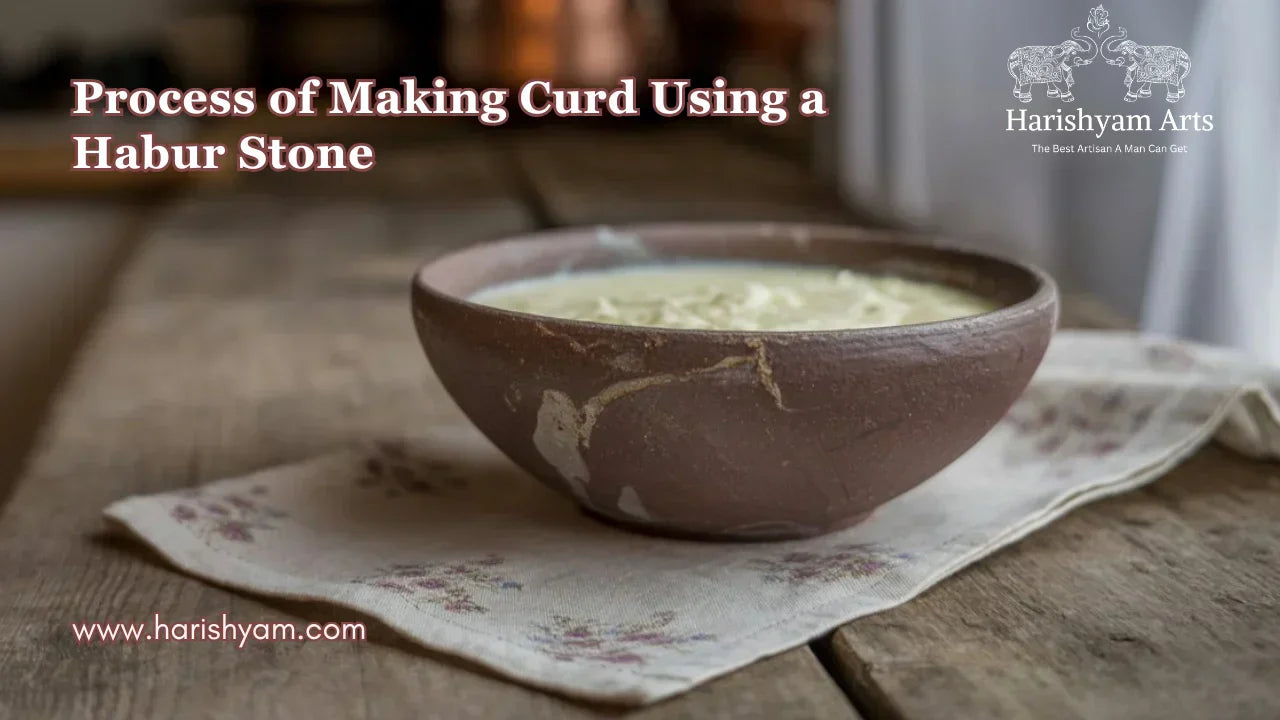
Curd is a staple in many Indian households, known not just for its taste but also for its health benefits. While modern refrigeration and stainless-steel containers have made curd-making easy, traditional methods using natural materials are making a comeback — and for good reason. One such traditional method involves using Habur Stone utensils, which are known for their unique mineral composition and health benefits. In this blog, we’ll explore how to make curd using Habur Stone, its advantages, and why it’s worth adopting this ancient technique in your home.
What is Habur Stone?
Habur Stone is a rare and natural stone found in the region of Rajasthan, India. It is considered to be rich in minerals and is known for its natural cooling properties. Traditionally used to make utensils like pots, bowls, and even pyramids, Habur Stone has been used for centuries in Ayurvedic practices for its ability to retain natural flavors and enhance food quality.
These utensils are non-toxic, eco-friendly, and known to have a positive effect on food stored or prepared in them, especially fermented items like curd.
Also Read: Learn about the unique Habur stone from Jaisalmer
Can I Turn Milk into Curd Using Habur Stone?
Yes, you can absolutely turn milk into curd using Habur Stone utensils. The stone’s natural mineral content and cool surface make it ideal for the fermentation process. Unlike metal or plastic containers that can either heat up or cool down too quickly, Habur Stone maintains a balanced temperature, helping in the slow and even formation of curd.
Many traditional Indian households still rely on Habur Stone bowls and pyramids to make creamy, thick, and naturally set curd — all without the use of any starter or culture.
Process of Making Curd Using a Habur Stone Utensils
Making curd using Habur Stone is simple and does not require any artificial starter. Here are two effective methods:
1. Using a Habur Stone Bowl or Pot for Making Curd Naturally
For those who value tradition and natural living, setting curd in a Habur Stone bowl or pot is a time-tested method that enhances both taste and health. Habur Stone is a mineral-rich stone known for its natural cooling properties and its ability to promote chemical-free curd fermentation without any added culture.
Here’s a step-by-step process to make curd using a Habur Stone vessels:
Step 1: Boil and Cool the Milk
Start by boiling fresh milk thoroughly to eliminate any impurities or bacteria. After boiling, let it cool down until it reaches a lukewarm temperature — neither hot nor cold. This is the optimal state for natural fermentation to begin.
Step 2: Choose the Right Habur Stone Vessel
Depending on your curd-making needs, you can choose from various Habur Stone utensils, each designed to suit different quantities and preferences:
1. Habur Stone Glass
Ideal for individual servings, the Habur Stone glass is a compact and convenient option for setting small portions of curd. Its natural properties help maintain a balanced temperature, encouraging smooth fermentation. Simply pour lukewarm milk into the glass and loosely cover it with a cotton cloth. Great for daily use and personal consumption.
2. Small Habur Stone Pot with Lid (150–200 ml)
This petite pot is perfect for setting curd for one or two people. The included stone lid helps retain warmth and creates a cozy environment for natural fermentation. Its size makes it especially suitable for setting thick, creamy curd in small batches, while the Habur Stone’s minerals enhance the taste and texture.
3. Large Habur Stone Bowl (600–700 ml, with or without lid)
For families or larger servings, the large Habur Stone bowl is a practical choice. It’s available both with and without a lid, giving you flexibility. If using a lid, it helps maintain internal warmth. If your bowl doesn’t have a lid, simply cover it with a clean, breathable cotton cloth. This bowl is ideal for those who prepare curd regularly in moderate to large quantities, ensuring consistent results every time.
Step 3: Pour and Cover
Pour the lukewarm milk into the chosen Habur Stone bowl, handi, or pot. If your vessel has a lid, cover it gently. If it’s an open bowl, use a cotton cloth or muslin to lightly cover the top. Avoid airtight lids, as curd needs a bit of airflow for proper setting.
Step 4: Let It Rest in a Warm, Shaded Area
Place the vessel in a quiet, undisturbed corner of your home, preferably in a warm place away from direct sunlight or cold drafts. Allow it to rest for 12–15 hours, or overnight, depending on the room temperature. During this time, the natural minerals in the Habur Stone create an ideal environment for good bacteria to flourish, resulting in a perfectly fermented curd.
Step 5: Check and Serve
After 12–15 hours, check the curd — it should have a firm consistency, mild tangy aroma, and creamy texture. Refrigerate if you prefer chilled curd, or enjoy it fresh.
Using a Habur Stone bowl for setting curd not only revives ancient traditions but also delivers a superior quality product. The stone’s natural cooling and probiotic-enhancing properties ensure that your curd is not just tastier but also healthier — without needing any curd starter or additives.
2. Curd Setting Using Habur Stone Pyramid
Many people today are exploring ancient, chemical-free methods of food preparation, and a popular question that arises is: Can we make curd using a Habur Stone Pyramid? The answer is a resounding yes. The Habur Stone Pyramid is not just a beautiful artifact — it is a powerful, energy-enhancing tool traditionally used in Indian households for various health and spiritual practices. When used for natural curd setting, it offers a completely culture-free way to make thick, flavorful curd.
Here’s a step-by-step guide to making curd using a Habur Stone Pyramid:
Step 1: Boil and Cool the Milk
Begin by boiling fresh milk thoroughly. Once boiled, let it cool naturally until it reaches a lukewarm temperature — warm enough to touch but not hot. This is the ideal condition for natural fermentation to begin.
Step 2: Choose a Natural Container
Pour the lukewarm milk into a clean, open bowl — preferably made of earthenware, terracotta, or food-safe ceramic. Avoid plastic or metal containers, as they may interfere with the pyramid’s energy alignment and affect the quality of curd.
Step 3: Submerge the Pyramid in the Milk
Carefully place the Habur Stone Pyramid directly into the bowl of milk, ensuring that the pyramid is fully submerged. The entire structure should be completely dipped beneath the surface. Choose a quiet, undisturbed spot in your home—away from direct sunlight or strong vibrations—to allow the natural minerals and unique shape of the pyramid to infuse the milk with subtle, beneficial energies.
Step 4: Leave It Undisturbed for 15–18 Hours
Allow the setup to rest for 15 to 18 hours, preferably overnight. Unlike methods using curd starters or artificial cultures, this process relies entirely on energy-based fermentation. During this time, the curd slowly forms, developing a rich taste and thick, creamy texture.
Step 5: Ready to Serve
After 15–18 hours, check the curd. You’ll notice it has naturally set, with a firm consistency. You can refrigerate it for a while before serving or enjoy it immediately as a part of your daily meal.
Using the Habur Stone Pyramid for curd making is a perfect example of returning to holistic, traditional food practices. It not only ensures a chemical-free curd but also enriches your diet with the subtle, health-enhancing effects of natural minerals and energies.
Also Read: Habur Stone Benefits & Uses
Benefits of Using Habur Stone for Curd Making
Using Habur stone for curd making is not just a traditional choice—it’s a healthier, more sustainable alternative to plastic or metal containers. Here are some key benefits:
1. Naturally Cooling Properties
Habur stone maintains a naturally cool temperature, which helps curd set perfectly even in warmer climates. This property eliminates the need for refrigeration during the setting process and ensures a smooth, thick texture.
2. Preserves Probiotics Better
The porous nature of Habur stone supports ideal fermentation conditions, helping to preserve and enhance the beneficial probiotic bacteria in curd. This leads to better digestion and improved gut health.
3. No Plastic or Metal Leaching
Unlike plastic or metal containers, Habur stone is completely non-reactive. It does not leach any chemicals or toxins into your food, making it a safe and natural option for everyday use.
4. Adds Subtle Earthy Flavor
Curd set in Habur stone takes on a gentle, earthy flavor that enhances its natural taste. This subtle difference is cherished in many traditional households for its authenticity and wholesome feel.
5. Long-Lasting and Eco-Friendly
Habur stone products are highly durable and reusable, making them an environmentally responsible choice. Their long life reduces waste and the need for frequent replacements.
Overall, curd made in Habur stone not only tastes better but also supports a healthier lifestyle and sustainable living.
Also Read: Health Benefits of Drinking Habur Stone Water
FAQs
1. Is Habur Stone safe for food preparation?
Ans: Yes, Habur Stone is completely safe. It is a naturally occurring stone that is non-reactive and free from harmful chemicals, making it perfect for food storage and preparation.
2. Can I use refrigerated milk to make curd in Habur Stone?
Ans: You can use refrigerated milk, but it must be heated first to lukewarm temperature before adding the curd culture. Cold milk will not ferment properly.
3. Why does curd taste better in Habur Stone?
Ans: The alkaline and mineral content in Habur Stone helps balance the acidity during fermentation, resulting in curd that is less sour and creamier.
4. How do I clean Habur Stone utensils?
Ans: Use plain water or a mild natural cleanser. Avoid harsh detergents, as they can seep into the porous surface. Let the utensil air-dry completely.
5. Does Habur Stone break easily?
Ans: It is relatively soft and can chip or crack if dropped. Handle with care and avoid using metal spoons or sharp objects inside it.
6. Where can I buy authentic Habur Stone utensils?
Ans: You can buy authentic Habur Stone utensils directly from Harishyam Arts, where we offer handcrafted, traditional cookware sourced from skilled artisans in Rajasthan. Shop online with us for genuine, high-quality Habur Stone products delivered to your doorstep.
Conclusion
Using Habur Stone utensils for curd making is not just a culinary choice — it’s a return to our roots and a commitment to healthier living. These natural stone products offer a host of benefits that modern materials simply cannot match.
From their natural cooling effect that aids in perfect fermentation to their ability to preserve probiotics without any chemical interaction, Habur Stone has stood the test of time for good reason. Unlike plastic or metal containers that may leach harmful substances, Habur Stone is completely non-reactive and safe for everyday use.
Moreover, it imparts a subtle, earthy flavor to the curd, enhancing both taste and texture. Its durability, eco-friendliness, and traditional charm make it an excellent choice for conscious households that value sustainability and authenticity. Whether you're following Ayurvedic practices, aiming for a toxin-free lifestyle, or simply want to elevate your curd-making process, Habur Stone is a trusted companion.
At Harishyam Arts, we take pride in offering only genuine, handcrafted Habur Stone utensils sourced with care and crafted with precision. Bring home the legacy of traditional wellness — shop original Habur Stone products today from Harishyam Arts and embrace a healthier, more meaningful way of living.
Curd is a staple in many Indian households, known not just for its taste but also for its health benefits. While modern refrigeration and stainless-steel containers have made curd-making easy, traditional methods using natural materials are making a comeback — and for good reason. One such traditional method involves...

Lakshay Sharma
I’m Lakshay Sharma, a writer with a deep passion for Hindu mythology, Vastu Shastra, and home interiors. I enjoy exploring the rich traditions of Hindu gods and goddesses, sharing insights into Vastu principles, and offering guidance on creating sacred spaces like Puja Mandirs. Through my writing, I aim to inspire harmony and spiritual well-being, blending traditional knowledge with modern perspectives.
Harishyam Arts | Jaipur
Related Blogs

How to Choose the Perfect Mini Temple for Home
Lakshay Sharma | April 08, 2026
How to Choose the Perfect Mini Temple for Home

Durga vs Mahishasura: The Story Behind Navratri
Lakshay Sharma | April 07, 2026
Durga vs Mahishasura: The Story Behind Navratri

Brass vs Marble vs Wooden Idols: Which One Should You Choose?
Lakshay Sharma | April 06, 2026
Choosing the right idol for your home, office, or temple is more than just a d...
Read More...
Top Tanjore Painting Designs for Home Décor in 2026
Lakshay Sharma | April 05, 2026
Tanjore paintings, also known as Thanjavur paintings, are a timeless symbol of...
Read More...
Wooden Animal Statues for Vastu & Interior Design
Lakshay Sharma | April 04, 2026
In today’s world of mindful living and aesthetic interiors, the use of decorat...
Read More...
Why White Marble Ganesh Idols Are Most Popular in India
Lakshay Sharma | April 03, 2026
In India, the worship of Lord Ganesha holds a special place in the hearts of m...
Read More...
The Story of Lord Krishna Lifting Govardhan Hill
Lakshay Sharma | April 02, 2026
The story of Lord Krishna lifting Govardhan Hill is one of the most celebrated...
Read More...
What Are the Different Types of Wooden Pooja Mandirs Available?
Lakshay Sharma | April 01, 2026
A pooja mandir holds a sacred place in every Indian home. It is not just a pie...
Read More...
Why Brass Idols Are Considered Auspicious in Hindu Homes?
Lakshay Sharma | March 31, 2026
In Hindu tradition, the presence of divine idols in the home is more than deco...
Read More...
Custom Living Room Furniture for Heritage Homes
Lakshay Sharma | March 30, 2026
Heritage homes are more than just residences—they are living stories shaped by...
Read More...
Significance of Radha Krishna Marble Idols
Lakshay Sharma | March 29, 2026
In the world of spirituality and art, few representations are as revered and c...
Read More...
How to Select the Perfect Marble Krishna Idol for Home
Lakshay Sharma | March 28, 2026
Bringing a Marble Krishna Idol into your home is not just about décor—it is ab...
Read More...
Modern vs Traditional Mandir Design – What Should You Choose?
Lakshay Sharma | March 27, 2026
In India, a mandir is not just a structure—it is a sacred space where devotion...
Read More...
Benefits of Having a Home Temple
Lakshay Sharma | March 26, 2026
In today's fast-paced world, creating a personal sanctuary at home has become ...
Read More...
Marble Ganesh Idol for Business Success
Lakshay Sharma | March 25, 2026
In the competitive world of business, success depends not only on strategy, pl...
Read More...
Affordable Premium Wall Art for Modern Homes
Lakshay Sharma | March 24, 2026
In today’s world of evolving interiors and expressive living spaces, wall art ...
Read More...
Which Mandir Is Best for Small Apartments?
Lakshay Sharma | March 23, 2026
When designing a peaceful and spiritual corner in a compact home, one of the m...
Read More...
Rajasthani Hand-Carved Furniture Style Guide
Lakshay Sharma | March 22, 2026
When it comes to heritage craftsmanship and timeless elegance, few styles comp...
Read More...

Best Brass Idols for Gifting During Festivals
Lakshay Sharma | March 20, 2026
Festivals are a time of joy, togetherness, and celebration. They are also a wo...
Read More...
Why Marble Idols Are Ideal for Outdoor Temples
Lakshay Sharma | March 19, 2026
In the heart of every devout Hindu or Jain household, an outdoor temple serves...
Read More...
Why Marble Durga Idols Are Popular for Navratri
Lakshay Sharma | March 18, 2026
Navratri, the nine-night festival celebrating Goddess Durga's victory over evi...
Read More...
Temple Idol Installation Guide
Lakshay Sharma | March 17, 2026
Installing a temple idol is not just a decorative or architectural step — it i...
Read More...
Why Handcrafted Idols Have More Spiritual Value
Lakshay Sharma | March 16, 2026
In a world that moves at the speed of machines, where almost everything is mas...
Read More...
Which God Idol Is Best for Office?
Lakshay Sharma | March 15, 2026
In today’s fast-paced professional world, creating a positive and peaceful wor...
Read More...
How Harishyam Arts Ensures Safe Global Delivery
Lakshay Sharma | March 14, 2026
In today’s interconnected world, art is no longer limited by geography. Collec...
Read More...
Premium Wooden Mandirs for Luxury Homes
Lakshay Sharma | March 13, 2026
In a luxury home, every detail tells a story — from the flooring beneath your ...
Read More...
What are the best marble Mandir designs for home?
Lakshay Sharma | March 12, 2026
A home is not complete without a sacred space that brings peace, positivity, a...
Read More...
Wall-Mounted vs Floor-Standing Mandirs
Lakshay Sharma | March 11, 2026
A home temple is more than just a piece of furniture—it is a sacred space wher...
Read More...
Brass Buddha vs Marble Buddha – Which Is Better?
Lakshay Sharma | March 10, 2026
In the world of art and home décor, Buddha statues hold a special place. They ...
Read More...
Importance of Brass Idols in Vastu
Lakshay Sharma | March 09, 2026
In the world of interior design and spiritual practices, Vastu Sh...
Read More...
Buying Indian Marble Idols in USA, UK & Australia – Complete Guide
Lakshay Sharma | March 08, 2026
Indian marble idols are more than decorative items—they are symbols of devotio...
Read More...
Brass vs Marble Idols: Which Should You Choose?
Lakshay Sharma | March 07, 2026
Decorating your home or temple with idols is not just about aesthetics—it’s ab...
Read More...
Top 10 Popular Brass God Idols and Their Meanings
Lakshay Sharma | March 06, 2026
Brass idols have been a cornerstone of Indian art and spirituality for centuri...
Read More...
Where Can I Buy Wooden Pooja Mandir for Home Online?
Lakshay Sharma | March 05, 2026
A Wooden Pooja Mandir is more than just a beautiful ...
Read More...
Akshaya Tritiya 2026: Auspicious Timing for Buying Gold-Plated Brass Ganesha Idols
Lakshay Sharma | March 04, 2026
Akshaya Tritiya is one of the most sacred and prosperous days in the Hindu cal...
Read More...
Why Handmade Wooden Mandirs Are Better
Lakshay Sharma | March 03, 2026
Why Handmade Wooden Mandirs Are Better Than Machine-Made Alternatives<... Read More...

Antique Finish vs Polished Brass Idols
Lakshay Sharma | March 02, 2026
Antique Finish vs Polished Brass Idols: Which One Should You Choose? Read More...

Why White Marble Is Considered Sacred in Hinduism
Lakshay Sharma | March 01, 2026
In Hinduism, every material used in worship carries deep spiritual meaning. Fr...
Read More...
Which Hindu God Murti Can be Made in Black Stone?
Lakshay Sharma | February 28, 2026
In the vibrant world of Hindu idol craftsmanship, the choice of material for a...
Read More...
Does Brass Tarnish Outdoors? What Happens When a Brass Statue Is Left Outside
Lakshay Sharma | February 27, 2026
Brass statues add timeless elegance to gardens, patios, and outdoor spaces, bl...
Read More...
Pooja Mandir Trends 2026: Modern Designs, Materials, and Styles for Home
Lakshay Sharma | February 26, 2026
In the hustle of modern life, the Pooja Mandir remains a sacred cornerstone of...
Read More...
Experiencing Gangaur Festival in Jaipur: Dates, Traditions, and Travel Tips
Lakshay Sharma | February 25, 2026
Jaipur, the Pink City, bursts into a kaleidoscope of colors, devotion, and art...
Read More...
When and Why You Should Repaint Marble Murtis?
Lakshay Sharma | February 24, 2026
Marble murtis—those stunning, timeless idols carved from pristine white or col...
Read More...
Where can I find custom-made white marble god statues in India?
Lakshay Sharma | February 23, 2026
White marble god statues hold a sacred place in Indian homes, temples, and off...
Read More...
Can You Gift a Puja Mandir to Someone?
Lakshay Sharma | February 22, 2026
In Hindu tradition, the puja mandir—also known as a prayer altar or home templ...
Read More...
What Are the Key Factors to Consider When Buying Sandstone?
Lakshay Sharma | February 21, 2026
Sandstone is one of the most widely used natural stones in architecture, const...
Read More...
Are Wooden Idols Worth Buying?
Lakshay Sharma | February 20, 2026
Choosing an idol for your home or sacred space is a deeply personal decision. ...
Read More...
Who is the best corian Mandir manufacturer in India?
Lakshay Sharma | February 19, 2026
In Indian culture, a mandir is more than just a physical structure—it is the s...
Read More...
When Is Gangaur in 2026? Date, Meaning, Story, Vrat Katha, and Puja Vidhi Explained
Lakshay Sharma | February 18, 2026
Gangaur is one of the most significant and beloved festivals of Rajasthan, cel...
Read More...


