
Harishyam Arts Blog
Where to Keep a Pooja Room / Mandir in East Facing House?
By Lakshay Sharma | On 24 May, 2024 | Views
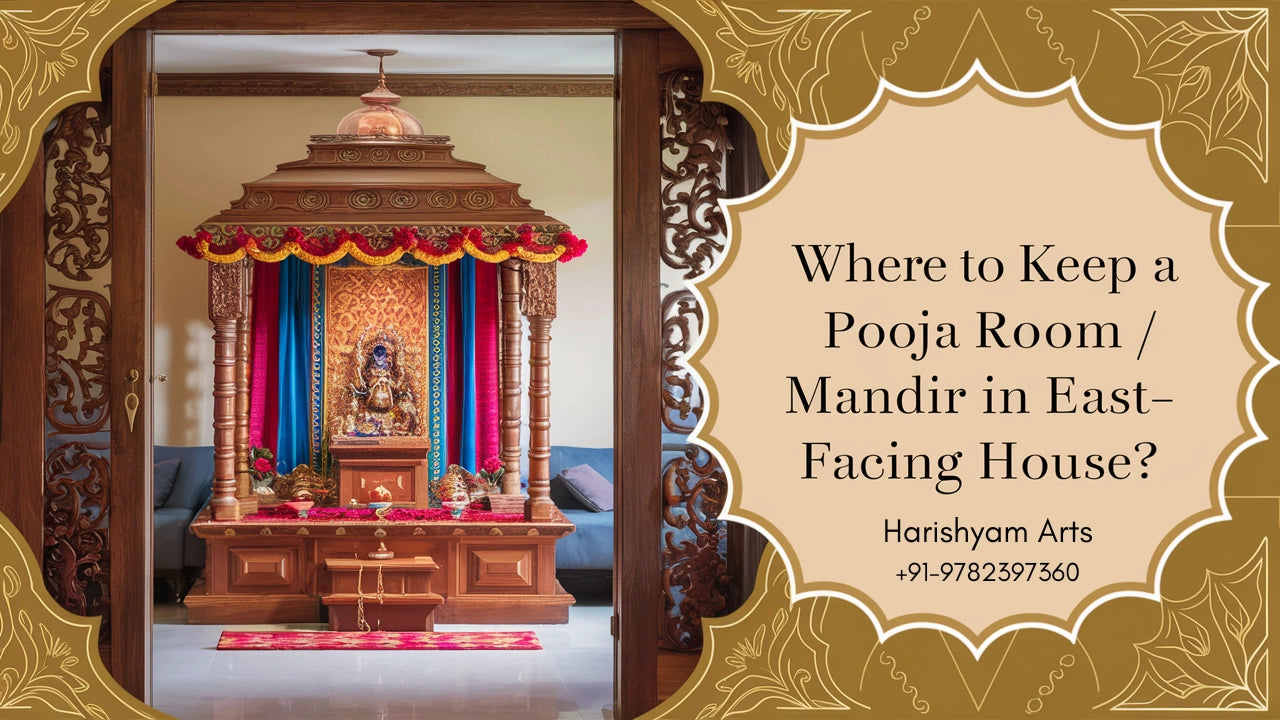
When building a house, there are many factors to consider, one being the direction and orientation of the house. Vastu Shastra is an ancient Indian science that focuses on creating harmony and balance in living spaces by optimizing energy flow. According to Vastu Shastra, each direction has its own significance and can greatly impact our lives. In this blog, we will discuss the importance of Vastu for pooja room in an east-facing house.
East-Facing House Vastu Plan
In Vastu Shastra, the east direction is considered very auspicious as it is associated with the sunrise and new beginnings. When constructing a house facing east, it is believed that positive energy from the sun enters through the windows into the house, bringing good luck and prosperity. However, to fully harness this energy, it is important to have a well-planned Vastu for an east-facing house.
Vastu For Pooja Room in East Facing House
Pooja room or prayer room holds a special place in every Indian household. It is a sacred space where we connect with our spirituality and offer prayers to the divine. According to Vastu Shastra, the pooja room should be located in the northeast corner of the house as it is considered highly auspicious and brings positive energy into the house. However, in an east-facing house, the ideal location for a pooja room would be either in the northeast or southeast corner.
East Facing House Vastu Plan with Pooja Room
The east direction is associated with the element of light and symbolizes new beginnings. Placing the puja room in the east-facing house requires attention to specific details to ensure the flow of positive energy.
- Entrance Point of the House:
The ideal placement for the puja room is near the entrance of the house, typically in the northeast corner. This location allows the morning sunlight to gently illuminate the space, creating a serene atmosphere for your prayers.
- Avoiding the Bedroom:
Avoid positioning the puja room in the bedroom. Bedrooms carry energy related to rest and relaxation, while the puja room is meant for spiritual activities. Combining these energies may disrupt the intended purpose of both spaces.
- Ground Floor Advantage:
If your east-facing house has multiple floors, consider placing the puja room on the ground floor. This ensures accessibility for all family members and guests without disturbing private spaces.
- East-Corner Alignment:
Align the puja room in such a way that you face east while praying. This alignment resonates with the rising sun, infusing the room with positive vibrations.
- Minimal Clutter:
Keep the puja room clutter-free and organized. A tidy space enhances the spiritual experience and allows energy to flow freely.
- Natural Elements:
Incorporate natural elements like fresh flowers, indoor plants, and a small water feature to amplify the positive energy in the puja room.
- Sacred Geometry and Symbols:
Adorn the room with sacred symbols and geometrical patterns that resonate with your beliefs. These symbols can enhance the spiritual energy within the space.
- Favorable Colors:
Choose calming and soothing colors for the puja room's decor. Light shades of blue, white, or pastels create an ambiance of serenity.
- Materials and Furnishings:
Opt for wooden furniture and natural fabrics for furnishings. These materials exude warmth and grounding energy.
- Personal Connection:
Infuse the room with items that hold personal significance—a family heirloom, religious artifacts, or a cherished idol.
- Proximity to Kitchen:
Avoid placing the puja room near the kitchen or bathroom, as these spaces have conflicting energies. Negative energy from these areas can counteract the positive vibes of the puja room.
- Balanced Energy:
Maintain a balance between simplicity and aesthetics. The puja room should be visually pleasing while also fostering spiritual connectedness.
- Ventilation and Lighting:
Ensure proper ventilation and ample natural lighting in the puja room. Fresh air and sunlight promote positivity.
- Privacy and Tranquility:
Position the puja room in a quiet and private area of the house. This ensures a peaceful environment for meditation and prayer.
- Regular Cleansing:
Frequently cleanse and purify the puja room to remove stagnant energy. Lighting incense or using natural cleansing agents can help.
- Vastu and Feng Shui Considerations:
For those following Vastu Shastra or Feng Shui principles, consult with experts to fine-tune the placement of the puja room.
- Respecting Tradition:
Respect your family's traditions and beliefs when arranging the puja room. A personal touch adds emotional significance to the space.
- Family Participation:
Involve your family in setting up the puja room. Their input and involvement can make the space more inclusive and harmonious.
- Regular Maintenance:
Keep the puja room well-maintained and update its decor periodically. A dynamic space encourages ongoing spiritual practice.
- Intention Setting:
Before finalizing the placement, set a clear intention for the puja room's purpose. Your intention can guide the energy within the space.
Pooja Mandir in East Facing House: Vastu Benefits
Having a pooja temple at home in an east-facing house can bring numerous benefits, some of which are:
- The northeast corner is considered the most auspicious and peaceful direction for a pooja room, promoting harmony and positivity in the household.
- It is believed that offering prayers facing east brings success, prosperity, and abundance into one's life.
- With proper placement of idols and images as per Vastu guidelines, it can enhance the spiritual energy of the pooja room, creating a serene atmosphere.
- A well-placed pooja room can also help in maintaining good health and overall well-being of the family members.
FAQs about Placing a Puja Room in an East-Facing House
Q.1 Can I place the puja room in any direction other than the east-facing one?
Ans: Absolutely. While the east direction is highly recommended, you can adapt the placement based on your home's layout. Just ensure the room maintains positive energy flow.
Q.2 How can I create a peaceful ambiance in the puja room?
Ans: Incorporate soft lighting, calming colors, and serene decor. Play gentle instrumental music during prayers to enhance the tranquility.
Q.3 Is it essential to consult a professional for setting up the puja room?
Ans: Consulting a Vastu or Feng Shui expert can provide valuable insights, but it's not mandatory. Trust your intuition and beliefs when arranging the space.
Q.4 What should I do if I have limited space for a puja room?
Ans: Even a small corner can be transformed into a sacred space. Use creative shelving, wall-mounted altars, or compact tables to make the most of the space you have.
Q.5 Can I personalize the puja room according to my deity preference?
Ans: Absolutely. Your puja room should resonate with your beliefs. Customize it with idols, symbols, and decor that hold personal significance. At Harishyam Arts, we offer a variety of hand-crafted wooden pooja mandirs that can enhance the spiritual energy of your puja room. Remember to always approach setting up the puja room with reverence and respect, and it will surely become a sacred space for you and your family.
Q.6 How can I maintain the positive energy in the puja room?
Ans: Regularly dust and clean the room. Burn camphor or sage to purify the air. Engage in daily prayers and meditation to infuse positive energy.
Conclusion: Puja Room Vastu for East Facing House
In conclusion, having a well-placed and maintained puja room in an east-facing house can bring numerous benefits and enhance the spiritual energy of the household. Remember to keep it clutter-free, incorporate natural elements, and personalize it according to your beliefs.
With these tips and guidelines, you can create a serene and harmonious space for prayer and meditation. Always remember to approach setting up the puja room with reverence and respect, and it will surely become a sacred space for you and your family.
We hope this guide has been helpful in understanding the significance of Vastu for the puja room in an east-facing house. May your spiritual journey be filled with positivity, peace, and abundance.

Lakshay Sharma
I’m Lakshay Sharma, a writer with a deep passion for Hindu mythology, Vastu Shastra, and home interiors. I enjoy exploring the rich traditions of Hindu gods and goddesses, sharing insights into Vastu principles, and offering guidance on creating sacred spaces like Puja Mandirs. Through my writing, I aim to inspire harmony and spiritual well-being, blending traditional knowledge with modern perspectives.
Harishyam Arts | Jaipur
Related Blogs

Smoke, Oil, and Incense: A 5-Year Maintenance Guide for Keeping Corian Mandirs Pristine White
Lakshay Sharma | October 08, 2026
A Corian mandir brings a clean, contemporary look to a home prayer space. Its ...
Read More...
Alkaline Water & Natural Minerals: The Wellness Benefits of Storing Water in Habur Stone
Lakshay Sharma | October 08, 2026
Water storage has been an important part of Indian household traditions for ce...
Read More...
Wall-Mounted Wooden Reliefs & Panels: Creating Dramatic Focal Walls
Lakshay Sharma | October 08, 2026
A well-designed wall can completely change the character of a room. While pain...
Read More...
Sacred Lighting Schemes: Layering Ambient, Accent, and Focal Light in Your Pooja Corner
Lakshay Sharma | October 08, 2026
A pooja corner is more than a designated space for prayer. It is a peaceful pa...
Read More...
Sagwan (Teak) vs. Sheesham vs. Mango Wood: Which Timber Belongs in Your Sacred Mandir?
Lakshay Sharma | October 07, 2026
A sacred mandir is more than a piece of furniture. It is a dedicated space for...
Read More...
Panchdhatu vs. Brass: Understanding Sacred Metal Alloys for Home Temples
Lakshay Sharma | October 06, 2026
Choosing a sacred metal idol for a home temple involves more than selecting a ...
Read More...
Combining Warm Teakwood and Pure White Corian for the Ultimate Dual-Tone Mandir
Lakshay Sharma | October 05, 2026
A home mandir is a deeply meaningful space where spirituality, tradition, and ...
Read More...
Solid Brass vs. Resin Replicas: How to Spot Genuine Sand-Cast Metal Handicrafts
Lakshay Sharma | October 04, 2026
Traditional Indian handicrafts are admired for their craftsmanship, heritage, ...
Read More...
Engineering & Weight Safety: How to Safely Install a Ceiling-Hung Wooden Jhula
Lakshay Sharma | October 04, 2026
A ceiling-hung wooden jhula, or traditional indoor swing, can become a beautif...
Read More...
The Chemistry of Shine: Safe Ways to Clean Brass Idols Without Damaging Their Antique Patina
Lakshay Sharma | October 03, 2026
Brass idols have a distinctive beauty that comes from their warm golden tones,...
Read More...
Marble Care Through the Seasons: How to Protect Idols During Abhishekam and Festivals
Lakshay Sharma | October 01, 2026
Marble idols are admired for their purity, elegance, and timeless beauty. Whet...
Read More...
The Beauty of Brass Chains: Choosing Antique Brass Figures and Heavy-Duty Links for Wooden Jhula
Lakshay Sharma | October 01, 2026
A traditional wooden jhula is more than a piece of furniture. It is a beautifu...
Read More...
The Ergonomics of Prayer: Designing Mandirs for Sitting vs. Standing Worship
Lakshay Sharma | September 30, 2026
A home mandir is more than a decorative corner. It is a dedicated space for pr...
Read More...
Light and Shadow: How Architectural Lighting Transforms Marble Idols
Lakshay Sharma | September 28, 2026
Marble idols have a timeless beauty that comes from their material, craftsmans...
Read More...
Coffee Table Artifacts: Transforming Minimalist Living Rooms with Handcrafted Showpieces
Lakshay Sharma | September 26, 2026
Minimalist living rooms are celebrated for their clean lines, uncluttered spac...
Read More...
The Open-Concept Mandir: Using Marble Jali Screens to Create Sacred Boundaries Without Walls
Lakshay Sharma | September 25, 2026
Modern homes increasingly favor open floor plans, spacious interiors, and flex...
Read More...
Pietra Dura in the Temple: The Timeless Art of Inlaying Semi-Precious Stones into Marble Mandir Walls
Lakshay Sharma | September 24, 2026
A beautifully crafted marble mandir is more than a place of worship. It can al...
Read More...
Fire Safety and Smoke Management in Indoor Home Temples
Lakshay Sharma | September 22, 2026
A home temple, or puja mandir, is a peaceful and spi...
Read More...
The Royal Living Room: How to Style a Grand Hand-Carved Sofa Set with Antique Finishes
Lakshay Sharma | September 22, 2026
A living room is more than just a place to sit. It is often the heart of a hom...
Read More...
Kadam Wood vs. Sandalwood vs. Teak: Choosing the Right Timber for Carved Statues
Lakshay Sharma | September 20, 2026
Wooden statues have a timeless beauty. From traditional Indian deities to deco...
Read More...
Water, Chaas, and Lassi: How Habur Stone Vessels Naturally Cool and Mineralize Drinks
Lakshay Sharma | September 18, 2026
In Rajasthan, where summers can be intense and temperatures can rise dramatica...
Read More...
Hallway, Living Room, or Bedroom? Finding the Right Spot for Your Mandir When You Don't Have a Dedicated Pooja Room
Lakshay Sharma | September 16, 2026
Hallway, Living Room, or Bedroom? Finding the Right Spot for Your Mandir Read More...

Myth vs. Reality: Debunking Common Taboos and Rules During Pitru Paksha
Lakshay Sharma | September 14, 2026
Pitru Paksha is one of the most meaningful periods in the Hindu calendar, trad...
Read More...
What is Sarva Pitru Amavasya (Mahalaya)? Significance for Forgotten Ancestors
Lakshay Sharma | September 14, 2026
Sarva Pitru Amavasya, also known as Mahalaya Amavasy...
Read More...
Step-by-Step Guide to Performing Tarpan, Pind Daan, and Anna Daan at Home
Lakshay Sharma | September 14, 2026
In Hindu tradition, remembering and honoring our ancestors is considered an im...
Read More...
Beyond Rituals: The True Scientific and Spiritual Significance of Honoring Ancestors
Lakshay Sharma | September 14, 2026
In many Indian households, remembering and honoring ancestors is a deeply root...
Read More...
Understanding Pitru Paksha 2026: Complete Shradh Tithi Calendar and Key Dates
Lakshay Sharma | September 14, 2026
Pitru Paksha is one of the most important periods in the Hindu calendar for re...
Read More...
Black Bheslana vs. White Makrana: Choosing the Right Marble for Your Deity & Vastu
Lakshay Sharma | September 14, 2026
Choosing the right marble for a deity statue is more than a matter of colour a...
Read More...
The Statement Foyer: How to Style Entryway Consoles with Brass, Marble, and Wooden Handicrafts
Lakshay Sharma | September 12, 2026
The foyer is the first glimpse guests receive of your home. It creates an imme...
Read More...
Long Weekend Planner: Maximizing Holidays Around Diwali 2026
Lakshay Sharma | September 11, 2026
Diwali is one of the most awaited festivals in India—a time of lights, celebra...
Read More...
Preparing Your Home for Diwali 2026: Deep Cleaning and Vastu Tips
Lakshay Sharma | September 11, 2026
Diwali is more than just a festival of lights. It is a time to welcome happine...
Read More...
Bhai Dooj 2026: Auspicious Timings, Tilak Muhurat & Gift Ideas
Lakshay Sharma | September 11, 2026
Bhai Dooj is one of the most beautiful Hindu festivals celebrating the special...
Read More...
Govardhan Puja and Annakut 2026: Traditions, Date, and Recipe Ideas
Lakshay Sharma | September 11, 2026
Govardhan Puja is one of the most beautiful festivals celebrated during the Di...
Read More...
Choti Diwali & Naraka Chaturdashi 2026: History, Abhyang Snan & Significance
Lakshay Sharma | September 11, 2026
Diwali is one of the most auspicious and widely celebrated festivals in India. The festival of...
Read More...
Dhanteras 2026 Shopping Guide: What to Buy (and Avoid) for Good Luck
Lakshay Sharma | September 11, 2026
Dhanteras is one of the most auspicious days of the Diwali festival and is tra...
Read More...
Complete Step-by-Step Lakshmi-Ganesha Puja Vidhi for Diwali 2026
Lakshay Sharma | September 11, 2026
Diwali is one of the most auspicious and joyous festivals celebrated across In...
Read More...
Lakshmi Puja Muhurat 2026: City-Wise Timings and Auspicious Windows
Lakshay Sharma | September 11, 2026
Diwali is one of the most celebrated festivals in India, symbolizing the victo...
Read More...
The 5-Day Diwali Festival 2026: Day-by-Day Significance and Rituals
Lakshay Sharma | September 11, 2026
Diwali, also known as the Festival of Lights, is one...
Read More...
Diwali 2026 Complete Date Guide: Calendar, Tithis & Festival Schedule
Lakshay Sharma | September 11, 2026
Diwali 2026: Complete Date and Festival Guide
...
Read More...
Navratri Havan at Home: Essential Samagri List, Vidhi, and Clean-Up Tips
Lakshay Sharma | September 10, 2026
Navratri is one of the most auspicious Hindu festivals dedicated to the worshi...
Read More...
Kanya Pujan Guide: Significance, Prasad Menu Ideas, and Traditional Setup
Lakshay Sharma | September 10, 2026
Kanya Pujan is one of the most cherished traditions observed during

Bold Interior Trends: Styling Dark Wood, Charcoal Accents, and Luminous Metals
Lakshay Sharma | September 10, 2026
Interior design is moving beyond light, neutral palettes and predictable décor...
Read More...
Investment Pieces for Your Home: Why Hand-Carved Wooden Mandirs & Stone Sculptures Last Generations
Lakshay Sharma | September 10, 2026
A beautiful home is more than just a collection of furniture and décor. The mo...
Read More...
DIY Navratri Decorations: Creative Craft Ideas to Involve Kids and Family
Lakshay Sharma | September 10, 2026
Navratri is a festival of devotion, celebration, creativity, and togetherness....
Read More...
Festive Color Palettes: Warm Earthy Tones and Golden Accents to Transform Your Living Room
Lakshay Sharma | September 10, 2026
Festivals are the perfect time to refresh your home and create a warm, welcomi...
Read More...
Pooja Room Lighting Ideas: How to Use Backlighting, Brass Lamps, and Diyas for Festive Ambiance
Lakshay Sharma | September 10, 2026
The pooja room is one of the most peaceful and sacred spaces in an Indian home...
Read More...
Minimalist Pooja Room Designs: How to Create a Serene Meditation Space
Lakshay Sharma | September 10, 2026
A pooja room is more than just a dedicated corner for prayer. It is a place wh...
Read More...
How to Setup Ghatasthapana at Home: Step-by-Step Kalash Sthapana Vidhi & Decor Ideas
Lakshay Sharma | September 10, 2026
Ghatasthapana, also known as Kalash Sthapana, is one...
Read More...
Matte, PU, or Traditional Polish: Choosing the Right Protective Finish for Teak Mandirs
Lakshay Sharma | September 10, 2026
A beautifully handcrafted teak wood mandir is more than a place of worship. It...
Read More...
Aaj Ka Panchang 31 October 2026: Tithi, Nakshatra, Rahu Kaal, Shubh Muhurat & Choghadiya
Lakshay Sharma | September 09, 2026
Aaj Ka Panchang — Saturday, 31 October 2026
Welc...
Read More...


