
Harishyam Arts Blog
Health Benefits of Kansa Bronze Cookware: Backed by Tradition and Science
By Lakshay Sharma | On 06 August, 2025 | Views
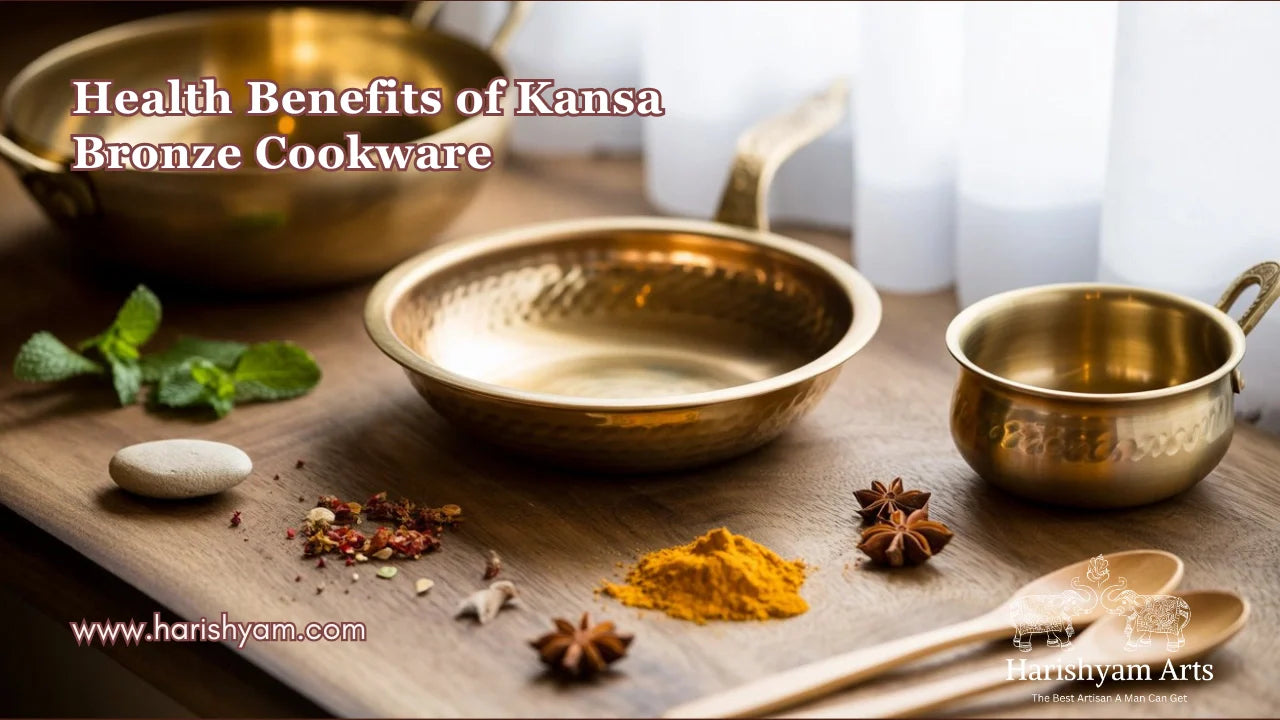
The resurgence of traditional cookware in modern kitchens isn't just about nostalgia—it's about rediscovering the profound wisdom embedded in ancient practices. Kansa bronze cookware, revered for millennia in Ayurvedic tradition, offers a compelling blend of time-tested benefits and emerging scientific validation that positions it as an exceptional choice for health-conscious cooking.
Understanding Kansa Bronze: The Perfect Alloy
Kansa, often called bell metal or bronze, is a precisely crafted alloy composed of approximately 78% copper and 22% tin. This specific composition isn't arbitrary—it represents centuries of metallurgical refinement that creates an ideal balance of durability, safety, and health benefits. Unlike pure copper, which can react adversely with acidic foods, the tin content in Kansa makes it far less reactive and safe for all types of cuisine.Modern manufacturers ensure that authentic Kansa cookware is completely free from harmful additives like lead, chromium, or other toxic substances. The alloy is created by heating copper and tin together at temperatures reaching 700°C, followed by careful crafting using traditional techniques that have been passed down through generations.
The Ayurvedic Foundation: Balancing Body Energy
Ayurveda recognizes Kansa as a 'sattvic' metal, promoting purity, clarity, and overall well-being. According to ancient texts like the Rasratna Samucchaya and Ayurveda Prakasha, metals used in cookware can significantly impact our health by influencing the three doshas—Vata (air and ether), Pitta (fire and water), and Kapha (earth and water).Traditional Ayurvedic principles suggest that eating from alkalinizing metals like Kansa helps balance these fundamental energies within the body. While the concept of doshas represents traditional understanding rather than scientifically validated physiology, the practical benefits observed by generations of users have created a foundation for modern scientific investigation.
Scientific Validation of Health Benefits
Natural Antimicrobial Properties
One of the most scientifically supported benefits of Kansa cookware stems from its copper content. Research published in multiple peer-reviewed journals confirms that copper possesses potent antimicrobial properties. Studies demonstrate that copper surfaces can eliminate 99.9% of bacteria within 2 hours, including dangerous pathogens like MRSA, E. coli, and various viruses.The antimicrobial mechanism works through multiple pathways: copper generates reactive oxygen species (ROS) that damage bacterial cell membranes, while copper ions disrupt RNA and cellular processes. This natural bacteria-fighting ability extends to Kansa cookware, helping maintain food safety without chemical additives.
Enhanced Digestive Health
Scientific understanding of pH balance supports traditional claims about Kansa's digestive benefits. When acidic foods come into contact with Kansa cookware, the alkaline nature of the metal slightly neutralizes acidity, helping balance stomach pH levels. This alkalizing effect can reduce acid reflux, improve nutrient absorption, and promote healthier gut flora.
Research indicates that maintaining proper pH balance in the digestive system is crucial for optimal nutrient absorption and overall digestive health. The trace minerals released from Kansa cookware—primarily copper and tin—support digestive enzyme production and enhance metabolic processes.
Trace Mineral Supplementation
Copper is an essential trace mineral required for numerous physiological functions, including red blood cell formation, collagen synthesis, immune system support, and cardiovascular health. The recommended daily allowance for adults is 900 micrograms, and copper deficiency can lead to anemia, bone problems, and compromised immune function.
Kansa cookware provides a natural, gentle source of bioavailable copper through normal cooking processes. Unlike synthetic supplements, the trace amounts absorbed from cookware are easily regulated by the body and don't pose risks of overconsumption when used normally.
Cardiovascular and Immune System Support
Scientific research links adequate copper intake with improved cardiovascular health. Studies suggest that copper helps maintain blood vessel elasticity, supports healthy cholesterol levels, and may reduce cardiovascular disease risk. The immune-supporting properties of copper are well-documented, with research showing its essential role in white blood cell function and overall immune response.
Anti-inflammatory Effects
Traditional claims about Kansa's anti-inflammatory properties align with scientific understanding of copper's biological roles. Research indicates that copper plays important roles in collagen synthesis and tissue repair. While more specific studies on Kansa cookware's anti-inflammatory effects are needed, the trace mineral content supports the body's natural healing and recovery processes.
Practical Health Advantages
Chemical-Free Cooking Experience
Unlike modern non-stick cookware that may release harmful compounds at high temperatures, Kansa provides a completely natural, chemical-free cooking surface. The alloy remains stable under normal cooking conditions and doesn't leach toxic substances into food, making it ideal for those seeking to minimize exposure to synthetic chemicals.
Superior Heat Distribution and Nutrient Preservation
Bronze's excellent thermal conductivity ensures even heat distribution, reducing hot spots that can destroy heat-sensitive nutrients. Studies suggest that cooking in quality bronze utensils preserves approximately 97% of food's micronutrients, significantly higher than many modern materials.
Enhanced Flavor and Food Quality
The unique properties of Kansa subtly enhance food flavors while maintaining nutritional integrity. The even heating and natural mineral content contribute to improved taste without artificial additives or flavor enhancers.
Safety Considerations and Quality Standards
Modern Kansa cookware from reputable manufacturers undergoes rigorous quality testing to ensure safety. Leading brands provide NABL (National Accreditation Board for Testing and Calibration Laboratories) certification and RoHS compliance, guaranteeing freedom from lead, chromium, and other harmful substances.
When purchasing Kansa cookware, consumers should verify certifications and choose products from established manufacturers who follow traditional composition ratios and modern safety standards. Proper care and maintenance ensure longevity and continued safety.
Environmental and Sustainability Benefits
Beyond health advantages, Kansa cookware offers significant environmental benefits. Bronze is completely recyclable, durable enough to last generations, and requires no chemical coatings or treatments. The manufacturing process, particularly when using traditional handcrafting methods, has a much lower environmental impact compared to modern cookware production.
Addressing Concerns and Limitations
While Kansa cookware offers numerous benefits, users should be aware of certain considerations. The cookware requires more maintenance than stainless steel, may develop a natural patina over time, and can be heavier than modern alternatives. However, proper care and understanding of these characteristics ensure optimal performance and longevity.
Some individuals may initially taste subtle metallic notes when transitioning to Kansa cookware, but this typically diminishes as the cookware is seasoned through regular use.
Conclusion: Bridging Ancient Wisdom and Modern Science
Kansa bronze cookware represents a remarkable convergence of traditional knowledge and scientific validation. While ancient Ayurvedic practitioners may not have understood the precise mechanisms of antimicrobial action or trace mineral absorption, their empirical observations about health benefits prove remarkably accurate when examined through modern scientific methods.The growing body of research supporting copper's health benefits, combined with centuries of safe traditional use, makes Kansa cookware an excellent choice for health-conscious consumers seeking natural, effective alternatives to modern synthetic options. As we continue to understand the intricate relationships between our cooking materials and health outcomes, Kansa bronze cookware stands as a testament to the enduring wisdom of traditional practices validated by contemporary science.
Frequently Asked Questions
Q1. Is Kansa bronze cookware safe for daily use?
Ans: Yes, when sourced from reputable manufacturers like Harishyam Arts, Kansa cookware is completely safe for daily use. Modern Kansa is manufactured to be lead-free and chromium-free, with certifications like NABL and RoHS ensuring safety standards. The tin content makes it much less reactive than pure copper, allowing safe use with all types of food, including acidic dishes.
Q2. How does Kansa cookware provide health benefits compared to stainless steel or non-stick options?
Ans: Kansa offers several advantages: natural antimicrobial properties that kill harmful bacteria, trace mineral supplementation supporting immune and cardiovascular health, alkalizing effects that aid digestion, and chemical-free cooking without harmful coatings that may leach into food. It also preserves up to 97% of food nutrients compared to other materials.
Q3. What scientific evidence supports the traditional claims about Kansa's health benefits?
Ans: Multiple peer-reviewed studies validate key benefits: copper's antimicrobial properties eliminate 99.9% of bacteria within hours, trace copper intake supports cardiovascular health and immune function, and the alkalizing properties help balance digestive pH levels. Research confirms copper's essential role in collagen synthesis, red blood cell formation, and tissue repair.
Q4. How should I care for and maintain Kansa cookware to ensure safety and longevity?
Ans: Clean Kansa cookware with mild soap and warm water, avoiding harsh abrasives or chemicals. Dry immediately after washing to prevent water spots. The cookware may develop a natural patina over time, which is normal and safe. Avoid storing acidic foods in Kansa for extended periods, and season the cookware before first use to create a protective layer.
Q5. Can people with copper sensitivity or Wilson's disease use Kansa cookware?
Ans: Individuals with Wilson's disease or known copper sensitivity should consult their healthcare provider before using any copper-containing cookware, including Kansa. While the trace amounts typically absorbed from cookware are minimal, those with copper metabolism disorders require medical supervision for all copper exposure sources.

Lakshay Sharma
I’m Lakshay Sharma, a writer with a deep passion for Hindu mythology, Vastu Shastra, and home interiors. I enjoy exploring the rich traditions of Hindu gods and goddesses, sharing insights into Vastu principles, and offering guidance on creating sacred spaces like Puja Mandirs. Through my writing, I aim to inspire harmony and spiritual well-being, blending traditional knowledge with modern perspectives.
Harishyam Arts | Jaipur
Related Blogs

Bhagavad Gita Chapter 3 Verse 27 Meaning in Hindi & English
Lakshay Sharma | June 10, 2026
Bhagavad Gita Chapter 3 Verse 27 presents one of the most profound philosophic...
Read More...
Bhagavad Gita Chapter 3 Verse 26 Meaning in Hindi And English
Lakshay Sharma | June 10, 2026
Bhagavad Gita Chapter 3 Verse 26 contains a profound lesson on leadership, tea...
Read More...
Bhagavad Gita Chapter 3 Verse 41 Meaning in Hindi and English
Lakshay Sharma | June 10, 2026
Bhagavad Gita Chapter 3 Verse 41 is Lord Krishna's practical instruction for o...
Read More...
Bhagavad Gita Chapter 3 Verse 40 Meaning in Hindi and English
Lakshay Sharma | June 10, 2026
Bhagavad Gita Chapter 3 Verse 40 continues Lord Krishna's explanation of desir...
Read More...
Bhagavad Gita Chapter 3 Verse 39 Meaning in Hindi and English
Lakshay Sharma | June 10, 2026
Bhagavad Gita Chapter 3 Verse 39 continues Lord Krishna's explanation about de...
Read More...
Bhagavad Gita Chapter 3 Verse 38 Meaning in Hindi and English
Lakshay Sharma | June 10, 2026
Bhagavad Gita Chapter 3 Verse 38 continues Lord Krishna's explanation about de...
Read More...
Bhagavad Gita Chapter 3 Verse 37 Meaning in Hindi and English
Lakshay Sharma | June 10, 2026
Bhagavad Gita Chapter 3 Verse 37 contains Lord Krishna's direct answer to Arju...
Read More...
Bhagavad Gita Chapter 3 Verse 36 Meaning in Hindi and English
Lakshay Sharma | June 10, 2026
Bhagavad Gita Chapter 3 Verse 36 marks the beginning of one of the most import...
Read More...
Bhagavad Gita Chapter 3 Verse 35 Meaning in Hindi and English
Lakshay Sharma | June 10, 2026
Bhagavad Gita Chapter 3 Verse 35 is one of the most famous verses in the entir...
Read More...
Bhagavad Gita Chapter 3 Verse 34 Meaning in Hindi and English
Lakshay Sharma | June 10, 2026
Bhagavad Gita Chapter 3 Verse 34 is a profound teaching on contro...
Read More...
Bhagavad Gita Chapter 3 Verse 25 Meaning in Hindi and English
Lakshay Sharma | June 10, 2026
Bhagavad Gita Chapter 3 Verse 25 is important because:

Bhagavad Gita Chapter 3 Verse 23 Meaning in Hindi and English
Lakshay Sharma | June 10, 2026
Bhagavad Gita Chapter 3 Verse 23 continues Lord Krishna's explanation of why H...
Read More...
Bhagavad Gita Chapter 3 Verse 22 Meaning in Hindi and English
Lakshay Sharma | June 10, 2026
Bhagavad Gita Chapter 3 Verse 22 is a profound teaching where Lord Krishna spe...
Read More...
Bhagavad Gita Chapter 3 Verse 21 Meaning in Hindi and English
Lakshay Sharma | June 10, 2026
Bhagavad Gita Chapter 3 Verse 21 is one of the most influential teachings on <...
Read More...
Bhagavad Gita Chapter 3 Verse 20 Meaning in Hindi and English
Lakshay Sharma | June 10, 2026
Bhagavad Gita Chapter 3 Verse 20 is a powerful teaching on Karma ...
Read More...
Bhagavad Gita Chapter 3 Verse 19 Meaning in Hindi and English
Lakshay Sharma | June 10, 2026
Bhagavad Gita Chapter 3 Verse 19 is one of the most important teachings on Read More...

The Hidden Meaning Behind the Eyes, Mudras, and Expressions of Marble Idols
Lakshay Sharma | June 10, 2026
Marble idols are not merely decorative sculptures; they are living symbols of ...
Read More...
Bhagavad Gita Chapter 3 Verse 16 Meaning in Hindi and English
Lakshay Sharma | June 09, 2026
Bhagavad Gita Chapter 3 Verse 16 continues Lord Krishna's explanation of the d...
Read More...
Bhagavad Gita Chapter 3 Verse 15 Meaning in Hindi and English
Lakshay Sharma | June 09, 2026
Bhagavad Gita Chapter 3 Verse 15 deepens the understanding of the sacred cycle...
Read More...
Bhagavad Gita Chapter 3 Verse 14 Meaning in Hindi and English
Lakshay Sharma | June 09, 2026
Bhagavad Gita Chapter 3 Verse 14 explains the sacred cycle that sustains life ...
Read More...
Bhagavad Gita Chapter 3 Verse 11 Meaning in Hindi and English
Lakshay Sharma | June 09, 2026
Bhagavad Gita Chapter 3 Verse 11 highlights the principle of mutual cooperatio...
Read More...
Bhagavad Gita Chapter 3 Verse 9 Meaning in Hindi & English
Lakshay Sharma | June 09, 2026
Bhagavad Gita Chapter 3 Verse 9 introduces one of the most important principle...
Read More...
Bhagavad Gita Chapter 3 Verse 7 Meaning in Hindi & English
Lakshay Sharma | June 09, 2026
Bhagavad Gita Chapter 3 Verse 7 presents Lord Krishna's solution to the proble...
Read More...
Bhagavad Gita Chapter 3 Verse 5 Meaning in Hindi & English
Lakshay Sharma | June 09, 2026
Bhagavad Gita Chapter 3 Verse 5 continues Lord Krishna's explanation of Karma ...
Read More...
Bhagavad Gita Chapter 3 Verse 4 Meaning in Hindi & English
Lakshay Sharma | June 09, 2026
Bhagavad Gita Chapter 3 Verse 4 continues Lord Krishna's explanation of Karma ...
Read More...
Bhagavad Gita Chapter 3 Verse 3 Meaning in Hindi & English
Lakshay Sharma | June 09, 2026
Bhagavad Gita Chapter 3 Verse 3 is Lord Krishna's direct response to Arjuna's ...
Read More...
Bhagavad Gita Chapter 3 Verse 2 Meaning in Hindi & English
Lakshay Sharma | June 09, 2026
Bhagavad Gita Chapter 3 Verse 2 continues Arjuna's confusion regarding the tea...
Read More...
Bhagavad Gita Chapter 3 Verse 1 Meaning in Hindi & English
Lakshay Sharma | June 09, 2026
Bhagavad Gita Chapter 3 Verse 1 marks the beginning of Karma Yoga...
Read More...
The Spiritual Warmth and Natural Energy of Handcrafted Wooden Statues
Lakshay Sharma | June 09, 2026
In a world filled with machine-made décor and mass-produced art, handcrafted w...
Read More...
Bhagavad Gita Chapter 3 Verse 18 Meaning in Hindi and English
Lakshay Sharma | June 08, 2026
Bhagavad Gita Chapter 3 Verse 18 continues Lord Krishna's description of the s...
Read More...
Bhagavad Gita Chapter 3 Verse 17 Meaning in Hindi and English
Lakshay Sharma | June 08, 2026
Bhagavad Gita Chapter 3 Verse 17 marks an important transition in Lord Krishna...
Read More...
Bhagavad Gita Chapter 3 Verse 12 Meaning in Hindi and English
Lakshay Sharma | June 08, 2026
Bhagavad Gita Chapter 3 Verse 12 continues Lord Krishna’s teaching on <...
Read More...
Bhagavad Gita Chapter 2 Verse 65 Meaning in Hindi and English
Lakshay Sharma | June 08, 2026
Bhagavad Gita Chapter 2 Verse 65 explains the profound benefits of attaining i...
Read More...
Bhagavad Gita Chapter 2 Verse 64 Meaning in Hindi and English
Lakshay Sharma | June 08, 2026
Bhagavad Gita Chapter 2 Verse 64 presents a powerful teaching on self-control,...
Read More...
Bhagavad Gita Chapter 3 Verse 10 Meaning in Hindi & English
Lakshay Sharma | June 08, 2026
Bhagavad Gita Chapter 3 Verse 10 continues Lord Krishna's teaching on <...
Read More...
Why Traditional Wooden Mandirs Are Still Preferred in Modern Homes
Lakshay Sharma | June 08, 2026
In today’s fast-paced world, modern homes are becoming more stylish, compact, ...
Read More...
The Symbolic Meaning of the Lotus in Hindu Tradition
Lakshay Sharma | June 08, 2026
The lotus flower holds a sacred and timeless place in Hindu tradition. Known f...
Read More...
Bhagavad Gita Chapter 2 Verse 23 Meaning in Hindi & English
Lakshay Sharma | June 08, 2026
As Lord Krishna continues to explain the eternal and indestructible nature of ...
Read More...
Bhagavad Gita Chapter 2 Verse 21 Meaning in Hindi & English
Lakshay Sharma | June 08, 2026
After revealing that the soul is unborn, eternal, and indestructible in the pr...
Read More...
The Greatest Philosophers and Thinkers of Ancient India
Lakshay Sharma | June 08, 2026
India has long been regarded as one of the world’s oldest centers of wisdom, s...
Read More...
Bhagavad Gita Chapter 2 Verse 22 Meaning in Hindi & English
Lakshay Sharma | June 08, 2026
Bhagavad Gita Chapter 2 Verse 22 contains one of the most famous and beautiful...
Read More...
Bhagavad Gita Chapter 2 Verse 20 Meaning in Hindi & English
Lakshay Sharma | June 08, 2026
Bhagavad Gita Chapter 2 Verse 20 is one of the most famous and profound verses...
Read More...
Bhagavad Gita Chapter 2 Verse 19 Meaning in Hindi & English
Lakshay Sharma | June 08, 2026
As Lord Krishna continues to reveal the eternal nature of the soul, He now add...
Read More...
Bhagavad Gita Chapter 2 Verse 18 Meaning in Hindi & English
Lakshay Sharma | June 08, 2026
After explaining the indestructible nature of the soul in the previous verse, ...
Read More...
Bhagavad Gita Chapter 2 Verse 16 Meaning in Hindi & English
Lakshay Sharma | June 08, 2026
As Lord Krishna continues to guide the grief-stricken Arjuna, He now introduce...
Read More...
Bhagavad Gita Chapter 3 Verse 8 Meaning in Hindi & English
Lakshay Sharma | June 08, 2026
Bhagavad Gita Chapter 3 Verse 8 is one of the most practical teachings in the ...
Read More...
Bhagavad Gita Chapter 2 Verse 56 Meaning in Hindi And English
Lakshay Sharma | June 08, 2026
In Bhagavad Gita Chapter 2 Verse 55, Lord Krishna explained that a person of steady wisdom (St...
Read More...
Bhagavad Gita Chapter 2 Verse 54 Meaning in Hindi And English
Lakshay Sharma | June 08, 2026
Bhagavad Gita Chapter 2 Verse 54 marks the beginning of one of the most important discussions ...
Read More...
Bhagavad Gita Chapter 2 Verse 30 Meaning in Hindi & English
Lakshay Sharma | June 08, 2026
Bhagavad Gita Chapter 2 Verse 30 serves as the conclusion of Lord Krishna's pr...
Read More...
Bhagavad Gita Chapter 2 Verse 17 Meaning in Hindi & English
Lakshay Sharma | June 08, 2026
After establishing the distinction between the eternal (Sat) and the temporary...
Read More...


