
Harishyam Arts Blog
How long does Marble Statues Last?
By Lakshay Sharma | On 06 October, 2025 | Views
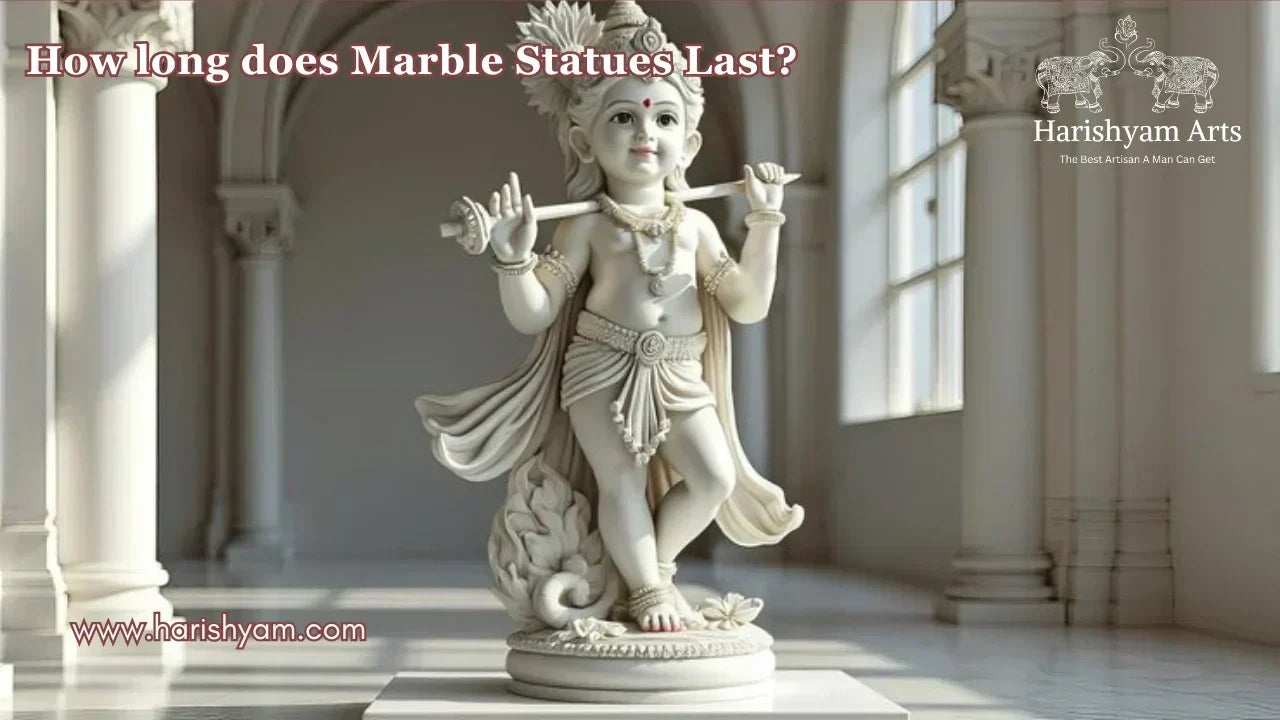
Marble statues can last for centuries, or even thousands of years, especially with proper care and favorable conditions. However, their longevity depends on several key factors, including environmental exposure, maintenance, and the quality of the marble itself.
Marble statues have been cherished for centuries, not just for their beauty, but also for their timeless durability.
From ancient temples to modern homes, marble statues from Harishyam Arts have adorned spaces with elegance and spiritual charm. Whether you are looking for marble idols, brass statues, or wooden statues, choosing the right material is essential for longevity. One common question many collectors and devotees ask is: how long does a marble murti last?
Factors Affecting the Lifespan of Marble Moortis
The longevity of a marble idols depends on several factors:
1. Type of Marble
Not all marble is created equal. High-quality marble, like Carrara or Makrana, is dense and less porous, which makes it more resistant to weathering and damage. Lower-quality marble may deteriorate faster over time.
2. Location and Exposure
-
Indoor statues: When kept indoors, away from sunlight, moisture, and pollution, marble statues can last hundreds of years with minimal care.
-
Outdoor statues: Exposure to rain, sunlight, and environmental pollutants can gradually erode the marble, shortening its lifespan. Proper sealing and occasional maintenance can extend its life.
3. Maintenance
Regular cleaning with soft cloths and mild cleaning agents prevents dust and dirt accumulation. Avoid harsh chemicals, which can damage the marble surface. Polishing and sealing can also help preserve the shine and structural integrity.
Complete Guide: How to Clean Marble Statue at Home
4. Craftsmanship
Well-carved statues with precise detailing not only look beautiful but also last longer. Poorly crafted statues are more prone to chipping or cracks over time.
Historical Perspective: Marble Through the Ages
Some of the world’s most famous marble statues, like Michelangelo’s David (over 500 years old) or the Taj Mahal’s marble carvings (over 350 years old), prove that with proper care, marble statues can last for centuries. Ancient Indian temples with marble deities still stand tall today, demonstrating the timeless quality of this natural stone.
How to Maximize the Life of Your Marble Statue
-
Keep it indoors if possible or in a shaded, protected outdoor area.
-
Dust regularly and avoid abrasive materials.
-
Apply a protective sealant every few years to prevent water damage.
-
Handle with care to avoid accidental chipping or cracks.
Marble vs Other Materials
-
Wooden statues: While beautiful, they are more prone to insect damage and humidity, lasting 50–100 years with care.
-
Brass statues: Highly durable, often lasting centuries, but require polishing to avoid tarnishing.
-
Marble statues: Offer a balance of elegance and longevity, potentially lasting hundreds of years if maintained properly.
Environmental Factors
-
Acid rain and pollution: Outdoor statues are vulnerable to acidic compounds in the air, such as sulfuric and nitric acid. When these mix with rain, they corrode the calcite in the marble, causing gradual surface erosion that can erase fine details over many years.
-
Weather and climate: Exposure to extreme weather, such as repeated freezing and thawing, can cause small cracks to expand over time. High humidity and persistent dampness also accelerate decay. Statues in warm, dry climates with low pollution tend to endure the longest.
-
Indoors vs. outdoors: Statues kept in a stable, controlled indoor environment—such as a museum—are protected from the elements and can last indefinitely
Historical Examples of Marble Statues
-
Michelangelo's David (1501–1504): This famous statue has lasted for centuries, but even with proper care, it has suffered some damage from pollution and acid rain, which has led to some details being eroded. It is now preserved in a museum to protect it.
-
Ancient Greek and Roman sculptures: Many ancient marble statues have survived for thousands of years, often due to their relocation to indoor museum settings
FAQs
Q1. Can marble statues withstand outdoor weather?
Ans: Yes, but prolonged exposure to rain, sunlight, and pollution may gradually affect the surface. Protective measures like sealing can help.
Q2. What types of marble do you use for statues?
Ans: Harishyam Arts uses high-quality marbles such as Makrana and Vietnam, known for their durability, fine texture, and natural shine—ensuring a long-lasting and elegant finish.
Q3. Where Can I Get a Custom Marble Statue?
Ans: You can get beautifully crafted custom marble statues from Harishyam Arts, a trusted name in marble artistry. They specialize in creating bespoke marble idols, temples, and sculptures tailored to your design preferences. Whether you need a divine idol for your home, temple, or gifting purpose, Harishyam Arts ensures premium quality, fine detailing, and nationwide delivery.
Q4. Can I buy a marble statue online from Harishyam Arts?
Ans: Yes, you can easily buy a marble statue online from Harishyam Arts. Their official website showcases a wide collection of handcrafted marble idols, home temples, and sculptures. Harishyam Arts offers secure online payment options, nationwide delivery, and safe packaging to ensure your statue reaches you in perfect condition.
Q5. How does marble compare to brass or wooden statues in terms of lifespan?
Ans: Marble statues generally have a longer lifespan compared to brass or wooden statues. Marble is a durable and weather-resistant material that retains its shine and beauty for decades with minimal maintenance. Brass can lose its luster over time and may require regular polishing to prevent tarnish, while wooden statues are prone to moisture damage, termites, and cracking.
Conclusion
Marble statues are not just decorative pieces; they are timeless treasures that can last for generations. With high-quality marble, proper care, and regular maintenance, your statue can retain its beauty and grandeur for centuries. Whether for spiritual purposes or aesthetic appeal, a marble statue is a long-term investment in art and culture.

Lakshay Sharma
I’m Lakshay Sharma, a writer with a deep passion for Hindu mythology, Vastu Shastra, and home interiors. I enjoy exploring the rich traditions of Hindu gods and goddesses, sharing insights into Vastu principles, and offering guidance on creating sacred spaces like Puja Mandirs. Through my writing, I aim to inspire harmony and spiritual well-being, blending traditional knowledge with modern perspectives.
Harishyam Arts | Jaipur
Related Blogs

Bhagavad Gita Chapter 3 Verse 27 Meaning in Hindi & English
Lakshay Sharma | June 10, 2026
Bhagavad Gita Chapter 3 Verse 27 presents one of the most profound philosophic...
Read More...
Bhagavad Gita Chapter 3 Verse 26 Meaning in Hindi And English
Lakshay Sharma | June 10, 2026
Bhagavad Gita Chapter 3 Verse 26 contains a profound lesson on leadership, tea...
Read More...
Bhagavad Gita Chapter 3 Verse 41 Meaning in Hindi and English
Lakshay Sharma | June 10, 2026
Bhagavad Gita Chapter 3 Verse 41 is Lord Krishna's practical instruction for o...
Read More...
Bhagavad Gita Chapter 3 Verse 40 Meaning in Hindi and English
Lakshay Sharma | June 10, 2026
Bhagavad Gita Chapter 3 Verse 40 continues Lord Krishna's explanation of desir...
Read More...
Bhagavad Gita Chapter 3 Verse 39 Meaning in Hindi and English
Lakshay Sharma | June 10, 2026
Bhagavad Gita Chapter 3 Verse 39 continues Lord Krishna's explanation about de...
Read More...
Bhagavad Gita Chapter 3 Verse 38 Meaning in Hindi and English
Lakshay Sharma | June 10, 2026
Bhagavad Gita Chapter 3 Verse 38 continues Lord Krishna's explanation about de...
Read More...
Bhagavad Gita Chapter 3 Verse 37 Meaning in Hindi and English
Lakshay Sharma | June 10, 2026
Bhagavad Gita Chapter 3 Verse 37 contains Lord Krishna's direct answer to Arju...
Read More...
Bhagavad Gita Chapter 3 Verse 36 Meaning in Hindi and English
Lakshay Sharma | June 10, 2026
Bhagavad Gita Chapter 3 Verse 36 marks the beginning of one of the most import...
Read More...
Bhagavad Gita Chapter 3 Verse 35 Meaning in Hindi and English
Lakshay Sharma | June 10, 2026
Bhagavad Gita Chapter 3 Verse 35 is one of the most famous verses in the entir...
Read More...
Bhagavad Gita Chapter 3 Verse 34 Meaning in Hindi and English
Lakshay Sharma | June 10, 2026
Bhagavad Gita Chapter 3 Verse 34 is a profound teaching on contro...
Read More...
Bhagavad Gita Chapter 3 Verse 25 Meaning in Hindi and English
Lakshay Sharma | June 10, 2026
Bhagavad Gita Chapter 3 Verse 25 is important because:

Bhagavad Gita Chapter 3 Verse 23 Meaning in Hindi and English
Lakshay Sharma | June 10, 2026
Bhagavad Gita Chapter 3 Verse 23 continues Lord Krishna's explanation of why H...
Read More...
Bhagavad Gita Chapter 3 Verse 22 Meaning in Hindi and English
Lakshay Sharma | June 10, 2026
Bhagavad Gita Chapter 3 Verse 22 is a profound teaching where Lord Krishna spe...
Read More...
Bhagavad Gita Chapter 3 Verse 21 Meaning in Hindi and English
Lakshay Sharma | June 10, 2026
Bhagavad Gita Chapter 3 Verse 21 is one of the most influential teachings on <...
Read More...
Bhagavad Gita Chapter 3 Verse 20 Meaning in Hindi and English
Lakshay Sharma | June 10, 2026
Bhagavad Gita Chapter 3 Verse 20 is a powerful teaching on Karma ...
Read More...
Bhagavad Gita Chapter 3 Verse 19 Meaning in Hindi and English
Lakshay Sharma | June 10, 2026
Bhagavad Gita Chapter 3 Verse 19 is one of the most important teachings on Read More...

The Hidden Meaning Behind the Eyes, Mudras, and Expressions of Marble Idols
Lakshay Sharma | June 10, 2026
Marble idols are not merely decorative sculptures; they are living symbols of ...
Read More...
Bhagavad Gita Chapter 3 Verse 16 Meaning in Hindi and English
Lakshay Sharma | June 09, 2026
Bhagavad Gita Chapter 3 Verse 16 continues Lord Krishna's explanation of the d...
Read More...
Bhagavad Gita Chapter 3 Verse 15 Meaning in Hindi and English
Lakshay Sharma | June 09, 2026
Bhagavad Gita Chapter 3 Verse 15 deepens the understanding of the sacred cycle...
Read More...
Bhagavad Gita Chapter 3 Verse 14 Meaning in Hindi and English
Lakshay Sharma | June 09, 2026
Bhagavad Gita Chapter 3 Verse 14 explains the sacred cycle that sustains life ...
Read More...
Bhagavad Gita Chapter 3 Verse 11 Meaning in Hindi and English
Lakshay Sharma | June 09, 2026
Bhagavad Gita Chapter 3 Verse 11 highlights the principle of mutual cooperatio...
Read More...
Bhagavad Gita Chapter 3 Verse 9 Meaning in Hindi & English
Lakshay Sharma | June 09, 2026
Bhagavad Gita Chapter 3 Verse 9 introduces one of the most important principle...
Read More...
Bhagavad Gita Chapter 3 Verse 7 Meaning in Hindi & English
Lakshay Sharma | June 09, 2026
Bhagavad Gita Chapter 3 Verse 7 presents Lord Krishna's solution to the proble...
Read More...
Bhagavad Gita Chapter 3 Verse 5 Meaning in Hindi & English
Lakshay Sharma | June 09, 2026
Bhagavad Gita Chapter 3 Verse 5 continues Lord Krishna's explanation of Karma ...
Read More...
Bhagavad Gita Chapter 3 Verse 4 Meaning in Hindi & English
Lakshay Sharma | June 09, 2026
Bhagavad Gita Chapter 3 Verse 4 continues Lord Krishna's explanation of Karma ...
Read More...
Bhagavad Gita Chapter 3 Verse 3 Meaning in Hindi & English
Lakshay Sharma | June 09, 2026
Bhagavad Gita Chapter 3 Verse 3 is Lord Krishna's direct response to Arjuna's ...
Read More...
Bhagavad Gita Chapter 3 Verse 2 Meaning in Hindi & English
Lakshay Sharma | June 09, 2026
Bhagavad Gita Chapter 3 Verse 2 continues Arjuna's confusion regarding the tea...
Read More...
Bhagavad Gita Chapter 3 Verse 1 Meaning in Hindi & English
Lakshay Sharma | June 09, 2026
Bhagavad Gita Chapter 3 Verse 1 marks the beginning of Karma Yoga...
Read More...
The Spiritual Warmth and Natural Energy of Handcrafted Wooden Statues
Lakshay Sharma | June 09, 2026
In a world filled with machine-made décor and mass-produced art, handcrafted w...
Read More...
Bhagavad Gita Chapter 3 Verse 18 Meaning in Hindi and English
Lakshay Sharma | June 08, 2026
Bhagavad Gita Chapter 3 Verse 18 continues Lord Krishna's description of the s...
Read More...
Bhagavad Gita Chapter 3 Verse 17 Meaning in Hindi and English
Lakshay Sharma | June 08, 2026
Bhagavad Gita Chapter 3 Verse 17 marks an important transition in Lord Krishna...
Read More...
Bhagavad Gita Chapter 3 Verse 12 Meaning in Hindi and English
Lakshay Sharma | June 08, 2026
Bhagavad Gita Chapter 3 Verse 12 continues Lord Krishna’s teaching on <...
Read More...
Bhagavad Gita Chapter 2 Verse 65 Meaning in Hindi and English
Lakshay Sharma | June 08, 2026
Bhagavad Gita Chapter 2 Verse 65 explains the profound benefits of attaining i...
Read More...
Bhagavad Gita Chapter 2 Verse 64 Meaning in Hindi and English
Lakshay Sharma | June 08, 2026
Bhagavad Gita Chapter 2 Verse 64 presents a powerful teaching on self-control,...
Read More...
Bhagavad Gita Chapter 3 Verse 10 Meaning in Hindi & English
Lakshay Sharma | June 08, 2026
Bhagavad Gita Chapter 3 Verse 10 continues Lord Krishna's teaching on <...
Read More...
Why Traditional Wooden Mandirs Are Still Preferred in Modern Homes
Lakshay Sharma | June 08, 2026
In today’s fast-paced world, modern homes are becoming more stylish, compact, ...
Read More...
The Symbolic Meaning of the Lotus in Hindu Tradition
Lakshay Sharma | June 08, 2026
The lotus flower holds a sacred and timeless place in Hindu tradition. Known f...
Read More...
Bhagavad Gita Chapter 2 Verse 23 Meaning in Hindi & English
Lakshay Sharma | June 08, 2026
As Lord Krishna continues to explain the eternal and indestructible nature of ...
Read More...
Bhagavad Gita Chapter 2 Verse 21 Meaning in Hindi & English
Lakshay Sharma | June 08, 2026
After revealing that the soul is unborn, eternal, and indestructible in the pr...
Read More...
The Greatest Philosophers and Thinkers of Ancient India
Lakshay Sharma | June 08, 2026
India has long been regarded as one of the world’s oldest centers of wisdom, s...
Read More...
Bhagavad Gita Chapter 2 Verse 22 Meaning in Hindi & English
Lakshay Sharma | June 08, 2026
Bhagavad Gita Chapter 2 Verse 22 contains one of the most famous and beautiful...
Read More...
Bhagavad Gita Chapter 2 Verse 20 Meaning in Hindi & English
Lakshay Sharma | June 08, 2026
Bhagavad Gita Chapter 2 Verse 20 is one of the most famous and profound verses...
Read More...
Bhagavad Gita Chapter 2 Verse 19 Meaning in Hindi & English
Lakshay Sharma | June 08, 2026
As Lord Krishna continues to reveal the eternal nature of the soul, He now add...
Read More...
Bhagavad Gita Chapter 2 Verse 18 Meaning in Hindi & English
Lakshay Sharma | June 08, 2026
After explaining the indestructible nature of the soul in the previous verse, ...
Read More...
Bhagavad Gita Chapter 2 Verse 16 Meaning in Hindi & English
Lakshay Sharma | June 08, 2026
As Lord Krishna continues to guide the grief-stricken Arjuna, He now introduce...
Read More...
Bhagavad Gita Chapter 3 Verse 8 Meaning in Hindi & English
Lakshay Sharma | June 08, 2026
Bhagavad Gita Chapter 3 Verse 8 is one of the most practical teachings in the ...
Read More...
Bhagavad Gita Chapter 2 Verse 56 Meaning in Hindi And English
Lakshay Sharma | June 08, 2026
In Bhagavad Gita Chapter 2 Verse 55, Lord Krishna explained that a person of steady wisdom (St...
Read More...
Bhagavad Gita Chapter 2 Verse 54 Meaning in Hindi And English
Lakshay Sharma | June 08, 2026
Bhagavad Gita Chapter 2 Verse 54 marks the beginning of one of the most important discussions ...
Read More...
Bhagavad Gita Chapter 2 Verse 30 Meaning in Hindi & English
Lakshay Sharma | June 08, 2026
Bhagavad Gita Chapter 2 Verse 30 serves as the conclusion of Lord Krishna's pr...
Read More...
Bhagavad Gita Chapter 2 Verse 17 Meaning in Hindi & English
Lakshay Sharma | June 08, 2026
After establishing the distinction between the eternal (Sat) and the temporary...
Read More...


