
Harishyam Arts Blog
How to Clean Marble Statues at Home: A Complete Guide
By Lakshay Sharma | On 07 October, 2024 | Views
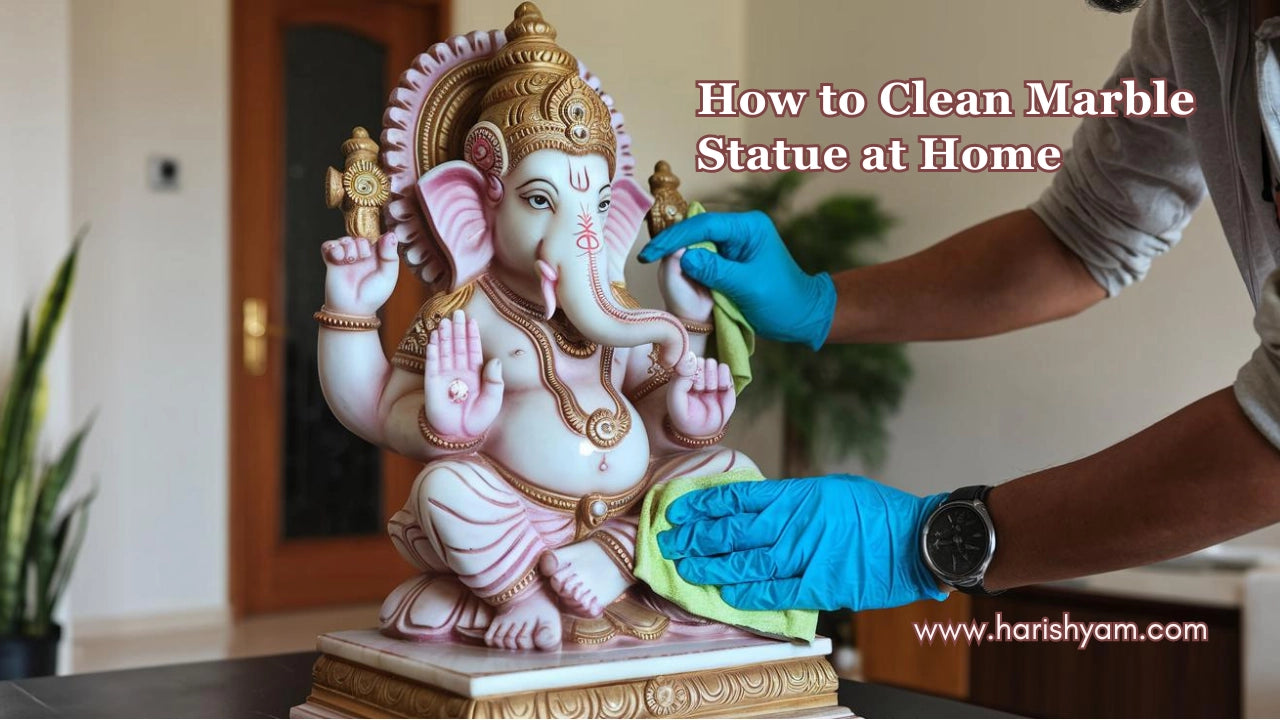
Marble statues, often referred to as sangmarmar ki murti, are stunning works of art that add a sense of elegance and spirituality to homes. Whether they are decorative pieces or religious marble idols, proper care is crucial to maintain their beauty. Since marble is a porous and delicate material, learning how to clean marble statues at home is essential to prevent damage and preserve the fine details of your statues.
Understanding the Nature of Marble
Before you begin cleaning, it’s important to understand marble's natural properties. Marble is a soft, porous stone that is sensitive to acids, which makes it prone to staining and etching. Whether you are cleaning white marble statues or darker ones, you need to use gentle, non-acidic cleaners to avoid damage. This guide will help you understand the right approach to how to clean marble idols and keep them looking their best.
Materials You Will Need to Clean Marble Statues
To properly clean your marble statues at home, gather the following items:
- Soft cloths or microfiber towels: For gentle dusting and wiping.
- pH-neutral cleaner: This is essential for safely cleaning marble without causing any damage.
- Warm water: Use to mix with soap and for rinsing.
- Mild dish soap: Ensure it is free of acids and abrasives.
- Soft-bristle brush: Great for cleaning detailed or intricate parts of the statue.
- Marble polish or sealant (optional): For adding an extra layer of protection.
Step-by-Step Guide on How to Clean a Marble Statue
Cleaning a marble statue, whether it's a white marble statue or one displayed outdoors, requires a methodical approach. Follow this guide to safely and effectively clean your sangmarmar ki murti:
Step 1: Dust the Surface
Begin by gently dusting the statue with a dry, soft cloth or a feather duster. This is especially important for outdoor marble statues, which are more exposed to dirt, dust, and weather elements. Regular dusting prevents debris from settling into the marble's porous surface.
Step 2: Prepare a Cleaning Solution
Mix a few drops of mild dish soap with warm water. It’s important to use a pH-neutral cleaner since acidic solutions can damage the marble. This mixture will help clean the marble without stripping away its natural sheen.
Step 3: Wipe the Statue
Dip a soft cloth in the soapy water, wring it out, and gently wipe down the statue. Be cautious not to soak the statue, as too much water can lead to stains. This method works well for indoor marble idols, while outdoor marble statues may require a little extra attention due to dirt buildup.
Step 4: Scrub Detailed Areas
For more intricate designs or parts of the statue, use a soft-bristle brush. This helps you reach small crevices without scratching the marble. White marble statues often highlight dust and grime more easily, so pay special attention to cleaning detailed areas.
Step 5: Rinse and Dry
Rinse the statue with clean water to remove any soap residue. After rinsing, use a dry cloth to thoroughly dry the statue. Leaving any water on the marble could lead to water spots or even mold growth, particularly on outdoor marble statues.
Step 6 (Optional): Polishing or Sealing
Once cleaned, you may choose to apply a marble polish or sealant. This step is particularly useful for white marble statues, as it enhances the shine and provides extra protection against stains. Follow the manufacturer’s instructions carefully when using polish or sealant.
What to Avoid When Cleaning Marble Statues
It’s important to know what to avoid when cleaning marble statues to prevent unintentional damage:
- Avoid acidic cleaners: Products like vinegar or lemon can cause etching, damaging the marble’s surface.
- Avoid abrasives: Cleaners that contain bleach or ammonia are too harsh and will scratch the marble.
- Avoid excessive water: Marble is porous, so too much water can lead to stains or water damage over time.
- Avoid hard scrubbing: Aggressive scrubbing with steel wool or stiff brushes can cause scratches.
Long-Term Maintenance Tips for Marble Statues
Caring for your marble idols requires more than just cleaning. Proper maintenance can prolong their beauty and shine:
- Regular dusting: Keep your statues free of dust by wiping them weekly with a soft, dry cloth.
- Immediate cleaning of spills: If your marble statue is in a space where spills are likely, clean up any spills immediately to avoid stains.
- Protecting outdoor statues: If you have outdoor marble statues, consider placing them in a shaded area to prevent fading from sun exposure.
- Polishing: Apply marble polish every 6 to 12 months for added protection and shine, especially for white marble statues.
FAQs About Cleaning Marble Statues
1. How often should I clean my marble statue?
You should dust your marble idols regularly—once a week is ideal. Deep cleaning can be done every 3 to 6 months, depending on the environment.
2. Can I use regular household cleaners on marble?
No, household cleaners often contain acids or abrasives, which can damage marble. Always use a pH-neutral cleaner designed for delicate surfaces like marble.
3. How can I clean outdoor marble statues?
Outdoor statues require more frequent cleaning due to exposure to the elements. Regular dusting and occasional gentle scrubbing with a soft-bristle brush will help keep them in good condition.
4. What’s the best way to clean a white marble statue?
The same cleaning process applies, but be extra careful to prevent stains. Use mild soap and warm water, followed by thorough drying. Applying a marble polish afterward will enhance the shine and protect against future stains.
5. How do I clean stubborn stains on marble statues?
For deeper stains, you can use a marble poultice to pull the stain from the porous surface. If the stain remains, you can opt for marble statue painting services to restore the original look and enhance its beauty.
6. Can I use lemon or vinegar to clean marble?
No, both lemon and vinegar are acidic and can etch or dull the surface of your marble statue. Stick to pH-neutral cleaners to keep the marble safe.
Also Read: How to Clean Marble Temple at Home
Conclusion
Taking proper care of your marble statues, whether they are displayed indoors or outdoors, ensures their longevity and beauty. By using gentle cleaning methods and avoiding harsh chemicals, you’ll maintain your sangmarmar ki murti in pristine condition. If you’re looking for high-quality marble idols, explore the collection at Harishyam Arts. With the right care and attention, your marble statues will remain a timeless and elegant addition to your home.

Lakshay Sharma
I’m Lakshay Sharma, a writer with a deep passion for Hindu mythology, Vastu Shastra, and home interiors. I enjoy exploring the rich traditions of Hindu gods and goddesses, sharing insights into Vastu principles, and offering guidance on creating sacred spaces like Puja Mandirs. Through my writing, I aim to inspire harmony and spiritual well-being, blending traditional knowledge with modern perspectives.
Harishyam Arts | Jaipur
Related Blogs

Bhagavad Gita Chapter 3 Verse 27 Meaning in Hindi & English
Lakshay Sharma | June 10, 2026
Bhagavad Gita Chapter 3 Verse 27 presents one of the most profound philosophic...
Read More...
Bhagavad Gita Chapter 3 Verse 26 Meaning in Hindi And English
Lakshay Sharma | June 10, 2026
Bhagavad Gita Chapter 3 Verse 26 contains a profound lesson on leadership, tea...
Read More...
Bhagavad Gita Chapter 3 Verse 41 Meaning in Hindi and English
Lakshay Sharma | June 10, 2026
Bhagavad Gita Chapter 3 Verse 41 is Lord Krishna's practical instruction for o...
Read More...
Bhagavad Gita Chapter 3 Verse 40 Meaning in Hindi and English
Lakshay Sharma | June 10, 2026
Bhagavad Gita Chapter 3 Verse 40 continues Lord Krishna's explanation of desir...
Read More...
Bhagavad Gita Chapter 3 Verse 39 Meaning in Hindi and English
Lakshay Sharma | June 10, 2026
Bhagavad Gita Chapter 3 Verse 39 continues Lord Krishna's explanation about de...
Read More...
Bhagavad Gita Chapter 3 Verse 38 Meaning in Hindi and English
Lakshay Sharma | June 10, 2026
Bhagavad Gita Chapter 3 Verse 38 continues Lord Krishna's explanation about de...
Read More...
Bhagavad Gita Chapter 3 Verse 37 Meaning in Hindi and English
Lakshay Sharma | June 10, 2026
Bhagavad Gita Chapter 3 Verse 37 contains Lord Krishna's direct answer to Arju...
Read More...
Bhagavad Gita Chapter 3 Verse 36 Meaning in Hindi and English
Lakshay Sharma | June 10, 2026
Bhagavad Gita Chapter 3 Verse 36 marks the beginning of one of the most import...
Read More...
Bhagavad Gita Chapter 3 Verse 35 Meaning in Hindi and English
Lakshay Sharma | June 10, 2026
Bhagavad Gita Chapter 3 Verse 35 is one of the most famous verses in the entir...
Read More...
Bhagavad Gita Chapter 3 Verse 34 Meaning in Hindi and English
Lakshay Sharma | June 10, 2026
Bhagavad Gita Chapter 3 Verse 34 is a profound teaching on contro...
Read More...
Bhagavad Gita Chapter 3 Verse 25 Meaning in Hindi and English
Lakshay Sharma | June 10, 2026
Bhagavad Gita Chapter 3 Verse 25 is important because:

Bhagavad Gita Chapter 3 Verse 23 Meaning in Hindi and English
Lakshay Sharma | June 10, 2026
Bhagavad Gita Chapter 3 Verse 23 continues Lord Krishna's explanation of why H...
Read More...
Bhagavad Gita Chapter 3 Verse 22 Meaning in Hindi and English
Lakshay Sharma | June 10, 2026
Bhagavad Gita Chapter 3 Verse 22 is a profound teaching where Lord Krishna spe...
Read More...
Bhagavad Gita Chapter 3 Verse 21 Meaning in Hindi and English
Lakshay Sharma | June 10, 2026
Bhagavad Gita Chapter 3 Verse 21 is one of the most influential teachings on <...
Read More...
Bhagavad Gita Chapter 3 Verse 20 Meaning in Hindi and English
Lakshay Sharma | June 10, 2026
Bhagavad Gita Chapter 3 Verse 20 is a powerful teaching on Karma ...
Read More...
Bhagavad Gita Chapter 3 Verse 19 Meaning in Hindi and English
Lakshay Sharma | June 10, 2026
Bhagavad Gita Chapter 3 Verse 19 is one of the most important teachings on Read More...

The Hidden Meaning Behind the Eyes, Mudras, and Expressions of Marble Idols
Lakshay Sharma | June 10, 2026
Marble idols are not merely decorative sculptures; they are living symbols of ...
Read More...
Bhagavad Gita Chapter 3 Verse 16 Meaning in Hindi and English
Lakshay Sharma | June 09, 2026
Bhagavad Gita Chapter 3 Verse 16 continues Lord Krishna's explanation of the d...
Read More...
Bhagavad Gita Chapter 3 Verse 15 Meaning in Hindi and English
Lakshay Sharma | June 09, 2026
Bhagavad Gita Chapter 3 Verse 15 deepens the understanding of the sacred cycle...
Read More...
Bhagavad Gita Chapter 3 Verse 14 Meaning in Hindi and English
Lakshay Sharma | June 09, 2026
Bhagavad Gita Chapter 3 Verse 14 explains the sacred cycle that sustains life ...
Read More...
Bhagavad Gita Chapter 3 Verse 11 Meaning in Hindi and English
Lakshay Sharma | June 09, 2026
Bhagavad Gita Chapter 3 Verse 11 highlights the principle of mutual cooperatio...
Read More...
Bhagavad Gita Chapter 3 Verse 9 Meaning in Hindi & English
Lakshay Sharma | June 09, 2026
Bhagavad Gita Chapter 3 Verse 9 introduces one of the most important principle...
Read More...
Bhagavad Gita Chapter 3 Verse 7 Meaning in Hindi & English
Lakshay Sharma | June 09, 2026
Bhagavad Gita Chapter 3 Verse 7 presents Lord Krishna's solution to the proble...
Read More...
Bhagavad Gita Chapter 3 Verse 5 Meaning in Hindi & English
Lakshay Sharma | June 09, 2026
Bhagavad Gita Chapter 3 Verse 5 continues Lord Krishna's explanation of Karma ...
Read More...
Bhagavad Gita Chapter 3 Verse 4 Meaning in Hindi & English
Lakshay Sharma | June 09, 2026
Bhagavad Gita Chapter 3 Verse 4 continues Lord Krishna's explanation of Karma ...
Read More...
Bhagavad Gita Chapter 3 Verse 3 Meaning in Hindi & English
Lakshay Sharma | June 09, 2026
Bhagavad Gita Chapter 3 Verse 3 is Lord Krishna's direct response to Arjuna's ...
Read More...
Bhagavad Gita Chapter 3 Verse 2 Meaning in Hindi & English
Lakshay Sharma | June 09, 2026
Bhagavad Gita Chapter 3 Verse 2 continues Arjuna's confusion regarding the tea...
Read More...
Bhagavad Gita Chapter 3 Verse 1 Meaning in Hindi & English
Lakshay Sharma | June 09, 2026
Bhagavad Gita Chapter 3 Verse 1 marks the beginning of Karma Yoga...
Read More...
The Spiritual Warmth and Natural Energy of Handcrafted Wooden Statues
Lakshay Sharma | June 09, 2026
In a world filled with machine-made décor and mass-produced art, handcrafted w...
Read More...
Bhagavad Gita Chapter 3 Verse 18 Meaning in Hindi and English
Lakshay Sharma | June 08, 2026
Bhagavad Gita Chapter 3 Verse 18 continues Lord Krishna's description of the s...
Read More...
Bhagavad Gita Chapter 3 Verse 17 Meaning in Hindi and English
Lakshay Sharma | June 08, 2026
Bhagavad Gita Chapter 3 Verse 17 marks an important transition in Lord Krishna...
Read More...
Bhagavad Gita Chapter 3 Verse 12 Meaning in Hindi and English
Lakshay Sharma | June 08, 2026
Bhagavad Gita Chapter 3 Verse 12 continues Lord Krishna’s teaching on <...
Read More...
Bhagavad Gita Chapter 2 Verse 65 Meaning in Hindi and English
Lakshay Sharma | June 08, 2026
Bhagavad Gita Chapter 2 Verse 65 explains the profound benefits of attaining i...
Read More...
Bhagavad Gita Chapter 2 Verse 64 Meaning in Hindi and English
Lakshay Sharma | June 08, 2026
Bhagavad Gita Chapter 2 Verse 64 presents a powerful teaching on self-control,...
Read More...
Bhagavad Gita Chapter 3 Verse 10 Meaning in Hindi & English
Lakshay Sharma | June 08, 2026
Bhagavad Gita Chapter 3 Verse 10 continues Lord Krishna's teaching on <...
Read More...
Why Traditional Wooden Mandirs Are Still Preferred in Modern Homes
Lakshay Sharma | June 08, 2026
In today’s fast-paced world, modern homes are becoming more stylish, compact, ...
Read More...
The Symbolic Meaning of the Lotus in Hindu Tradition
Lakshay Sharma | June 08, 2026
The lotus flower holds a sacred and timeless place in Hindu tradition. Known f...
Read More...
Bhagavad Gita Chapter 2 Verse 23 Meaning in Hindi & English
Lakshay Sharma | June 08, 2026
As Lord Krishna continues to explain the eternal and indestructible nature of ...
Read More...
Bhagavad Gita Chapter 2 Verse 21 Meaning in Hindi & English
Lakshay Sharma | June 08, 2026
After revealing that the soul is unborn, eternal, and indestructible in the pr...
Read More...
The Greatest Philosophers and Thinkers of Ancient India
Lakshay Sharma | June 08, 2026
India has long been regarded as one of the world’s oldest centers of wisdom, s...
Read More...
Bhagavad Gita Chapter 2 Verse 22 Meaning in Hindi & English
Lakshay Sharma | June 08, 2026
Bhagavad Gita Chapter 2 Verse 22 contains one of the most famous and beautiful...
Read More...
Bhagavad Gita Chapter 2 Verse 20 Meaning in Hindi & English
Lakshay Sharma | June 08, 2026
Bhagavad Gita Chapter 2 Verse 20 is one of the most famous and profound verses...
Read More...
Bhagavad Gita Chapter 2 Verse 19 Meaning in Hindi & English
Lakshay Sharma | June 08, 2026
As Lord Krishna continues to reveal the eternal nature of the soul, He now add...
Read More...
Bhagavad Gita Chapter 2 Verse 18 Meaning in Hindi & English
Lakshay Sharma | June 08, 2026
After explaining the indestructible nature of the soul in the previous verse, ...
Read More...
Bhagavad Gita Chapter 2 Verse 16 Meaning in Hindi & English
Lakshay Sharma | June 08, 2026
As Lord Krishna continues to guide the grief-stricken Arjuna, He now introduce...
Read More...
Bhagavad Gita Chapter 3 Verse 8 Meaning in Hindi & English
Lakshay Sharma | June 08, 2026
Bhagavad Gita Chapter 3 Verse 8 is one of the most practical teachings in the ...
Read More...
Bhagavad Gita Chapter 2 Verse 56 Meaning in Hindi And English
Lakshay Sharma | June 08, 2026
In Bhagavad Gita Chapter 2 Verse 55, Lord Krishna explained that a person of steady wisdom (St...
Read More...
Bhagavad Gita Chapter 2 Verse 54 Meaning in Hindi And English
Lakshay Sharma | June 08, 2026
Bhagavad Gita Chapter 2 Verse 54 marks the beginning of one of the most important discussions ...
Read More...
Bhagavad Gita Chapter 2 Verse 30 Meaning in Hindi & English
Lakshay Sharma | June 08, 2026
Bhagavad Gita Chapter 2 Verse 30 serves as the conclusion of Lord Krishna's pr...
Read More...
Bhagavad Gita Chapter 2 Verse 17 Meaning in Hindi & English
Lakshay Sharma | June 08, 2026
After establishing the distinction between the eternal (Sat) and the temporary...
Read More...


