
Harishyam Arts Blog
The Different Forms of Shiva Statues and their Symbolism
By Lakshay Sharma | On 18 October, 2025 | Views
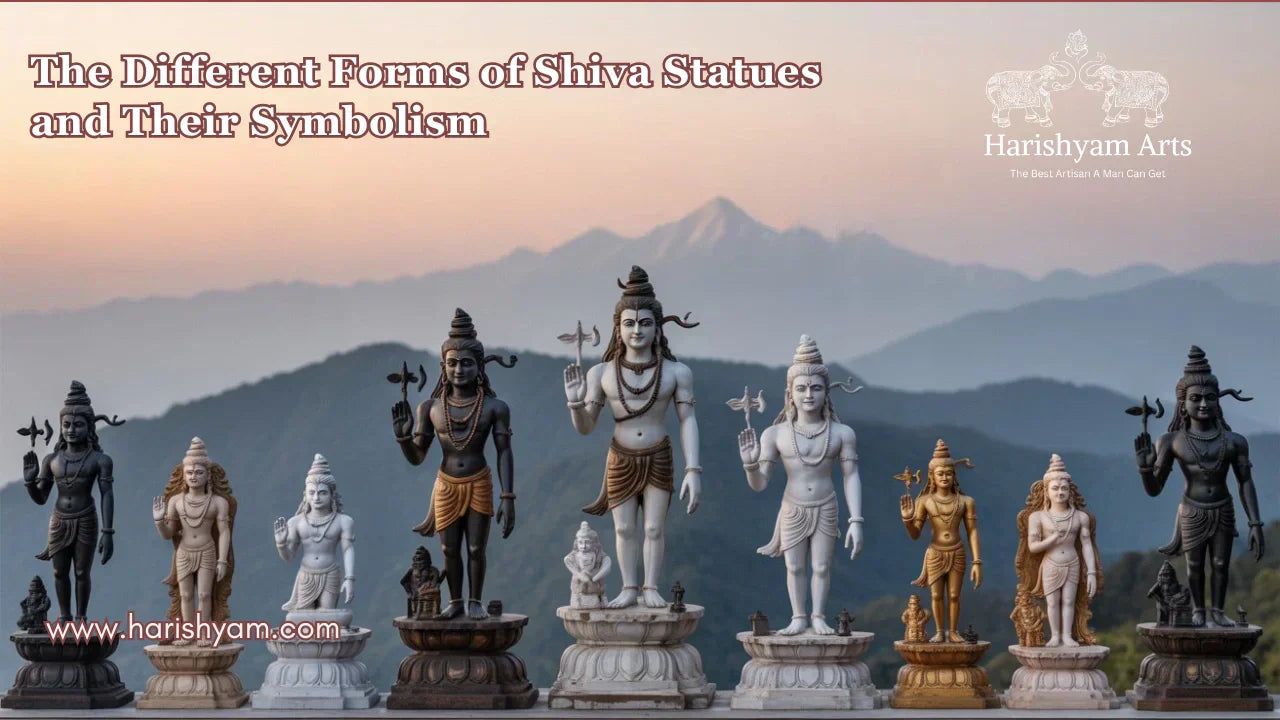
Introduction to the God Shiva Statue
Lord Shiva — known as Mahadeva, the Great God — is one of the most revered deities in Hinduism. He represents the cycle of creation, preservation, and dissolution. Every form of Shiva carries deep symbolism, from calm meditation poses to powerful dancing figures.
At Harishyam Arts, our handcrafted Shiva statues are designed not only for aesthetic beauty but also to radiate divine energy and peace into your surroundings — whether at home, in offices, or temples.
The Different Forms of Shiva Statues
Lord Shiva is depicted in various forms, each carrying unique symbolism and spiritual meaning.
1. Nataraja (The Cosmic Dancer)
Shiva as Nataraja performs the dance of creation and destruction, symbolizing the eternal rhythm of the universe. The circle of fire around him represents the cosmic cycle, while his calm face reminds us of inner peace amid chaos.
2. Meditating Shiva (The Yogi)
This peaceful form of Shiva in deep meditation represents stillness, balance, and self-realization. Perfect for meditation rooms and serene spaces.
3. Ardhanarishvara (Half Shiva, Half Parvati)
This androgynous form symbolizes the union of Shiva and Shakti — the balance of male and female energies. It stands for equality, harmony, and wholeness in life.
4. Dakshinamurti (The Divine Teacher)
In this form, Shiva is the universal guru, imparting wisdom through silence. Ideal for placement in study areas or spiritual learning spaces.
5. Bhairava (The Fierce Protector)
Bhairava’s form represents protection, transformation, and strength. It’s often worshipped to ward off negativity and evil forces.
6. Shiva Linga (Abstract Form of Shiva)
As mentioned, this form transcends shape and form — it is the formless divine energy of creation itself.
Symbolism of Shiva’s Attributes
Each element associated with Lord Shiva carries deep meaning:
-
Trishul (Trident): Symbol of the three functions — creation, preservation, and destruction.
-
Third Eye: Represents spiritual wisdom and insight beyond the physical world.
-
Snake around neck: Symbolizes control over ego, fear, and time.
-
Crescent Moon: Signifies balance and time cycles.
-
River Ganga: Symbol of purity and life.
-
Damru (Drum): Represents sound and cosmic vibration of creation.
How to Choose the Right Shiva Statue
Choosing the perfect Shiva statue for your home or pooja space involves understanding your intention, selecting the right material, and ensuring proper placement according to spiritual and Vastu principles.
1. Purpose:
Your choice of Shiva statue should align with the energy and blessings you wish to invoke:
-
Nataraja (Lord of Dance): Symbolizes cosmic energy, movement, and transformation. Ideal for spaces where inspiration, creativity, and vitality are desired.
-
Meditating Shiva: Represents peace, calm, and introspection. Perfect for meditation rooms or personal shrines where serenity is the focus.
-
Shiva Lingam: Traditionally used for worship and rituals, the Lingam symbolizes divine energy and spiritual growth, making it a sacred addition to any pooja area.
2. Material:
The material of your Shiva statue not only affects aesthetics but also spiritual energy and longevity:
-
Marble Shiva Statue – Elegant, timeless, and pure, marble statues are ideal for traditional pooja rooms and main altars.
-
Wooden Shiv Ji Moorti – Lightweight, eco-friendly, and warm, wooden idols suit modern homes, apartments, and smaller shrines.
-
Brass Shiva Idol – Durable with an antique charm, brass statues are perfect for long-lasting devotion and can be placed at entrances, living areas, or offices.
3. Placement:
Correct placement enhances the spiritual energy of the Shiva idol. According to Vastu guidelines, it is recommended to place the statue in the north or northeast direction of your home or pooja room. Proper placement of Shiva Statue ensures positive energy, harmony, and balance in your living space.
By carefully considering purpose, material, and placement, you can select a Shiva statue that not only enhances your spiritual practice but also complements your home décor, creating a serene and sacred environment.
Explore our exclusive collection of handmade Shiva statues at Harishyam Arts and find the perfect one for your home or temple.
Conclusion
Every form of Lord Shiva tells a story — of creation, balance, and transformation. Whether you prefer the serene meditation pose or the powerful Nataraja, each statue brings divine symbolism and peace to your space.At Harishyam Arts, we craft every Shiva statue with devotion, blending traditional artistry with spiritual meaning. Explore our collection today and bring home the divine essence of Lord Shiva.
FAQs
Q1: Which form of Lord Shiva is best for home?
Ans: Meditating Shiva or the Shiva Lingam is ideal for homes as they bring peace and positivity.
Q2: Can we keep Nataraja idol at home?
Ans: Yes, but it should be placed in a clean, sacred spot facing east or north.
Q3: What material is best for a Shiva statue?
Ans: Brass, marble, and wood are popular choices — each adds elegance and divine charm.
Q4: Does Harishyam Arts offer worldwide delivery?
Ans: Yes, Harishyam Arts delivers handcrafted Shiva statues to countries like the USA, UK, and Canada.

Lakshay Sharma
I’m Lakshay Sharma, a writer with a deep passion for Hindu mythology, Vastu Shastra, and home interiors. I enjoy exploring the rich traditions of Hindu gods and goddesses, sharing insights into Vastu principles, and offering guidance on creating sacred spaces like Puja Mandirs. Through my writing, I aim to inspire harmony and spiritual well-being, blending traditional knowledge with modern perspectives.
Harishyam Arts | Jaipur
Related Blogs

Bhagavad Gita Chapter 3 Verse 27 Meaning in Hindi & English
Lakshay Sharma | June 10, 2026
Bhagavad Gita Chapter 3 Verse 27 presents one of the most profound philosophic...
Read More...
Bhagavad Gita Chapter 3 Verse 26 Meaning in Hindi And English
Lakshay Sharma | June 10, 2026
Bhagavad Gita Chapter 3 Verse 26 contains a profound lesson on leadership, tea...
Read More...
Bhagavad Gita Chapter 3 Verse 41 Meaning in Hindi and English
Lakshay Sharma | June 10, 2026
Bhagavad Gita Chapter 3 Verse 41 is Lord Krishna's practical instruction for o...
Read More...
Bhagavad Gita Chapter 3 Verse 40 Meaning in Hindi and English
Lakshay Sharma | June 10, 2026
Bhagavad Gita Chapter 3 Verse 40 continues Lord Krishna's explanation of desir...
Read More...
Bhagavad Gita Chapter 3 Verse 39 Meaning in Hindi and English
Lakshay Sharma | June 10, 2026
Bhagavad Gita Chapter 3 Verse 39 continues Lord Krishna's explanation about de...
Read More...
Bhagavad Gita Chapter 3 Verse 38 Meaning in Hindi and English
Lakshay Sharma | June 10, 2026
Bhagavad Gita Chapter 3 Verse 38 continues Lord Krishna's explanation about de...
Read More...
Bhagavad Gita Chapter 3 Verse 37 Meaning in Hindi and English
Lakshay Sharma | June 10, 2026
Bhagavad Gita Chapter 3 Verse 37 contains Lord Krishna's direct answer to Arju...
Read More...
Bhagavad Gita Chapter 3 Verse 36 Meaning in Hindi and English
Lakshay Sharma | June 10, 2026
Bhagavad Gita Chapter 3 Verse 36 marks the beginning of one of the most import...
Read More...
Bhagavad Gita Chapter 3 Verse 35 Meaning in Hindi and English
Lakshay Sharma | June 10, 2026
Bhagavad Gita Chapter 3 Verse 35 is one of the most famous verses in the entir...
Read More...
Bhagavad Gita Chapter 3 Verse 34 Meaning in Hindi and English
Lakshay Sharma | June 10, 2026
Bhagavad Gita Chapter 3 Verse 34 is a profound teaching on contro...
Read More...
Bhagavad Gita Chapter 3 Verse 25 Meaning in Hindi and English
Lakshay Sharma | June 10, 2026
Bhagavad Gita Chapter 3 Verse 25 is important because:

Bhagavad Gita Chapter 3 Verse 23 Meaning in Hindi and English
Lakshay Sharma | June 10, 2026
Bhagavad Gita Chapter 3 Verse 23 continues Lord Krishna's explanation of why H...
Read More...
Bhagavad Gita Chapter 3 Verse 22 Meaning in Hindi and English
Lakshay Sharma | June 10, 2026
Bhagavad Gita Chapter 3 Verse 22 is a profound teaching where Lord Krishna spe...
Read More...
Bhagavad Gita Chapter 3 Verse 21 Meaning in Hindi and English
Lakshay Sharma | June 10, 2026
Bhagavad Gita Chapter 3 Verse 21 is one of the most influential teachings on <...
Read More...
Bhagavad Gita Chapter 3 Verse 20 Meaning in Hindi and English
Lakshay Sharma | June 10, 2026
Bhagavad Gita Chapter 3 Verse 20 is a powerful teaching on Karma ...
Read More...
Bhagavad Gita Chapter 3 Verse 19 Meaning in Hindi and English
Lakshay Sharma | June 10, 2026
Bhagavad Gita Chapter 3 Verse 19 is one of the most important teachings on Read More...

The Hidden Meaning Behind the Eyes, Mudras, and Expressions of Marble Idols
Lakshay Sharma | June 10, 2026
Marble idols are not merely decorative sculptures; they are living symbols of ...
Read More...
Bhagavad Gita Chapter 3 Verse 16 Meaning in Hindi and English
Lakshay Sharma | June 09, 2026
Bhagavad Gita Chapter 3 Verse 16 continues Lord Krishna's explanation of the d...
Read More...
Bhagavad Gita Chapter 3 Verse 15 Meaning in Hindi and English
Lakshay Sharma | June 09, 2026
Bhagavad Gita Chapter 3 Verse 15 deepens the understanding of the sacred cycle...
Read More...
Bhagavad Gita Chapter 3 Verse 14 Meaning in Hindi and English
Lakshay Sharma | June 09, 2026
Bhagavad Gita Chapter 3 Verse 14 explains the sacred cycle that sustains life ...
Read More...
Bhagavad Gita Chapter 3 Verse 11 Meaning in Hindi and English
Lakshay Sharma | June 09, 2026
Bhagavad Gita Chapter 3 Verse 11 highlights the principle of mutual cooperatio...
Read More...
Bhagavad Gita Chapter 3 Verse 9 Meaning in Hindi & English
Lakshay Sharma | June 09, 2026
Bhagavad Gita Chapter 3 Verse 9 introduces one of the most important principle...
Read More...
Bhagavad Gita Chapter 3 Verse 7 Meaning in Hindi & English
Lakshay Sharma | June 09, 2026
Bhagavad Gita Chapter 3 Verse 7 presents Lord Krishna's solution to the proble...
Read More...
Bhagavad Gita Chapter 3 Verse 5 Meaning in Hindi & English
Lakshay Sharma | June 09, 2026
Bhagavad Gita Chapter 3 Verse 5 continues Lord Krishna's explanation of Karma ...
Read More...
Bhagavad Gita Chapter 3 Verse 4 Meaning in Hindi & English
Lakshay Sharma | June 09, 2026
Bhagavad Gita Chapter 3 Verse 4 continues Lord Krishna's explanation of Karma ...
Read More...
Bhagavad Gita Chapter 3 Verse 3 Meaning in Hindi & English
Lakshay Sharma | June 09, 2026
Bhagavad Gita Chapter 3 Verse 3 is Lord Krishna's direct response to Arjuna's ...
Read More...
Bhagavad Gita Chapter 3 Verse 2 Meaning in Hindi & English
Lakshay Sharma | June 09, 2026
Bhagavad Gita Chapter 3 Verse 2 continues Arjuna's confusion regarding the tea...
Read More...
Bhagavad Gita Chapter 3 Verse 1 Meaning in Hindi & English
Lakshay Sharma | June 09, 2026
Bhagavad Gita Chapter 3 Verse 1 marks the beginning of Karma Yoga...
Read More...
The Spiritual Warmth and Natural Energy of Handcrafted Wooden Statues
Lakshay Sharma | June 09, 2026
In a world filled with machine-made décor and mass-produced art, handcrafted w...
Read More...
Bhagavad Gita Chapter 3 Verse 18 Meaning in Hindi and English
Lakshay Sharma | June 08, 2026
Bhagavad Gita Chapter 3 Verse 18 continues Lord Krishna's description of the s...
Read More...
Bhagavad Gita Chapter 3 Verse 17 Meaning in Hindi and English
Lakshay Sharma | June 08, 2026
Bhagavad Gita Chapter 3 Verse 17 marks an important transition in Lord Krishna...
Read More...
Bhagavad Gita Chapter 3 Verse 12 Meaning in Hindi and English
Lakshay Sharma | June 08, 2026
Bhagavad Gita Chapter 3 Verse 12 continues Lord Krishna’s teaching on <...
Read More...
Bhagavad Gita Chapter 2 Verse 65 Meaning in Hindi and English
Lakshay Sharma | June 08, 2026
Bhagavad Gita Chapter 2 Verse 65 explains the profound benefits of attaining i...
Read More...
Bhagavad Gita Chapter 2 Verse 64 Meaning in Hindi and English
Lakshay Sharma | June 08, 2026
Bhagavad Gita Chapter 2 Verse 64 presents a powerful teaching on self-control,...
Read More...
Bhagavad Gita Chapter 3 Verse 10 Meaning in Hindi & English
Lakshay Sharma | June 08, 2026
Bhagavad Gita Chapter 3 Verse 10 continues Lord Krishna's teaching on <...
Read More...
Why Traditional Wooden Mandirs Are Still Preferred in Modern Homes
Lakshay Sharma | June 08, 2026
In today’s fast-paced world, modern homes are becoming more stylish, compact, ...
Read More...
The Symbolic Meaning of the Lotus in Hindu Tradition
Lakshay Sharma | June 08, 2026
The lotus flower holds a sacred and timeless place in Hindu tradition. Known f...
Read More...
Bhagavad Gita Chapter 2 Verse 23 Meaning in Hindi & English
Lakshay Sharma | June 08, 2026
As Lord Krishna continues to explain the eternal and indestructible nature of ...
Read More...
Bhagavad Gita Chapter 2 Verse 21 Meaning in Hindi & English
Lakshay Sharma | June 08, 2026
After revealing that the soul is unborn, eternal, and indestructible in the pr...
Read More...
The Greatest Philosophers and Thinkers of Ancient India
Lakshay Sharma | June 08, 2026
India has long been regarded as one of the world’s oldest centers of wisdom, s...
Read More...
Bhagavad Gita Chapter 2 Verse 22 Meaning in Hindi & English
Lakshay Sharma | June 08, 2026
Bhagavad Gita Chapter 2 Verse 22 contains one of the most famous and beautiful...
Read More...
Bhagavad Gita Chapter 2 Verse 20 Meaning in Hindi & English
Lakshay Sharma | June 08, 2026
Bhagavad Gita Chapter 2 Verse 20 is one of the most famous and profound verses...
Read More...
Bhagavad Gita Chapter 2 Verse 19 Meaning in Hindi & English
Lakshay Sharma | June 08, 2026
As Lord Krishna continues to reveal the eternal nature of the soul, He now add...
Read More...
Bhagavad Gita Chapter 2 Verse 18 Meaning in Hindi & English
Lakshay Sharma | June 08, 2026
After explaining the indestructible nature of the soul in the previous verse, ...
Read More...
Bhagavad Gita Chapter 2 Verse 16 Meaning in Hindi & English
Lakshay Sharma | June 08, 2026
As Lord Krishna continues to guide the grief-stricken Arjuna, He now introduce...
Read More...
Bhagavad Gita Chapter 3 Verse 8 Meaning in Hindi & English
Lakshay Sharma | June 08, 2026
Bhagavad Gita Chapter 3 Verse 8 is one of the most practical teachings in the ...
Read More...
Bhagavad Gita Chapter 2 Verse 56 Meaning in Hindi And English
Lakshay Sharma | June 08, 2026
In Bhagavad Gita Chapter 2 Verse 55, Lord Krishna explained that a person of steady wisdom (St...
Read More...
Bhagavad Gita Chapter 2 Verse 54 Meaning in Hindi And English
Lakshay Sharma | June 08, 2026
Bhagavad Gita Chapter 2 Verse 54 marks the beginning of one of the most important discussions ...
Read More...
Bhagavad Gita Chapter 2 Verse 30 Meaning in Hindi & English
Lakshay Sharma | June 08, 2026
Bhagavad Gita Chapter 2 Verse 30 serves as the conclusion of Lord Krishna's pr...
Read More...
Bhagavad Gita Chapter 2 Verse 17 Meaning in Hindi & English
Lakshay Sharma | June 08, 2026
After establishing the distinction between the eternal (Sat) and the temporary...
Read More...


