
Harishyam Arts Blog
Top Reasons to Choose Brass Statues for Home Décor and Spiritual Spaces
By Lakshay Sharma | On 25 October, 2025 | Views
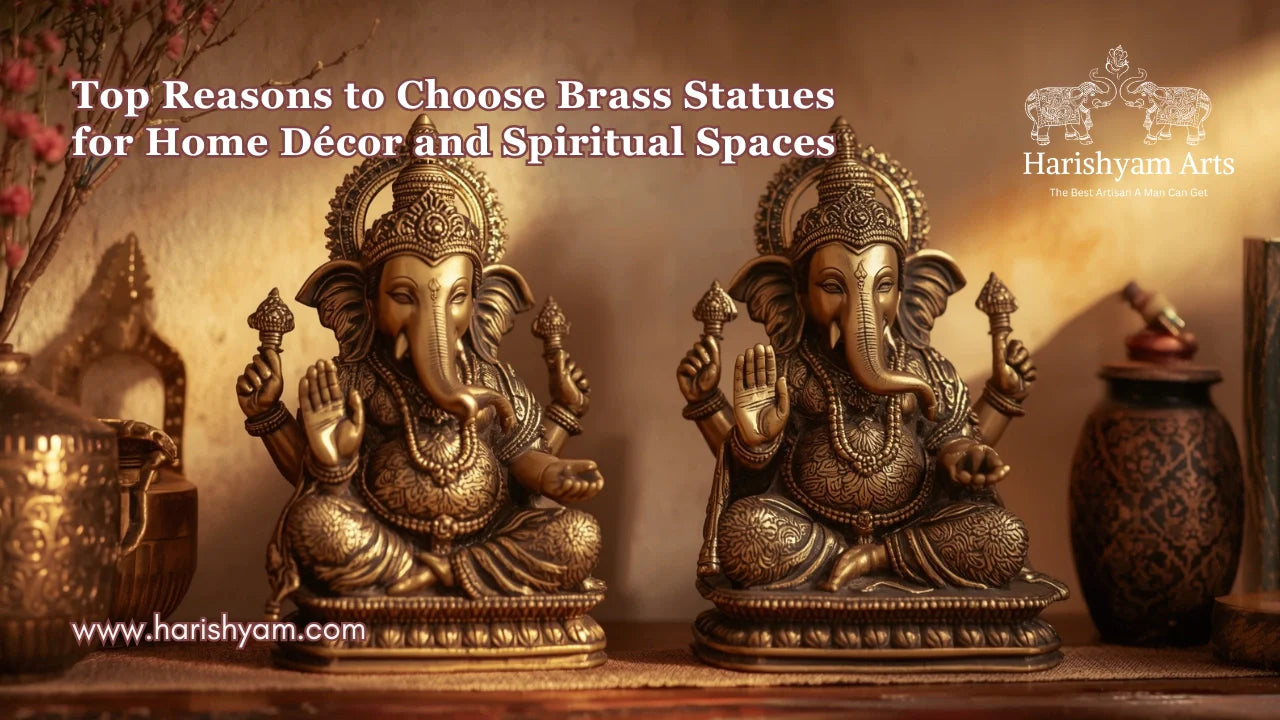
Home décor today is not only about beauty—it’s about creating a peaceful and meaningful space that reflects your beliefs and emotions. Among the many décor options, brass statues stand out for their rich heritage, spiritual symbolism, and elegant appeal. From a sacred home temple to a contemporary living room, these statues effortlessly blend tradition with timeless art.
At Harishyam Arts, we specialize in handcrafted brass statues that bring divine energy and artistic grace to every corner of your home.
Why Choose Brass Statues?
Brass, an alloy of copper and zinc, is known for its strength, shine, and sacred value. Since ancient times, it has been used in temples and homes to craft idols of gods and goddesses. Brass statues are not only aesthetically appealing but also energize your space with positivity and spiritual warmth.
Top Reasons to Choose Brass Statues for Home Décor and Spiritual Spaces
1. Timeless Elegance
Brass statues have a natural golden sheen that gives your space a royal and elegant touch. Whether placed on a console, altar, or shelf, they enhance your home’s visual charm.
2. Spiritual Significance
In Indian tradition, brass is considered a pure and sattvic metal, ideal for worship. Idols made from brass are believed to attract divine vibrations and purify the surroundings.
3. Exquisite Handcrafted Detailing
Each brass idol from Harishyam Arts is a masterpiece, carefully designed by skilled artisans. The intricate carvings and lifelike details make every statue unique.
4. Perfect Balance of Décor and Devotion
A brass statue fits beautifully in both modern interiors and traditional prayer rooms, offering aesthetic harmony and divine presence in one.
5. Symbol of Prosperity and Positivity
Brass idols like Lord Ganesha, Lakshmi, or Buddha are believed to attract abundance, peace, and spiritual growth.
Durability and Longevity
One of the biggest advantages of brass statues is their long-lasting durability.
-
Brass does not easily corrode or break, making it ideal for long-term display.
-
With minimal maintenance, a brass idol can last for generations, maintaining its shine and sacred aura.
-
Its sturdiness makes it perfect for both indoor and outdoor use (like gardens or temple entrances).
Compared to resin, ceramic, or clay idols, brass requires less replacement and retains its spiritual value for decades.
How to Choose the Perfect Brass Idol
Selecting the right brass idol involves more than just looks — it’s about energy, symbolism, and fit for your space.
Here’s how to find the perfect one:
-
Decide the Purpose – For worship, choose deities like Shiva, Ganesha, or Lakshmi; for décor, consider Buddha or abstract spiritual art.
-
Size and Placement – Measure your altar or shelf to ensure perfect proportion.
-
Check Craftsmanship – Look for detailed work and balanced posture; avoid rough edges.
-
Consider the Finish – Antique, matte, or polished — each has its charm.
-
Buy from Authentic Makers – Choose trusted sources like Harishyam Arts for genuine brass and fine craftsmanship.
Do’s and Don’ts When Buying Brass Statues
Do’s
-
Do check authenticity: Ensure it’s made of pure brass and not plated.
-
Do verify craftsmanship: Inspect details like eyes, ornaments, and facial expressions.
-
Do choose according to Vastu: Place idols facing the right direction (e.g., Ganesha facing the main entrance).
-
Do clean regularly: Keep the statue dust-free to maintain its luster.
-
Do buy from reputed sellers: Purchase from reliable sources like Harishyam Arts to ensure quality and purity.
Don’ts
-
Don’t buy lightweight statues — they may be brass-coated instead of solid brass.
-
Don’t place idols directly on the floor — use a clean pedestal or altar.
-
Don’t use harsh chemicals for cleaning — it can dull the shine.
-
Don’t ignore proportions — ensure the size fits the intended space.
-
Don’t mix metals on the same altar — stick to one element for energetic balance.
Where to Buy Brass Statues?
If you’re looking to buy authentic brass idols online, choose a trusted name that blends tradition with artistry — Harishyam Arts.
At Harishyam Arts, you’ll find:
-
100% handcrafted brass statues made by skilled artisans
-
Worldwide delivery for easy access outside India
-
Secure online payment options
-
Custom design options for temples, offices, and gifting
Whether you want a brass Lord Shiva idols, brass Ganesha murti, or brass Buddha statue, Harishyam Arts offers a curated collection that radiates divinity and aesthetic excellence.
Frequently Asked Questions (FAQs)
Q1: Are brass idols good for Vastu?
Ans: Yes, brass idols are highly recommended according to Vastu Shastra. Brass, being a sacred metal alloy of copper and zinc, is believed to emit positive vibrations that attract prosperity, peace, and good fortune into the home. Placing brass deities in your pooja room or living area helps balance the energy flow and promote spiritual harmony. According to traditional belief, brass idols also create a sense of grounding and enhance the divine atmosphere of your space.
Q2: How can I maintain the shine of my brass statue?
Ans: Maintaining the lustrous shine of brass idols is simple with a bit of regular care. You can clean your brass statue using a natural mixture of lemon juice and salt or mild brass polish. Gently rub the mixture with a soft cloth, rinse with clean water, and wipe it dry to restore the glow. Avoid using harsh chemicals or abrasive scrubbers, as they can dull the surface or remove the protective coating. For long-lasting shine, dust your idol regularly and store it away from moisture or direct sunlight.
Q3: Which brass deity is best for home?
Ans: The choice of deity often depends on your beliefs and the blessings you wish to invite. However, certain brass idols are traditionally considered auspicious for homes:
-
Lord Ganesha: Symbolizes new beginnings, wisdom, and success. Ideal for the entrance or living room.
-
Goddess Lakshmi: Represents wealth, prosperity, and abundance. Best placed in the pooja room or near the cash area.
-
Lord Shiva: Signifies strength, transformation, and inner peace. Suitable for meditation spaces.
Each brass idol not only enhances your décor but also invites divine energy and serenity into your home.
Q4: How do I know if a statue is made of pure brass?
Ans: To identify a pure brass statue, observe its weight, color, and magnetic properties. Pure brass feels heavier and denser than imitation materials and has a warm golden-yellow tone rather than a bright or dull finish. Additionally, brass does not attract magnets, so if a magnet sticks to it, the item likely contains iron or other metals. The craftsmanship and finish of authentic brass idols also tend to be smooth, detailed, and refined.
Q5: Can I buy brass idols online safely?
Ans: Yes, you can safely purchase brass idols online as long as you choose trusted and reputed sellers. Always check for authentic product descriptions, verified customer reviews, and secure payment options. Reputable brands like Harishyam Arts specialize in authentic, handcrafted brass idols that showcase premium quality and intricate detailing. Their statues are carefully packed and delivered with full assurance of safety and authenticity, so you can order with complete confidence.
Conclusion
Brass statues are not just décor pieces—they are timeless works of art that infuse your space with beauty, culture, and divine energy. Their durability, symbolism, and craftsmanship make them a perfect choice for homes and spiritual places alike.
If you’re looking to bring this blend of art and devotion into your space, explore the handcrafted collection at Harishyam Arts — where tradition meets creativity.

Lakshay Sharma
I’m Lakshay Sharma, a writer with a deep passion for Hindu mythology, Vastu Shastra, and home interiors. I enjoy exploring the rich traditions of Hindu gods and goddesses, sharing insights into Vastu principles, and offering guidance on creating sacred spaces like Puja Mandirs. Through my writing, I aim to inspire harmony and spiritual well-being, blending traditional knowledge with modern perspectives.
Harishyam Arts | Jaipur
Related Blogs

The Sacred Geometry of Shilpa Shastra: Why Precision Ratios Give a Murti Its "Aura"
Lakshay Sharma | August 07, 2026
For thousands of years, Indian artisans have followed an ancient science known...
Read More...
The Hidden Art Behind CNC-Cut Designs and Patterns in Corian Mandirs
Lakshay Sharma | August 06, 2026
In the world of modern home temples, Corian Mandirs ...
Read More...
Why Hand-Carved Furniture Reflects Heritage, Royalty, and Timeless Elegance
Lakshay Sharma | August 05, 2026
In a world where mass-produced furniture dominates modern homes, hand-carved f...
Read More...
The Mystery Behind Temple Fragrances: Why Incense, Camphor, and Sandalwood Are Used in Mandirs
Lakshay Sharma | August 04, 2026
Walk into any Hindu temple or home mandir, and one of the first things you not...
Read More...
Janmashtami Dahi Handi 2026: Celebrating Devotion, Unity & the Spirit of Govindas
Lakshay Sharma | August 04, 2026
Janmashtami is one of the most beloved festivals in India, celebrating the bir...
Read More...
The Legend of Gokulashtami: Decoding the Birth Secrets of Lord Krishna
Lakshay Sharma | August 04, 2026
Gokulashtami, also known as Janmashtami, is one of the most cherished festival...
Read More...
Traditional Chhappan Bhog & Janmashtami Prasad Recipes: A Divine Celebration of Flavors
Lakshay Sharma | August 04, 2026
Janmashtami is one of the most cherished festivals dedicated to Lord Krishna, ...
Read More...
How to Decorate a Jhulan/Palna: DIY Gopal Cradle Setup Ideas for Home
Lakshay Sharma | August 04, 2026
Janmashtami is a celebration filled with devotion, happiness, and beautiful tr...
Read More...
Krishna Janmashtami 2026: Date, Nishita Puja Muhurat & Fasting Rules
Lakshay Sharma | August 04, 2026
Krishna Janmashtami is one of the most sacred festivals celebrated by millions...
Read More...
Step-by-Step Ganpati Puja Vidhi at Home & Essential Samagri List for Ganpati Sthapana (2026)
Lakshay Sharma | August 04, 2026
Ganesh Chaturthi is one of the most joyful and spiritually significant festiva...
Read More...
Traditional Modak Recipes: 5 Ways to Make Bappa's Favorite Sweet
Lakshay Sharma | August 04, 2026
Ganesh Chaturthi is one of India's most joyful and spiritually significant fes...
Read More...
Eco-Friendly Ganpati Decor: How to Set Up a Stunning Mandap at Home
Lakshay Sharma | August 04, 2026
Ganesh Chaturthi is one of the most cherished festivals in India, bringing fam...
Read More...
The Myth of the Moon: Why You Must Avoid Seeing the Moon on Ganesh Chaturthi
Lakshay Sharma | August 04, 2026
Ganesh Chaturthi is one of the most beloved Hindu festivals, celebrated with i...
Read More...
Ganesh Chaturthi 2026: Complete Date, Madhyahna Sthapana Muhurat & Calendar
Lakshay Sharma | August 04, 2026
Ganesh Chaturthi 2026 date is one of the most searched festival q...
Read More...
What Different Types of Temple Lights Symbolize in a Home Pooja Space
Lakshay Sharma | August 03, 2026
A home temple is much more than a decorative corner—it is a sacred space where...
Read More...
Bhagavad Gita Chapter 17, Verse 15 Meaning in Hindi & English
Lakshay Sharma | August 03, 2026
Bhagavad Gita Chapter 17, Shraddhatraya Vibhaga Yoga (The Yoga of...
Read More...
Bhagavad Gita Chapter 18, Verse 78 Meaning in Hindi & English
Lakshay Sharma | August 03, 2026
Bhagavad Gita Chapter 18, Moksha Sannyasa Yoga (The ...
Read More...
Bhagavad Gita Chapter 18, Verse 77 Meaning in Hindi & English
Lakshay Sharma | August 03, 2026
Bhagavad Gita Chapter 18, Moksha Sannyasa Yoga (The ...
Read More...
Bhagavad Gita Chapter 18, Verse 76 Meaning in Hindi & English
Lakshay Sharma | August 03, 2026
Bhagavad Gita Chapter 18, Moksha Sannyasa Yoga (The ...
Read More...
Bhagavad Gita Chapter 18, Verse 75 Meaning in Hindi & English
Lakshay Sharma | August 03, 2026
Bhagavad Gita Chapter 18, Moksha Sannyasa Yoga (The ...
Read More...
Bhagavad Gita Chapter 18, Verse 74 Meaning in Hindi & English
Lakshay Sharma | August 03, 2026
Bhagavad Gita Chapter 18, Moksha Sannyasa Yoga (The ...
Read More...
Bhagavad Gita Chapter 18, Verse 73 Meaning in Hindi & English
Lakshay Sharma | August 03, 2026
Bhagavad Gita Chapter 18, Moksha Sannyasa Yoga (The ...
Read More...
Bhagavad Gita Chapter 18, Verse 72 Meaning in Hindi & English
Lakshay Sharma | August 03, 2026
Bhagavad Gita Chapter 18, Moksha Sannyasa Yoga (The ...
Read More...
Bhagavad Gita Chapter 18, Verse 71 Meaning in Hindi & English
Lakshay Sharma | August 03, 2026
Bhagavad Gita Chapter 18, Moksha Sannyasa Yoga (The ...
Read More...
Bhagavad Gita Chapter 18, Verse 70 Meaning in Hindi & English
Lakshay Sharma | August 03, 2026
Bhagavad Gita Chapter 18, Moksha Sannyasa Yoga (The ...
Read More...
Bhagavad Gita Chapter 18, Verse 69 Meaning in Hindi & English
Lakshay Sharma | August 03, 2026
Bhagavad Gita Chapter 18, Moksha Sannyasa Yoga (The ...
Read More...
Bhagavad Gita Chapter 18, Verse 68 Meaning in Hindi & English
Lakshay Sharma | August 03, 2026
Bhagavad Gita Chapter 18, Moksha Sannyasa Yoga (The ...
Read More...
Bhagavad Gita Chapter 18, Verse 67 Meaning in Hindi & English
Lakshay Sharma | August 03, 2026
Bhagavad Gita Chapter 18, Moksha Sannyasa Yoga (The ...
Read More...
Bhagavad Gita Chapter 18, Verse 66 Meaning in Hindi & English
Lakshay Sharma | August 03, 2026
Bhagavad Gita Chapter 18, Moksha Sannyasa Yoga (The ...
Read More...
Bhagavad Gita Chapter 18, Verse 65 Meaning in Hindi & English
Lakshay Sharma | August 03, 2026
Bhagavad Gita Chapter 18, Moksha Sannyasa Yoga (The ...
Read More...
Bhagavad Gita Chapter 18, Verse 64 Meaning in Hindi & English
Lakshay Sharma | August 03, 2026
Bhagavad Gita Chapter 18, Moksha Sannyasa Yoga (The ...
Read More...
Bhagavad Gita Chapter 18, Verse 63 Meaning in Hindi & English
Lakshay Sharma | August 03, 2026
Bhagavad Gita Chapter 18, Moksha Sannyasa Yoga (The ...
Read More...
Bhagavad Gita Chapter 18, Verse 62 Meaning in Hindi & English
Lakshay Sharma | August 02, 2026
Bhagavad Gita Chapter 18, Moksha Sannyasa Yoga (The ...
Read More...
Bhagavad Gita Chapter 18, Verse 61 Meaning in Hindi & English
Lakshay Sharma | August 02, 2026
Bhagavad Gita Chapter 18, Moksha Sannyasa Yoga (The ...
Read More...
Bhagavad Gita Chapter 18, Verse 60 Meaning in Hindi & English
Lakshay Sharma | August 02, 2026
Bhagavad Gita Chapter 18, Moksha Sannyasa Yoga (The ...
Read More...
Bhagavad Gita Chapter 18, Verse 59 Meaning in Hindi & English
Lakshay Sharma | August 02, 2026
Bhagavad Gita Chapter 18, Moksha Sannyasa Yoga (The ...
Read More...
Bhagavad Gita Chapter 18, Verse 58 Meaning in Hindi & English
Lakshay Sharma | August 02, 2026
Bhagavad Gita Chapter 18, Moksha Sannyasa Yoga (The ...
Read More...
Bhagavad Gita Chapter 18, Verse 57 Meaning in Hindi & English
Lakshay Sharma | August 02, 2026
Bhagavad Gita Chapter 18, Moksha Sannyasa Yoga (The ...
Read More...
Bhagavad Gita Chapter 18, Verse 56 Meaning in Hindi & English
Lakshay Sharma | August 02, 2026
Bhagavad Gita Chapter 18, Moksha Sannyasa Yoga (The ...
Read More...
Bhagavad Gita Chapter 18, Verse 55 Meaning in Hindi & English
Lakshay Sharma | August 02, 2026
Bhagavad Gita Chapter 18, Moksha Sannyasa Yoga (The ...
Read More...
Bhagavad Gita Chapter 18, Verse 54 Meaning in Hindi & English
Lakshay Sharma | August 02, 2026
Bhagavad Gita Chapter 18, Moksha Sannyasa Yoga (The ...
Read More...
Bhagavad Gita Chapter 18, Verse 53 Meaning in Hindi & English
Lakshay Sharma | August 02, 2026
Bhagavad Gita Chapter 18, Moksha Sannyasa Yoga (The ...
Read More...
Bhagavad Gita Chapter 18, Verse 51 Meaning in Hindi & English
Lakshay Sharma | August 02, 2026
Bhagavad Gita Chapter 18, Moksha Sannyasa Yoga (The ...
Read More...
How Different Woods Influence the Appearance and Symbolism of Wooden Statues
Lakshay Sharma | August 02, 2026
Wooden statues have been cherished for centuries as timeless works of art, rel...
Read More...
Why Habur Stoneware Is Considered a Healthier and More Eco-Friendly Choice
Lakshay Sharma | August 01, 2026
Why Habur Stoneware Is Considered a Healthier and More Eco-Friendly Choice Read More...
Bhagavad Gita Chapter 18, Verse 50 Meaning in Hindi & English
Lakshay Sharma | August 01, 2026
Bhagavad Gita Chapter 18, Moksha Sannyasa Yoga (The ...
Read More...
Bhagavad Gita Chapter 18, Verse 49 Meaning in Hindi & English
Lakshay Sharma | August 01, 2026
Bhagavad Gita Chapter 18, Moksha Sannyasa Yoga (The ...
Read More...
Bhagavad Gita Chapter 18, Verse 48 Meaning in Hindi & English
Lakshay Sharma | August 01, 2026
Bhagavad Gita Chapter 18, Moksha Sannyasa Yoga (The ...
Read More...
Bhagavad Gita Chapter 18, Verse 47 Meaning in Hindi & English
Lakshay Sharma | August 01, 2026
Bhagavad Gita Chapter 18, Moksha Sannyasa Yoga (The ...
Read More...
Bhagavad Gita Chapter 18, Verse 46 Meaning in Hindi & English
Lakshay Sharma | August 01, 2026
Bhagavad Gita Chapter 18, Moksha Sannyasa Yoga (The ...
Read More...


