
Harishyam Arts Blog
How to Dispose of Broken Marble God Murti
By Lakshay Sharma | On 30 October, 2025 | Views
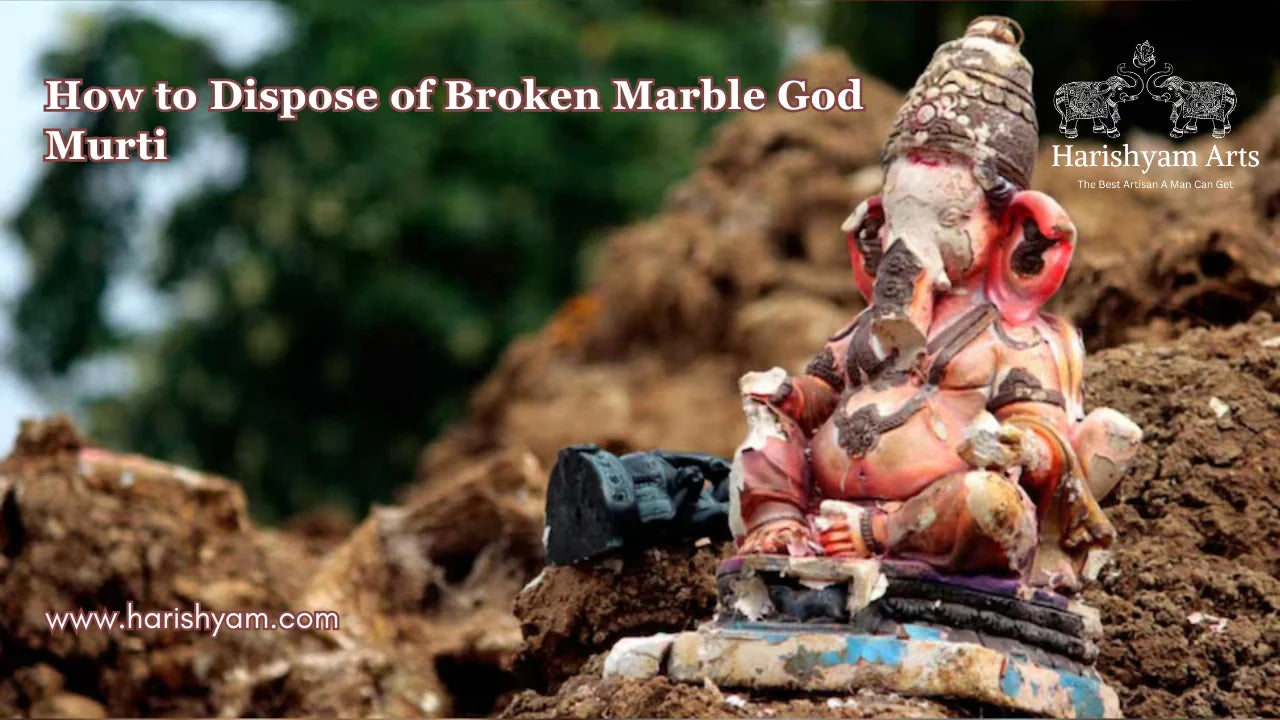
In Hindu tradition, marble murtis represent divine presence and spiritual energy. When a murti gets damaged or broken, it’s believed that the spiritual essence departs from it. Therefore, it should never be discarded carelessly or treated as waste. Proper disposal shows devotion, respect, and understanding of sacred values. At Harishyam Arts, we guide devotees to handle this process gracefully, ensuring every idol receives the honor it deserves. Whether you choose restoration or respectful disposal, treating a murti with reverence maintains your home’s sanctity and spiritual balance.
Why Proper Disposal Matters
A marble murti symbolizes divine power, so improper disposal is considered disrespectful. Throwing or neglecting a broken idol can disturb the spiritual harmony of your space. Proper rituals and respectful handling maintain purity, gratitude, and connection with the divine. It’s also an expression of responsibility toward your faith and the environment. Following traditional practices ensures you part with your idol reverently. At Harishyam Arts, we help devotees understand these sacred processes so that every step, from farewell to renewal, reflects devotion, dignity, and awareness of our cultural and spiritual roots.
Step-by-Step Guide to Dispose of a Broken Marble Murti
-
Clean the Murti:
Gently wash the broken idol with clean water or milk to purify and remove dust or negative energy.
-
Wrap Respectfully:
Use a clean white or red cloth to wrap the murti. Add flowers, tulsi leaves, or sandalwood paste as a final offering.
-
Offer Prayers:
Light incense or a diya and chant mantras to thank the deity for divine blessings and guidance.
-
Dispose Reverently:
-
Option 1: Immerse in a clean pond or river (eco-friendly way preferred).
-
Option 2: Bury it in your garden near a sacred tree or plant.
-
Purify the Space:
After disposal, clean the puja area, light a diya, and offer fresh flowers to invite positive energy and divine grace.
Eco-Friendly Alternatives
Modern devotees are now embracing eco-friendly murti disposal methods. Instead of immersing idols in rivers or lakes—which may harm nature—you can respectfully bury the murti in your garden or courtyard. Another thoughtful way is to preserve a small piece of marble as a symbolic reminder of divine blessings. Some devotees place the remains beneath a tulsi or peepal tree, representing life and renewal.
At Harishyam Arts, we encourage sustainable spirituality—honoring both tradition and nature—so that your devotion remains pure, environmentally conscious, and aligned with today’s ethical practices.
Can Broken Marble Murtis Be Repaired?
Yes, in many cases, a broken marble murti can be beautifully repaired. Skilled artisans can fill cracks, reattach fragments, and repaint damaged portions while maintaining the idol’s sanctity.
At Harishyam Arts, our experienced craftsmen specialize in restoring marble murtis with precision and devotion. Restoration allows devotees to continue worshiping their beloved deity while preserving the idol’s emotional and spiritual value. Choosing repair over disposal can be a meaningful act of faith, demonstrating care for both craftsmanship and divine connection, keeping the murti’s presence alive in your sacred space.
Custom Replacement Options at Harishyam Arts
When restoration isn’t possible, creating a new custom murti is the next sacred step. At Harishyam Arts, we craft exquisite marble god murtis from high-quality Makrana marble. Our artisans blend traditional design with precise detailing to reflect divine grace. Whether you wish to recreate your old murti or commission a new design, we ensure each piece radiates beauty and purity. Every murti is hand-sculpted with devotion, making it worthy of worship and your spiritual vision. Replacing respectfully renews your connection to faith and invites divine energy into your home.
FAQs
Q1. What should I do if my murti has small cracks?
Ans: Minor cracks can often be repaired by skilled craftsmen. Harishyam Arts offers expert restoration to revive its beauty and sanctity.
Q2. Can I keep a broken murti at home?
Ans: No, a broken murti is considered spiritually inactive. It should be respectfully disposed of following traditional rituals.
Q3. How can I perform visarjan at home?
Ans: You can immerse the idol in a clean water vessel or bury it in your garden while chanting prayers and offering flowers.
Q4. Can Harishyam Arts create custom marble idols?
Ans: Yes, we specialize in custom-made marble murtis crafted to match your spiritual preferences and artistic vision.
Conclusion
Disposing of a broken marble murti is a sacred act rooted in gratitude and renewal. Following proper rituals preserves the purity of faith and honors divine energy. Whether you choose restoration, eco-friendly disposal, or a new idol, it reflects your devotion’s depth.
At Harishyam Arts, we help devotees handle every stage—from repairing to replacing—with respect and care. Each marble murti we create or restore symbolizes devotion, purity, and timeless artistry. Continue your spiritual journey gracefully, knowing your faith is reflected in every sacred action you take.

Lakshay Sharma
I’m Lakshay Sharma, a writer with a deep passion for Hindu mythology, Vastu Shastra, and home interiors. I enjoy exploring the rich traditions of Hindu gods and goddesses, sharing insights into Vastu principles, and offering guidance on creating sacred spaces like Puja Mandirs. Through my writing, I aim to inspire harmony and spiritual well-being, blending traditional knowledge with modern perspectives.
Harishyam Arts | Jaipur
Related Blogs

Bhagavad Gita Chapter 5 Verse 27 Meaning in Hindi and English
Lakshay Sharma | June 17, 2026
Bhagavad Gita Chapter 5 Verse 27 Meaning in Hindi and English

Bhagavad Gita Chapter 5 Verse 28 Meaning in Hindi and English
Lakshay Sharma | June 17, 2026
Bhagavad Gita Chapter 5 Verse 28 Meaning in Hindi and English

Bhagavad Gita Chapter 5 Verse 26 Meaning in Hindi and English
Lakshay Sharma | June 17, 2026
Bhagavad Gita Chapter 5 Verse 26 Meaning in Hindi and English

Bhagavad Gita Chapter 5 Verse 25 Meaning in Hindi and English
Lakshay Sharma | June 17, 2026
Bhagavad Gita Chapter 5 Verse 25 Meaning in Hindi and English

Bhagavad Gita Chapter 5 Verse 23 Meaning in Hindi and English
Lakshay Sharma | June 17, 2026
Bhagavad Gita Chapter 5 Verse 23 Meaning in Hindi and English
Bhagavad Gita Chapter 5 Verse 15 Meaning in Hindi and English
Lakshay Sharma | June 17, 2026
Bhagavad Gita Chapter 5 Verse 15 Meaning in Hindi and English

Bhagavad Gita Chapter 5 Verse 14 Meaning in Hindi and English
Lakshay Sharma | June 17, 2026
Bhagavad Gita Chapter 5 Verse 14 is important because:

Bhagavad Gita Chapter 5 Verse 11 Meaning in Hindi and English
Lakshay Sharma | June 17, 2026
Bhagavad Gita Chapter 5 Verse 11 Meaning in Hindi and English

How Marble Moortis Are Energized Before Being Placed in a Temple or Home Mandir
Lakshay Sharma | June 17, 2026
In Indian spiritual tradition, a marble moorti is much more than a decorative ...
Read More...
Bhagavad Gita Chapter 5 Verse 22 Meaning in Hindi & English
Lakshay Sharma | June 16, 2026
Bhagavad Gita Chapter 5 Verse 22 delivers a powerful warning about the nature ...
Read More...
Bhagavad Gita Chapter 5 Verse 21 Meaning in Hindi & English
Lakshay Sharma | June 16, 2026
Bhagavad Gita Chapter 5 Verse 21 continues Lord Krishna's teachings on inner p...
Read More...
Bhagavad Gita Chapter 5 Verse 20 Meaning in Hindi & English
Lakshay Sharma | June 16, 2026
Bhagavad Gita Chapter 5 Verse 20 teaches one of the most important qualities o...
Read More...
Bhagavad Gita Chapter 5 Verse 19 Meaning in Hindi & English
Lakshay Sharma | June 16, 2026
Bhagavad Gita Chapter 5 Verse 19 continues the profound teaching of

Bhagavad Gita Chapter 5 Verse 18 Meaning in Hindi & English
Lakshay Sharma | June 16, 2026
Bhagavad Gita Chapter 5 Verse 18 is one of the most celebrated verses on Read More...

Bhagavad Gita Chapter 5 Verse 17 Meaning in Hindi & English
Lakshay Sharma | June 16, 2026
Bhagavad Gita Chapter 5 Verse 17 continues Lord Krishna's profound discussion ...
Read More...
Bhagavad Gita Chapter 5 Verse 16 Meaning in Hindi And English
Lakshay Sharma | June 16, 2026
Bhagavad Gita Chapter 5 Verse 16 is a powerful verse about the transformative ...
Read More...
Bhagavad Gita Chapter 5 Verse 10 Meaning in Hindi and English
Lakshay Sharma | June 16, 2026
Bhagavad Gita Chapter 5 Verse 10 Meaning in Hindi and English

Bhagavad Gita Chapter 5 Verse 9 Meaning in Hindi and English
Lakshay Sharma | June 16, 2026
Bhagavad Gita Chapter 5 Verse 9 Meaning in Hindi and English

Bhagavad Gita Chapter 5 Verse 8 Meaning in Hindi and English
Lakshay Sharma | June 16, 2026
Bhagavad Gita Chapter 5 Verse 8 Meaning in Hindi and English

Bhagavad Gita Chapter 5 Verse 6 Meaning in Hindi and English
Lakshay Sharma | June 16, 2026
Bhagavad Gita Chapter 5 Verse 6 Meaning in Hindi and English

Bhagavad Gita Chapter 5 Verse 4 Meaning in Hindi and English
Lakshay Sharma | June 16, 2026
Bhagavad Gita Chapter 5 Verse 4 Meaning in Hindi and English

Bhagavad Gita Chapter 5 Verse 3 Meaning in Hindi and English
Lakshay Sharma | June 16, 2026
Bhagavad Gita Chapter 5 Verse 3 Meaning in Hindi and English

Bhagavad Gita Chapter 5 Verse 2 Meaning in Hindi and English
Lakshay Sharma | June 16, 2026
Bhagavad Gita Chapter 5 Verse 2 Meaning in Hindi and English

Bhagavad Gita Chapter 5 Verse 1 Meaning in Hindi and English
Lakshay Sharma | June 16, 2026
Bhagavad Gita Chapter 5 Verse 1 Meaning in Hindi and English

Bhagavad Gita Chapter 5 Verse 24 Meaning in Hindi and English
Lakshay Sharma | June 16, 2026
Bhagavad Gita Chapter 5 Verse 24 Meaning in Hindi and English

Bhagavad Gita Chapter 5 Verse 13 Meaning in Hindi and English
Lakshay Sharma | June 16, 2026
Bhagavad Gita Chapter 5 Verse 13 Meaning in Hindi and English

Bhagavad Gita Chapter 5 Verse 12 Meaning in Hindi and English
Lakshay Sharma | June 16, 2026
Bhagavad Gita Chapter 5 Verse 12 Meaning in Hindi and English
Bhagavad Gita Chapter 4 Verse 42 Meaning in Hindi and English
Lakshay Sharma | June 16, 2026
Bhagavad Gita Chapter 4 Verse 42 is the concluding verse of Chapt...
Read More...
Bhagavad Gita Chapter 4 Verse 41 Meaning in Hindi and English
Lakshay Sharma | June 16, 2026
Bhagavad Gita Chapter 4 Verse 41 reveals the state of a person who has attaine...
Read More...
Bhagavad Gita Chapter 4 Verse 39 Meaning in Hindi and English
Lakshay Sharma | June 16, 2026
Bhagavad Gita Chapter 4 Verse 39 beautifully explains the qualiti...
Read More...
Bhagavad Gita Chapter 4 Verse 38 Meaning in Hindi and English
Lakshay Sharma | June 16, 2026
Bhagavad Gita Chapter 4 Verse 38 is one of the most celebrated verses on the g...
Read More...
Bhagavad Gita Chapter 4 Verse 37 Meaning in Hindi and English
Lakshay Sharma | June 16, 2026
Bhagavad Gita Chapter 4 Verse 37 uses a powerful metaphor to describe the tran...
Read More...
Bhagavad Gita Chapter 4 Verse 36 Meaning in Hindi and English
Lakshay Sharma | June 16, 2026
Bhagavad Gita Chapter 4 Verse 36 is one of the most reassuring verses in the G...
Read More...
Bhagavad Gita Chapter 5 Verse 7 Meaning in Hindi and English
Lakshay Sharma | June 15, 2026
Bhagavad Gita Chapter 5 Verse 7 Meaning in Hindi and English

Powerful Lord Ganesha Mantras to Remove Obstacles in Life
Lakshay Sharma | June 15, 2026
In Hindu spirituality, Lord Ganesha is worshipped as the remover of obstacles,...
Read More...
Bhagavad Gita Chapter 4 Verse 40 Meaning in Hindi and English
Lakshay Sharma | June 15, 2026
Bhagavad Gita Chapter 4 Verse 40 serves as a profound warning about the obstac...
Read More...
Why White Marble Mandirs Are Associated with Purity, Peace, and Divine Energy
Lakshay Sharma | June 14, 2026
In Indian culture and spiritual traditions, temples are not just places of wor...
Read More...
Bhagavad Gita Chapter 4 Verse 35 Meaning in Hindi and English
Lakshay Sharma | June 13, 2026
Bhagavad Gita Chapter 4 Verse 35 reveals the transformative power...
Read More...
Bhagavad Gita Chapter 4 Verse 34 Meaning in Hindi and English
Lakshay Sharma | June 13, 2026
Bhagavad Gita Chapter 4 Verse 34 is one of the most influential verses on the ...
Read More...
Bhagavad Gita Chapter 4 Verse 33 Meaning in Hindi and English
Lakshay Sharma | June 13, 2026
Bhagavad Gita Chapter 4 Verse 33 marks a turning point in Lord Krishna’s teach...
Read More...
Bhagavad Gita Chapter 4 Verse 32 Meaning in Hindi and English
Lakshay Sharma | June 13, 2026
Bhagavad Gita Chapter 4 Verse 32 concludes Lord Krishna’s discussion on the va...
Read More...
Bhagavad Gita Chapter 4 Verse 31 Meaning in Hindi and English
Lakshay Sharma | June 12, 2026
Bhagavad Gita Chapter 4 Verse 31 highlights the immense importance of <...
Read More...
Bhagavad Gita Chapter 4 Verse 30 Meaning in Hindi and English
Lakshay Sharma | June 12, 2026
Bhagavad Gita Chapter 4 Verse 30 continues Lord Krishna’s discussion on the di...
Read More...
Bhagavad Gita Chapter 4 Verse 29 Meaning in Hindi and English
Lakshay Sharma | June 12, 2026
Bhagavad Gita Chapter 4 Verse 29 continues Lord Krishna’s explanation of the d...
Read More...
Bhagavad Gita Chapter 4 Verse 28 Meaning in Hindi and English
Lakshay Sharma | June 12, 2026
Bhagavad Gita Chapter 4 Verse 28 continues Lord Krishna’s explanation of the m...
Read More...
Bhagavad Gita Chapter 4 Verse 27 Meaning in Hindi and English
Lakshay Sharma | June 12, 2026
Bhagavad Gita Chapter 4 Verse 27 continues Lord Krishna’s discourse on the var...
Read More...
Bhagavad Gita Chapter 4 Verse 25 Meaning in Hindi & English
Lakshay Sharma | June 12, 2026
Bhagavad Gita Chapter 4 Verse 25 marks the beginning of Lord Krishna's detaile...
Read More...
Bhagavad Gita Chapter 4 Verse 24 Meaning in Hindi & English
Lakshay Sharma | June 12, 2026
Bhagavad Gita Chapter 4 Verse 24 is one of the most profound and philosophical...
Read More...
Bhagavad Gita Chapter 4 Verse 23 Meaning in Hindi & English
Lakshay Sharma | June 12, 2026
Bhagavad Gita Chapter 4 Verse 23 continues Lord Krishna's profound teachings o...
Read More...
Bhagavad Gita Chapter 4 Verse 22 Meaning in Hindi & English
Lakshay Sharma | June 12, 2026
Bhagavad Gita Chapter 4 Verse 22 presents one of the clearest descriptions of ...
Read More...


