
Harishyam Arts Blog
Which Lakshmi Idol is Good for Home? Types, Materials, and Significance
By Lakshay Sharma | On 11 October, 2025 | Views
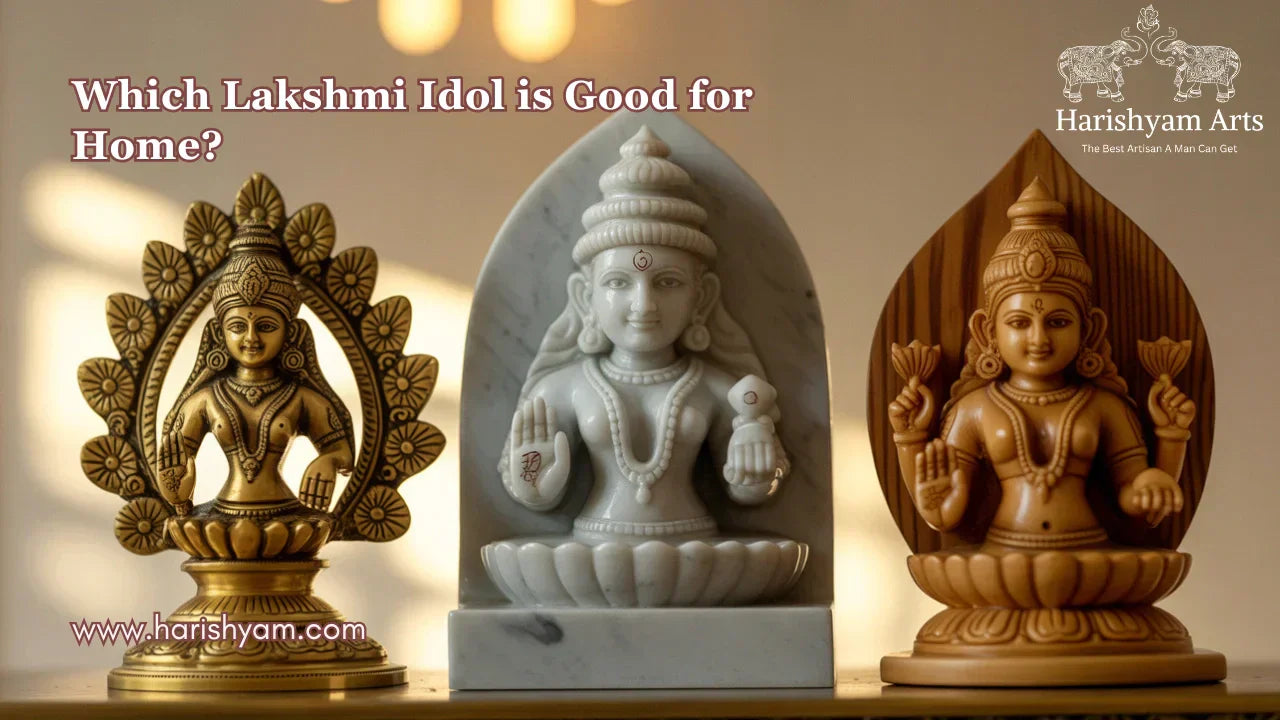
Goddess Lakshmi, the divine symbol of wealth, prosperity, and abundance, is revered in every Hindu household. Choosing the right Lakshmi idol for your home not only enhances your pooja space but also attracts positive energy and spiritual harmony. At Harishyam Arts, we offer an exquisite collection of brass, marble, and wooden statues of Lakshmi Ma perfect for home worship.
Different Forms of Lakshmi Statues and Their Significance
-
Sitting Lakshmi (Padmasana): Seated gracefully on a lotus, this form represents stability, peace, and spiritual balance. Ideal for your home altar.
-
Standing Lakshmi: Symbolizes active energy and growth, making it perfect for business areas or home offices.
-
Lakshmi with Ganesha: A popular combination representing wealth and wisdom, often placed at entrances or pooja rooms.
-
Ashta Lakshmi (Eight Forms of Lakshmi): Represents different aspects of wealth, including prosperity, knowledge, courage, fertility, and victory. Placing Ashta Lakshmi statues can bring holistic blessings into your home.
Which Material Lakshmi Idol is Good for Home?
Choosing the right material for a Goddess Lakshmi idol is important because it affects both the aesthetics and the energy of your home. Different materials have different spiritual and decorative benefits.
-
Pros: Pure, elegant, and long-lasting.
-
Spiritual Significance: White marble symbolizes purity and peace, attracting positive energy.
-
Best For: Traditional pooja rooms and main altars.
2. Brass or Bronze Lakshmi Idol
-
Pros: Durable, antique look, easy to maintain.
-
Spiritual Significance: Metals like brass and bronze are believed to enhance prosperity and good luck.
-
Best For: Homes where rituals are performed regularly; also suitable for placing at entrances or offices.
-
Pros: Lightweight, eco-friendly, natural look.
-
Spiritual Significance: Brings warmth and a natural vibe to the pooja area.
-
Best For: Modern homes, apartments, or small altars.
4. Resin or Fiber Lakshmi Idol
-
Pros: Affordable, available in many designs, easy to clean.
-
Spiritual Significance: While not traditional, these idols are good for decorative purposes and casual worship.
-
Best For: Homes looking for decorative yet symbolic idols.
Tip for Choosing Material:
-
Traditional Worship: Marble or brass is preferred.
-
Aesthetic & Compact Spaces: Wood or resin works well.
-
Always ensure the idol is clean, intact, and respectfully placed in the pooja area.
Conclusion
Choosing the right Lakshmi idol for your home is a meaningful decision that combines devotion, aesthetics, and positive energy. Whether you prefer the purity of marble, the timeless charm of brass, or the warmth of wood, each material carries its own spiritual significance and visual appeal. The form you select—sitting, standing, or with Lord Ganesha—should align with your intentions, whether for peace, prosperity, or growth.
At Harishyam Arts, we take pride in offering finely crafted Lakshmi idols made from premium materials, designed to bring grace, abundance, and divine blessings into every home. Choose the form and material that resonate with your heart, and let the presence of Maa Lakshmi fill your space with wealth, harmony, and serenity.
FAQs
Q1. Can we keep a standing Lakshmi photo at home?
Ans: It is generally recommended to keep a sitting Lakshmi photo at home, as it represents stability, peace, and prosperity. A standing Lakshmi image is often associated with movement and is more suitable for temples or places of business where constant growth and activity are desired.
Q2. Can we keep a silver Lakshmi idol at home?
Ans: Yes, keeping a silver Lakshmi idol at home is considered highly auspicious. Silver symbolizes purity, wealth, and divine energy, making it ideal for invoking Goddess Lakshmi’s blessings for prosperity and well-being.
Q3. Which direction should Lakshmi face at home?
Ans: The ideal direction for placing Goddess Lakshmi is facing east or north. Devotees should face east while worshipping. Avoid placing the idol near restrooms or directly facing the main door. The space should always remain clean, bright, and positive.
Q4. Which Lakshmi photo is good for home — standing or sitting?
Ans: A sitting Lakshmi photo or idol is best for home use. It symbolizes calmness, stability, and continuous prosperity, indicating that Goddess Lakshmi is staying in your home. A standing form, on the other hand, signifies movement and is better suited for workplaces or shops.
Q5. Where to buy Maa Lakshmi idols online?
Ans: You can purchase beautifully crafted Maa Lakshmi idols from Harishyam Arts, which offers a wide range of marble, brass, silver, and wooden idols available for online order and worldwide delivery. Each idol is intricately designed to bring divine grace and positive energy to your space.

Lakshay Sharma
I’m Lakshay Sharma, a writer with a deep passion for Hindu mythology, Vastu Shastra, and home interiors. I enjoy exploring the rich traditions of Hindu gods and goddesses, sharing insights into Vastu principles, and offering guidance on creating sacred spaces like Puja Mandirs. Through my writing, I aim to inspire harmony and spiritual well-being, blending traditional knowledge with modern perspectives.
Harishyam Arts | Jaipur
Related Blogs

Bhagavad Gita Chapter 2 Verse 35 Meaning in Hindi and English
Lakshay Sharma | June 22, 2026
Bhagavad Gita Chapter 2 Verse 35 continues Lord Krishna’s message about courag...
Read More...
Bhagavad Gita Chapter 2 Verse 34 Meaning in Hindi and English
Lakshay Sharma | June 22, 2026
Bhagavad Gita Chapter 2 Verse 34 continues Lord Krishna's effort to awaken Arj...
Read More...
Sacred Animals in Hinduism and Their Spiritual Meaning
Lakshay Sharma | June 22, 2026
Hinduism is one of the oldest religions in the world, deeply connected with na...
Read More...
Bhagavad Gita Chapter 5 Verse 27 Meaning in Hindi and English
Lakshay Sharma | June 17, 2026
Bhagavad Gita Chapter 5 Verse 27 Meaning in Hindi and English

Bhagavad Gita Chapter 5 Verse 28 Meaning in Hindi and English
Lakshay Sharma | June 17, 2026
Bhagavad Gita Chapter 5 Verse 28 Meaning in Hindi and English

Bhagavad Gita Chapter 5 Verse 26 Meaning in Hindi and English
Lakshay Sharma | June 17, 2026
Bhagavad Gita Chapter 5 Verse 26 Meaning in Hindi and English

Bhagavad Gita Chapter 5 Verse 25 Meaning in Hindi and English
Lakshay Sharma | June 17, 2026
Bhagavad Gita Chapter 5 Verse 25 Meaning in Hindi and English

Bhagavad Gita Chapter 5 Verse 23 Meaning in Hindi and English
Lakshay Sharma | June 17, 2026
Bhagavad Gita Chapter 5 Verse 23 Meaning in Hindi and English
Bhagavad Gita Chapter 5 Verse 15 Meaning in Hindi and English
Lakshay Sharma | June 17, 2026
Bhagavad Gita Chapter 5 Verse 15 Meaning in Hindi and English

Bhagavad Gita Chapter 5 Verse 14 Meaning in Hindi and English
Lakshay Sharma | June 17, 2026
Bhagavad Gita Chapter 5 Verse 14 is important because:

Bhagavad Gita Chapter 5 Verse 11 Meaning in Hindi and English
Lakshay Sharma | June 17, 2026
Bhagavad Gita Chapter 5 Verse 11 Meaning in Hindi and English

How Marble Moortis Are Energized Before Being Placed in a Temple or Home Mandir
Lakshay Sharma | June 17, 2026
In Indian spiritual tradition, a marble moorti is much more than a decorative ...
Read More...
Bhagavad Gita Chapter 5 Verse 22 Meaning in Hindi & English
Lakshay Sharma | June 16, 2026
Bhagavad Gita Chapter 5 Verse 22 delivers a powerful warning about the nature ...
Read More...
Bhagavad Gita Chapter 5 Verse 21 Meaning in Hindi & English
Lakshay Sharma | June 16, 2026
Bhagavad Gita Chapter 5 Verse 21 continues Lord Krishna's teachings on inner p...
Read More...
Bhagavad Gita Chapter 5 Verse 20 Meaning in Hindi & English
Lakshay Sharma | June 16, 2026
Bhagavad Gita Chapter 5 Verse 20 teaches one of the most important qualities o...
Read More...
Bhagavad Gita Chapter 5 Verse 19 Meaning in Hindi & English
Lakshay Sharma | June 16, 2026
Bhagavad Gita Chapter 5 Verse 19 continues the profound teaching of

Bhagavad Gita Chapter 5 Verse 18 Meaning in Hindi & English
Lakshay Sharma | June 16, 2026
Bhagavad Gita Chapter 5 Verse 18 is one of the most celebrated verses on Read More...

Bhagavad Gita Chapter 5 Verse 17 Meaning in Hindi & English
Lakshay Sharma | June 16, 2026
Bhagavad Gita Chapter 5 Verse 17 continues Lord Krishna's profound discussion ...
Read More...
Bhagavad Gita Chapter 5 Verse 16 Meaning in Hindi And English
Lakshay Sharma | June 16, 2026
Bhagavad Gita Chapter 5 Verse 16 is a powerful verse about the transformative ...
Read More...
Bhagavad Gita Chapter 5 Verse 10 Meaning in Hindi and English
Lakshay Sharma | June 16, 2026
Bhagavad Gita Chapter 5 Verse 10 Meaning in Hindi and English

Bhagavad Gita Chapter 5 Verse 9 Meaning in Hindi and English
Lakshay Sharma | June 16, 2026
Bhagavad Gita Chapter 5 Verse 9 Meaning in Hindi and English

Bhagavad Gita Chapter 5 Verse 8 Meaning in Hindi and English
Lakshay Sharma | June 16, 2026
Bhagavad Gita Chapter 5 Verse 8 Meaning in Hindi and English

Bhagavad Gita Chapter 5 Verse 6 Meaning in Hindi and English
Lakshay Sharma | June 16, 2026
Bhagavad Gita Chapter 5 Verse 6 Meaning in Hindi and English

Bhagavad Gita Chapter 5 Verse 4 Meaning in Hindi and English
Lakshay Sharma | June 16, 2026
Bhagavad Gita Chapter 5 Verse 4 Meaning in Hindi and English

Bhagavad Gita Chapter 5 Verse 3 Meaning in Hindi and English
Lakshay Sharma | June 16, 2026
Bhagavad Gita Chapter 5 Verse 3 Meaning in Hindi and English

Bhagavad Gita Chapter 5 Verse 2 Meaning in Hindi and English
Lakshay Sharma | June 16, 2026
Bhagavad Gita Chapter 5 Verse 2 Meaning in Hindi and English

Bhagavad Gita Chapter 5 Verse 1 Meaning in Hindi and English
Lakshay Sharma | June 16, 2026
Bhagavad Gita Chapter 5 Verse 1 Meaning in Hindi and English

Bhagavad Gita Chapter 5 Verse 24 Meaning in Hindi and English
Lakshay Sharma | June 16, 2026
Bhagavad Gita Chapter 5 Verse 24 Meaning in Hindi and English

Bhagavad Gita Chapter 5 Verse 13 Meaning in Hindi and English
Lakshay Sharma | June 16, 2026
Bhagavad Gita Chapter 5 Verse 13 Meaning in Hindi and English

Bhagavad Gita Chapter 5 Verse 12 Meaning in Hindi and English
Lakshay Sharma | June 16, 2026
Bhagavad Gita Chapter 5 Verse 12 Meaning in Hindi and English
Bhagavad Gita Chapter 4 Verse 42 Meaning in Hindi and English
Lakshay Sharma | June 16, 2026
Bhagavad Gita Chapter 4 Verse 42 is the concluding verse of Chapt...
Read More...
Bhagavad Gita Chapter 4 Verse 41 Meaning in Hindi and English
Lakshay Sharma | June 16, 2026
Bhagavad Gita Chapter 4 Verse 41 reveals the state of a person who has attaine...
Read More...
Bhagavad Gita Chapter 4 Verse 39 Meaning in Hindi and English
Lakshay Sharma | June 16, 2026
Bhagavad Gita Chapter 4 Verse 39 beautifully explains the qualiti...
Read More...
Bhagavad Gita Chapter 4 Verse 38 Meaning in Hindi and English
Lakshay Sharma | June 16, 2026
Bhagavad Gita Chapter 4 Verse 38 is one of the most celebrated verses on the g...
Read More...
Bhagavad Gita Chapter 4 Verse 37 Meaning in Hindi and English
Lakshay Sharma | June 16, 2026
Bhagavad Gita Chapter 4 Verse 37 uses a powerful metaphor to describe the tran...
Read More...
Bhagavad Gita Chapter 4 Verse 36 Meaning in Hindi and English
Lakshay Sharma | June 16, 2026
Bhagavad Gita Chapter 4 Verse 36 is one of the most reassuring verses in the G...
Read More...
Bhagavad Gita Chapter 5 Verse 7 Meaning in Hindi and English
Lakshay Sharma | June 15, 2026
Bhagavad Gita Chapter 5 Verse 7 Meaning in Hindi and English

Powerful Lord Ganesha Mantras to Remove Obstacles in Life
Lakshay Sharma | June 15, 2026
In Hindu spirituality, Lord Ganesha is worshipped as the remover of obstacles,...
Read More...
Bhagavad Gita Chapter 4 Verse 40 Meaning in Hindi and English
Lakshay Sharma | June 15, 2026
Bhagavad Gita Chapter 4 Verse 40 serves as a profound warning about the obstac...
Read More...
Why White Marble Mandirs Are Associated with Purity, Peace, and Divine Energy
Lakshay Sharma | June 14, 2026
In Indian culture and spiritual traditions, temples are not just places of wor...
Read More...
Bhagavad Gita Chapter 4 Verse 35 Meaning in Hindi and English
Lakshay Sharma | June 13, 2026
Bhagavad Gita Chapter 4 Verse 35 reveals the transformative power...
Read More...
Bhagavad Gita Chapter 4 Verse 34 Meaning in Hindi and English
Lakshay Sharma | June 13, 2026
Bhagavad Gita Chapter 4 Verse 34 is one of the most influential verses on the ...
Read More...
Bhagavad Gita Chapter 4 Verse 33 Meaning in Hindi and English
Lakshay Sharma | June 13, 2026
Bhagavad Gita Chapter 4 Verse 33 marks a turning point in Lord Krishna’s teach...
Read More...
Bhagavad Gita Chapter 4 Verse 32 Meaning in Hindi and English
Lakshay Sharma | June 13, 2026
Bhagavad Gita Chapter 4 Verse 32 concludes Lord Krishna’s discussion on the va...
Read More...
Bhagavad Gita Chapter 4 Verse 31 Meaning in Hindi and English
Lakshay Sharma | June 12, 2026
Bhagavad Gita Chapter 4 Verse 31 highlights the immense importance of <...
Read More...
Bhagavad Gita Chapter 4 Verse 30 Meaning in Hindi and English
Lakshay Sharma | June 12, 2026
Bhagavad Gita Chapter 4 Verse 30 continues Lord Krishna’s discussion on the di...
Read More...
Bhagavad Gita Chapter 4 Verse 29 Meaning in Hindi and English
Lakshay Sharma | June 12, 2026
Bhagavad Gita Chapter 4 Verse 29 continues Lord Krishna’s explanation of the d...
Read More...
Bhagavad Gita Chapter 4 Verse 28 Meaning in Hindi and English
Lakshay Sharma | June 12, 2026
Bhagavad Gita Chapter 4 Verse 28 continues Lord Krishna’s explanation of the m...
Read More...
Bhagavad Gita Chapter 4 Verse 27 Meaning in Hindi and English
Lakshay Sharma | June 12, 2026
Bhagavad Gita Chapter 4 Verse 27 continues Lord Krishna’s discourse on the var...
Read More...
Bhagavad Gita Chapter 4 Verse 25 Meaning in Hindi & English
Lakshay Sharma | June 12, 2026
Bhagavad Gita Chapter 4 Verse 25 marks the beginning of Lord Krishna's detaile...
Read More...


