
Harishyam Arts Blog
The Story of Goddess Saraswati: The Embodiment of Wisdom and Knowledge
By Lakshay Sharma | On 26 October, 2025 | Views
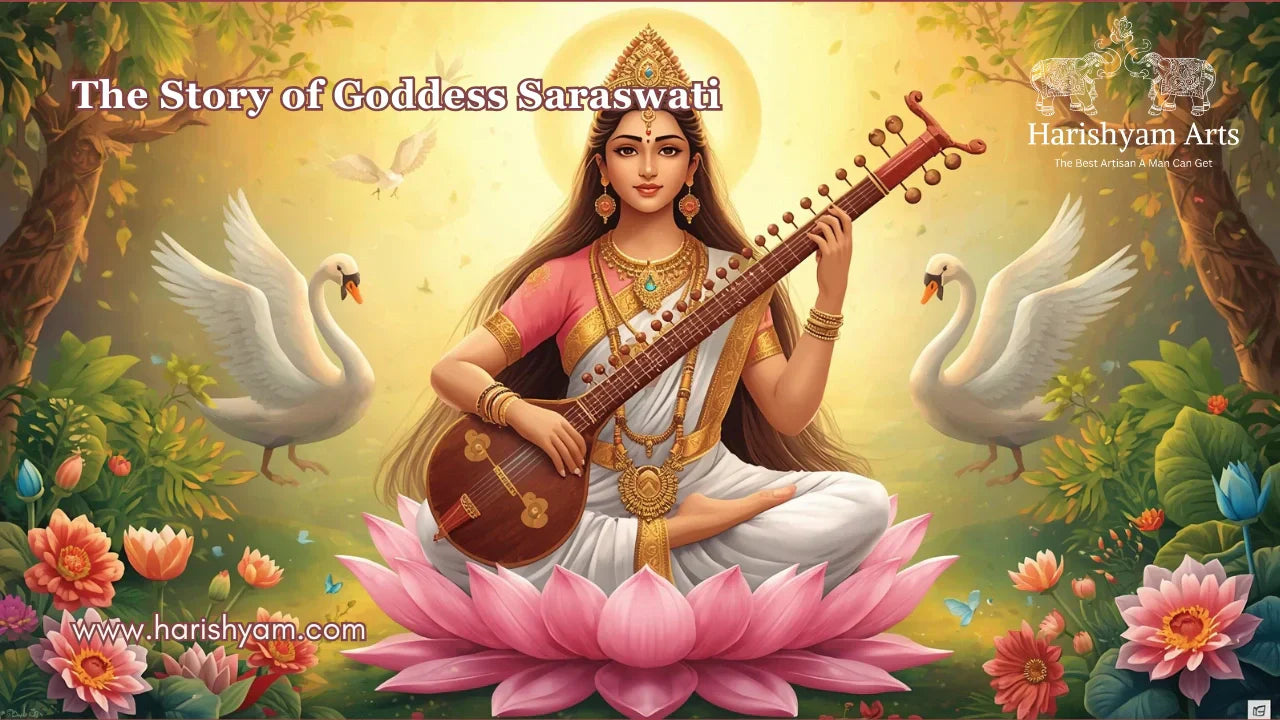
Among the many deities of the Hindu pantheon, Maa Saraswati holds a unique and sacred place. She is the Goddess of Wisdom, Knowledge, Music, and Arts, and the divine energy that transforms ignorance into enlightenment. Her blessings are sought by students, artists, and seekers of truth.
At Harishyam Arts, we honor this divine embodiment through our handcrafted brass Saraswati idols, made with devotion and artistry to bring knowledge and peace to every home.
Who is Goddess Saraswati?
Maa Saraswati is one of the Tridevi, alongside Goddess Lakshmi and Goddess Parvati. She is the consort of Lord Brahma, the creator of the universe, and is believed to have given speech, music, and intellect to the world.
Her name is derived from the Sanskrit word “Saras” meaning “flow,” and “Wati” meaning “she who has.” Thus, Saraswati represents the continuous flow of wisdom and learning, guiding humanity toward truth and enlightenment.
The Divine Story of Maa Saraswati
According to ancient Hindu scriptures, when the universe was first created, it was silent and void. Lord Brahma desired to bring order and meaning to this creation. From his divine energy emerged a radiant goddess — Saraswati, holding a veena, scriptures, and a rosary.
She filled the world with sound, melody, and the power of expression. Her voice became the source of all knowledge, language, and art.
With her guidance, Lord Brahma began the act of creation — thus, Maa Saraswati became the source of knowledge that shaped existence itself.
In another tale, when ignorance spread across the universe, Saraswati descended to restore light and intellect. Her wisdom conquered darkness, reminding all that true power lies in knowledge, not wealth or might.
Symbolism of Maa Saraswati
Every element associated with Maa Saraswati holds spiritual meaning:
-
White attire: Represents purity, truth, and simplicity.
-
Veena: Symbol of balance between emotion and intellect.
-
Books (Vedas): The eternal source of divine knowledge.
-
Lotus seat: Detachment and spiritual awakening.
-
Swan (Hamsa): Discrimination between truth and illusion.
Together, these symbols teach that knowledge, when guided by purity and wisdom, leads to liberation.
Why Worship Maa Saraswati?
Worshipping Goddess Saraswati invites clarity, focus, and peace of mind. She blesses devotees with creativity, intelligence, and eloquence.
-
Ideal for students, writers, musicians, and teachers.
-
Enhances concentration and learning power.
-
Brings harmony and inspiration to your surroundings.
Keeping a marble Saraswati mata idol at home or in your study room helps attract divine energy, promoting learning and peace.
Pooja Rituals to Honor Maa Saraswati
Performing Saraswati Pooja brings wisdom and success in education and arts.
Here’s a simple ritual:
-
Clean the area and the idol with a soft cloth.
-
Place the idol on a white cloth facing east.
-
Offer white flowers, fruits, and sandalwood paste.
-
Chant the mantra – “Om Aim Saraswatyai Namah.”
-
Meditate while seeking her blessings for clarity and wisdom.
Special prayers are performed on Vasant Panchami, the sacred festival dedicated to Goddess Saraswati.
Why Choose a Maa Saraswati Statues from Harishyam Arts
At Harishyam Arts, every Saraswati idol is a true work of art — lovingly handcrafted by skilled Indian artisans with devotion, precision, and care.
✨ Our Saraswati statues feature:
-
Premium materials include marble, brass, and wooden saraswati maa statues ensuring beauty, strength, and timeless appeal.
-
Exquisite craftsmanship with fine detailing that reflects divine grace and serenity.
-
Variety of designs — from traditional to contemporary — perfect for homes, schools, offices, and temples.
-
Worldwide shipping with secure and convenient online ordering.
Each idol from Harishyam Arts radiates spiritual energy and artistic excellence, making it a perfect addition to your sacred space or place of learning.
FAQs about Goddess Saraswati and Brass Idols
Q1. Why is Maa Saraswati called the Goddess of Wisdom?\
Ans: She symbolizes the power of knowledge, speech, and learning. Her teachings inspire clarity, creativity, and enlightenment in all who seek her blessings.
Q2. What are the benefits of keeping a Saraswati idol at home?
Ans: It enhances focus, memory, and peace of mind. Students and artists benefit greatly, as it brings success in education, arts, and music.
Q3. Where should I place the Saraswati idol in my home?
Ans: The idol should face east or northeast, ideally in your study room or temple. This direction attracts positivity and mental clarity.
Q4. When is the best time to worship Maa Saraswati?
Ans: Vasant Panchami is the most auspicious day. However, regular prayers on Thursdays are also highly beneficial.
Q5. Why choose a brass Saraswati idol over other materials?
Ans: Brass conducts positive spiritual energy and symbolizes purity. It’s durable, radiant, and ideal for pooja or decoration.
Q6. How can I identify a pure brass idol?
Ans: A genuine brass idol feels heavier, has a warm golden hue, and produces a metallic sound when tapped gently.
Conclusion
The story of Maa Saraswati teaches that true beauty lies in wisdom, knowledge, and self-awareness. Her blessings bring enlightenment, creativity, and inner peace.
Bring home the divine presence of Saraswati with handcrafted idols from Harishyam Arts — a symbol of art, devotion, and eternal knowledge. Let her light guide your thoughts and your home toward purity and purpose.

Lakshay Sharma
I’m Lakshay Sharma, a writer with a deep passion for Hindu mythology, Vastu Shastra, and home interiors. I enjoy exploring the rich traditions of Hindu gods and goddesses, sharing insights into Vastu principles, and offering guidance on creating sacred spaces like Puja Mandirs. Through my writing, I aim to inspire harmony and spiritual well-being, blending traditional knowledge with modern perspectives.
Harishyam Arts | Jaipur
Related Blogs

Smoke, Oil, and Incense: A 5-Year Maintenance Guide for Keeping Corian Mandirs Pristine White
Lakshay Sharma | October 08, 2026
A Corian mandir brings a clean, contemporary look to a home prayer space. Its ...
Read More...
Alkaline Water & Natural Minerals: The Wellness Benefits of Storing Water in Habur Stone
Lakshay Sharma | October 08, 2026
Water storage has been an important part of Indian household traditions for ce...
Read More...
Wall-Mounted Wooden Reliefs & Panels: Creating Dramatic Focal Walls
Lakshay Sharma | October 08, 2026
A well-designed wall can completely change the character of a room. While pain...
Read More...
Sacred Lighting Schemes: Layering Ambient, Accent, and Focal Light in Your Pooja Corner
Lakshay Sharma | October 08, 2026
A pooja corner is more than a designated space for prayer. It is a peaceful pa...
Read More...
Sagwan (Teak) vs. Sheesham vs. Mango Wood: Which Timber Belongs in Your Sacred Mandir?
Lakshay Sharma | October 07, 2026
A sacred mandir is more than a piece of furniture. It is a dedicated space for...
Read More...
Panchdhatu vs. Brass: Understanding Sacred Metal Alloys for Home Temples
Lakshay Sharma | October 06, 2026
Choosing a sacred metal idol for a home temple involves more than selecting a ...
Read More...
Combining Warm Teakwood and Pure White Corian for the Ultimate Dual-Tone Mandir
Lakshay Sharma | October 05, 2026
A home mandir is a deeply meaningful space where spirituality, tradition, and ...
Read More...
Solid Brass vs. Resin Replicas: How to Spot Genuine Sand-Cast Metal Handicrafts
Lakshay Sharma | October 04, 2026
Traditional Indian handicrafts are admired for their craftsmanship, heritage, ...
Read More...
Engineering & Weight Safety: How to Safely Install a Ceiling-Hung Wooden Jhula
Lakshay Sharma | October 04, 2026
A ceiling-hung wooden jhula, or traditional indoor swing, can become a beautif...
Read More...
The Chemistry of Shine: Safe Ways to Clean Brass Idols Without Damaging Their Antique Patina
Lakshay Sharma | October 03, 2026
Brass idols have a distinctive beauty that comes from their warm golden tones,...
Read More...
Marble Care Through the Seasons: How to Protect Idols During Abhishekam and Festivals
Lakshay Sharma | October 01, 2026
Marble idols are admired for their purity, elegance, and timeless beauty. Whet...
Read More...
The Beauty of Brass Chains: Choosing Antique Brass Figures and Heavy-Duty Links for Wooden Jhula
Lakshay Sharma | October 01, 2026
A traditional wooden jhula is more than a piece of furniture. It is a beautifu...
Read More...
The Ergonomics of Prayer: Designing Mandirs for Sitting vs. Standing Worship
Lakshay Sharma | September 30, 2026
A home mandir is more than a decorative corner. It is a dedicated space for pr...
Read More...
Light and Shadow: How Architectural Lighting Transforms Marble Idols
Lakshay Sharma | September 28, 2026
Marble idols have a timeless beauty that comes from their material, craftsmans...
Read More...
Coffee Table Artifacts: Transforming Minimalist Living Rooms with Handcrafted Showpieces
Lakshay Sharma | September 26, 2026
Minimalist living rooms are celebrated for their clean lines, uncluttered spac...
Read More...
The Open-Concept Mandir: Using Marble Jali Screens to Create Sacred Boundaries Without Walls
Lakshay Sharma | September 25, 2026
Modern homes increasingly favor open floor plans, spacious interiors, and flex...
Read More...
Pietra Dura in the Temple: The Timeless Art of Inlaying Semi-Precious Stones into Marble Mandir Walls
Lakshay Sharma | September 24, 2026
A beautifully crafted marble mandir is more than a place of worship. It can al...
Read More...
Fire Safety and Smoke Management in Indoor Home Temples
Lakshay Sharma | September 22, 2026
A home temple, or puja mandir, is a peaceful and spi...
Read More...
The Royal Living Room: How to Style a Grand Hand-Carved Sofa Set with Antique Finishes
Lakshay Sharma | September 22, 2026
A living room is more than just a place to sit. It is often the heart of a hom...
Read More...
Kadam Wood vs. Sandalwood vs. Teak: Choosing the Right Timber for Carved Statues
Lakshay Sharma | September 20, 2026
Wooden statues have a timeless beauty. From traditional Indian deities to deco...
Read More...
Water, Chaas, and Lassi: How Habur Stone Vessels Naturally Cool and Mineralize Drinks
Lakshay Sharma | September 18, 2026
In Rajasthan, where summers can be intense and temperatures can rise dramatica...
Read More...
Hallway, Living Room, or Bedroom? Finding the Right Spot for Your Mandir When You Don't Have a Dedicated Pooja Room
Lakshay Sharma | September 16, 2026
Hallway, Living Room, or Bedroom? Finding the Right Spot for Your Mandir Read More...

Myth vs. Reality: Debunking Common Taboos and Rules During Pitru Paksha
Lakshay Sharma | September 14, 2026
Pitru Paksha is one of the most meaningful periods in the Hindu calendar, trad...
Read More...
What is Sarva Pitru Amavasya (Mahalaya)? Significance for Forgotten Ancestors
Lakshay Sharma | September 14, 2026
Sarva Pitru Amavasya, also known as Mahalaya Amavasy...
Read More...
Step-by-Step Guide to Performing Tarpan, Pind Daan, and Anna Daan at Home
Lakshay Sharma | September 14, 2026
In Hindu tradition, remembering and honoring our ancestors is considered an im...
Read More...
Beyond Rituals: The True Scientific and Spiritual Significance of Honoring Ancestors
Lakshay Sharma | September 14, 2026
In many Indian households, remembering and honoring ancestors is a deeply root...
Read More...
Understanding Pitru Paksha 2026: Complete Shradh Tithi Calendar and Key Dates
Lakshay Sharma | September 14, 2026
Pitru Paksha is one of the most important periods in the Hindu calendar for re...
Read More...
Black Bheslana vs. White Makrana: Choosing the Right Marble for Your Deity & Vastu
Lakshay Sharma | September 14, 2026
Choosing the right marble for a deity statue is more than a matter of colour a...
Read More...
The Statement Foyer: How to Style Entryway Consoles with Brass, Marble, and Wooden Handicrafts
Lakshay Sharma | September 12, 2026
The foyer is the first glimpse guests receive of your home. It creates an imme...
Read More...
Long Weekend Planner: Maximizing Holidays Around Diwali 2026
Lakshay Sharma | September 11, 2026
Diwali is one of the most awaited festivals in India—a time of lights, celebra...
Read More...
Preparing Your Home for Diwali 2026: Deep Cleaning and Vastu Tips
Lakshay Sharma | September 11, 2026
Diwali is more than just a festival of lights. It is a time to welcome happine...
Read More...
Bhai Dooj 2026: Auspicious Timings, Tilak Muhurat & Gift Ideas
Lakshay Sharma | September 11, 2026
Bhai Dooj is one of the most beautiful Hindu festivals celebrating the special...
Read More...
Govardhan Puja and Annakut 2026: Traditions, Date, and Recipe Ideas
Lakshay Sharma | September 11, 2026
Govardhan Puja is one of the most beautiful festivals celebrated during the Di...
Read More...
Choti Diwali & Naraka Chaturdashi 2026: History, Abhyang Snan & Significance
Lakshay Sharma | September 11, 2026
Diwali is one of the most auspicious and widely celebrated festivals in India. The festival of...
Read More...
Dhanteras 2026 Shopping Guide: What to Buy (and Avoid) for Good Luck
Lakshay Sharma | September 11, 2026
Dhanteras is one of the most auspicious days of the Diwali festival and is tra...
Read More...
Complete Step-by-Step Lakshmi-Ganesha Puja Vidhi for Diwali 2026
Lakshay Sharma | September 11, 2026
Diwali is one of the most auspicious and joyous festivals celebrated across In...
Read More...
Lakshmi Puja Muhurat 2026: City-Wise Timings and Auspicious Windows
Lakshay Sharma | September 11, 2026
Diwali is one of the most celebrated festivals in India, symbolizing the victo...
Read More...
The 5-Day Diwali Festival 2026: Day-by-Day Significance and Rituals
Lakshay Sharma | September 11, 2026
Diwali, also known as the Festival of Lights, is one...
Read More...
Diwali 2026 Complete Date Guide: Calendar, Tithis & Festival Schedule
Lakshay Sharma | September 11, 2026
Diwali 2026: Complete Date and Festival Guide
...
Read More...
Navratri Havan at Home: Essential Samagri List, Vidhi, and Clean-Up Tips
Lakshay Sharma | September 10, 2026
Navratri is one of the most auspicious Hindu festivals dedicated to the worshi...
Read More...
Kanya Pujan Guide: Significance, Prasad Menu Ideas, and Traditional Setup
Lakshay Sharma | September 10, 2026
Kanya Pujan is one of the most cherished traditions observed during

Bold Interior Trends: Styling Dark Wood, Charcoal Accents, and Luminous Metals
Lakshay Sharma | September 10, 2026
Interior design is moving beyond light, neutral palettes and predictable décor...
Read More...
Investment Pieces for Your Home: Why Hand-Carved Wooden Mandirs & Stone Sculptures Last Generations
Lakshay Sharma | September 10, 2026
A beautiful home is more than just a collection of furniture and décor. The mo...
Read More...
DIY Navratri Decorations: Creative Craft Ideas to Involve Kids and Family
Lakshay Sharma | September 10, 2026
Navratri is a festival of devotion, celebration, creativity, and togetherness....
Read More...
Festive Color Palettes: Warm Earthy Tones and Golden Accents to Transform Your Living Room
Lakshay Sharma | September 10, 2026
Festivals are the perfect time to refresh your home and create a warm, welcomi...
Read More...
Pooja Room Lighting Ideas: How to Use Backlighting, Brass Lamps, and Diyas for Festive Ambiance
Lakshay Sharma | September 10, 2026
The pooja room is one of the most peaceful and sacred spaces in an Indian home...
Read More...
Minimalist Pooja Room Designs: How to Create a Serene Meditation Space
Lakshay Sharma | September 10, 2026
A pooja room is more than just a dedicated corner for prayer. It is a place wh...
Read More...
How to Setup Ghatasthapana at Home: Step-by-Step Kalash Sthapana Vidhi & Decor Ideas
Lakshay Sharma | September 10, 2026
Ghatasthapana, also known as Kalash Sthapana, is one...
Read More...
Matte, PU, or Traditional Polish: Choosing the Right Protective Finish for Teak Mandirs
Lakshay Sharma | September 10, 2026
A beautifully handcrafted teak wood mandir is more than a place of worship. It...
Read More...
Aaj Ka Panchang 31 October 2026: Tithi, Nakshatra, Rahu Kaal, Shubh Muhurat & Choghadiya
Lakshay Sharma | September 09, 2026
Aaj Ka Panchang — Saturday, 31 October 2026
Welc...
Read More...


