
Harishyam Arts Blog
Interesting Facts About Maa Kali Statue
By Lakshay Sharma | On 02 October, 2025 | Views
Introduction
Among the many divine forms of Goddess Parvati, Maa Kali stands out as one of the most powerful and awe-inspiring. Known as the fierce destroyer of evil, Maa Kali is often misunderstood because of her terrifying appearance. In reality, she is the compassionate Mother Goddess who protects her devotees from negativity and guides them toward liberation. Statues of Maa Kali not only embody deep symbolism but also inspire strength, courage, and spiritual awakening.
(If you are looking for divine and artistic statues, you can explore beautifully crafted deity idols at Harishyam Arts for your home and temple.)
Origins and Significance of Maa Kali Statues
Maa Kali, a fierce form of Goddess Parvati, emerged from the ancient Shakta tradition, representing the boundless energy of Shakti. She is seen as the goddess of time, change, and destruction of evil. Her statues embody profound symbolism—her dark form represents the infinite cosmos, while her posture on Lord Shiva shows the balance of creation and destruction. Worshipping Maa Kali idols is believed to remove fear, ego, and negativity, guiding devotees toward spiritual liberation. Whether placed in temples or homes, Marble Maa Kali statues serve as powerful reminders of courage, divine protection, and the eternal victory of good over evil.
Unique Features of Maa Kali Statues
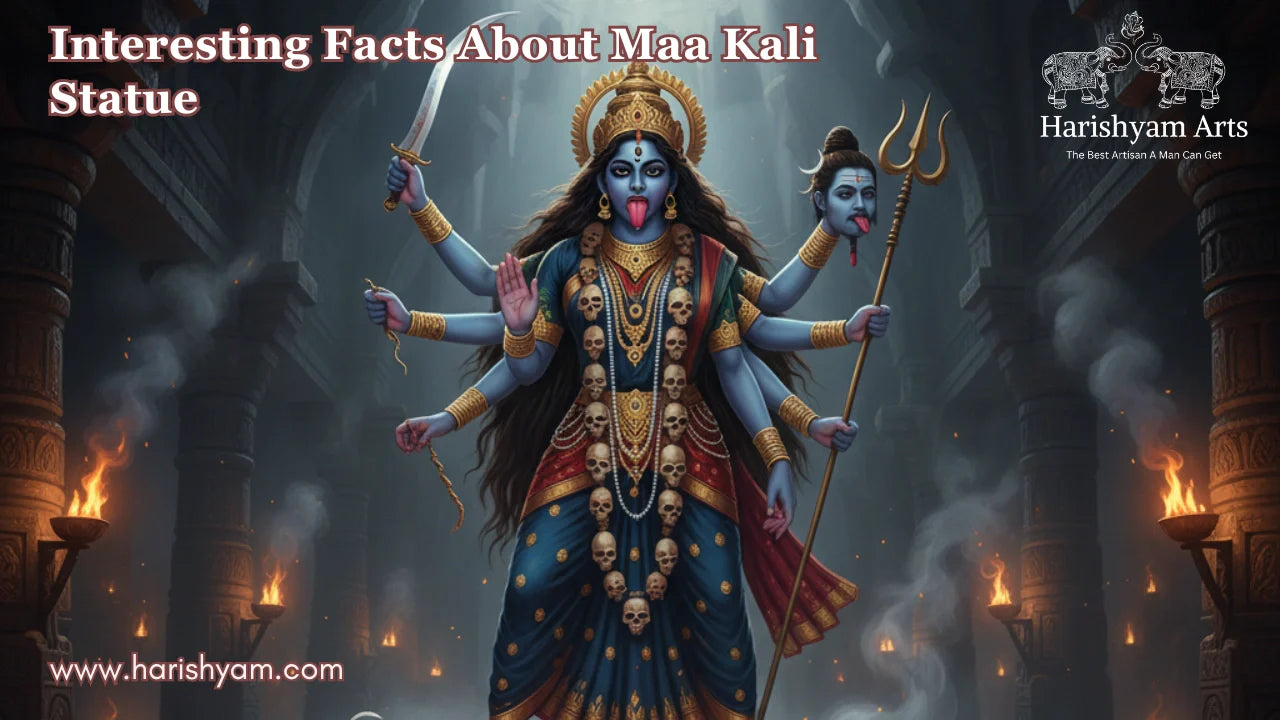
Maa Kali statues are full of deep symbolism. Every detail of her idol has a meaning:
Dark Complexion – Usually black or dark blue, symbolizing infinite cosmic power and the transcendence of form.
Tongue Out – Represents humility and control over ego; some traditions also say it reflects her shock after stepping on Lord Shiva.
Garland of Skulls (Mundamala) – Symbolizes the cycle of birth and death, as well as liberation from the fear of mortality.
Four Arms – Each hand depicts a purpose: destruction of evil, granting blessings, protection, and removing fear.
Weapons – Her sword and other weapons signify the cutting away of ignorance and negativity.
Shiva Beneath Her Feet – Symbol of balance, showing how destruction (Kali) and consciousness (Shiva) coexist to maintain harmony in the universe.
Interesting Facts About Maa Kali Statues
Here are some fascinating insights that make her statues truly remarkable:
-
Motherly Protector in a Fierce Form: Despite her frightening appearance, she is worshipped as the most loving and protective mother.
-
Symbol of Fearlessness: Devotees believe keeping her idol brings courage, removes negativity, and protects against evil forces.
-
Regional Depictions: In Bengal, she is often shown dancing in ecstasy, while in South India, her statues emphasize her warrior aspect.
-
Connection to Festivals: Kali Puja, celebrated especially in West Bengal and Assam, involves grand worship of Maa Kali statues.
-
Famous Temples with Statues:
-
Kalighat Temple (Kolkata) – One of the 51 Shakti Peethas.
-
Dakshineswar Kali Temple (Kolkata) – Known for its majestic idol of Bhavatarini Kali.
-
Kamakhya Temple (Assam) – Dedicated to the goddess in her fierce form.
FAQs About Maa Kali Statues
Q1. Why does Maa Kali have her tongue out?
Ans: It represents humility and the control of ego. Some stories say it’s her reaction after realizing she stepped on Lord Shiva.
Q2. What does Maa Kali’s garland of skulls represent?
Ans: It symbolizes the cycle of birth and death, reminding devotees of liberation from worldly attachments.
Q3. Can we keep Maa Kali statue at home?
Ans:Yes, but it should be placed with devotion in a clean, sacred space. It’s believed to protect the household from negativity.
Q4. Which is the most famous Maa Kali temple in India?
Ans: The Kalighat Temple and Dakshineswar Kali Temple in Kolkata are among the most famous.
Conclusion
Maa Kali statues are not just artistic marvels; they are embodiments of divine energy and symbolism. From her dark form that represents the limitless cosmos to the skull garland that reminds us of life’s impermanence, every feature of her idol carries a deep spiritual lesson. For devotees, a Maa Kali statue is a source of courage, protection, and motherly love.

Lakshay Sharma
I’m Lakshay Sharma, a writer with a deep passion for Hindu mythology, Vastu Shastra, and home interiors. I enjoy exploring the rich traditions of Hindu gods and goddesses, sharing insights into Vastu principles, and offering guidance on creating sacred spaces like Puja Mandirs. Through my writing, I aim to inspire harmony and spiritual well-being, blending traditional knowledge with modern perspectives.
Harishyam Arts | Jaipur
Related Blogs

The Spiritual Significance of Intricate Marble Carvings in Home Temples
Lakshay Sharma | June 28, 2026
A home temple is much more than a decorative corner in a house. It is a sacred...
Read More...
Bhagavad Gita Chapter 6 Verse 38 Meaning in Hindi & English
Lakshay Sharma | June 25, 2026
Bhagavad Gita Chapter 6 Verse 38 continues Arjuna's heartfelt inquiry about th...
Read More...
Bhagavad Gita Chapter 6 Verse 37 Meaning in Hindi & English
Lakshay Sharma | June 25, 2026
Bhagavad Gita Chapter 6 Verse 37 begins one of the most comforting and inspiri...
Read More...
Bhagavad Gita Chapter 6 Verse 36 Meaning in Hindi & English
Lakshay Sharma | June 25, 2026
Bhagavad Gita Chapter 6 Verse 36 concludes Lord Krishna's response to Arjuna's...
Read More...
Bhagavad Gita Chapter 6 Verse 35 Meaning in Hindi & English
Lakshay Sharma | June 25, 2026
Bhagavad Gita Chapter 6 Verse 35 contains Lord Krishna's famous response to Ar...
Read More...
Bhagavad Gita Chapter 6 Verse 34 Meaning in Hindi & English
Lakshay Sharma | June 25, 2026
Bhagavad Gita Chapter 6 Verse 34 continues Arjuna's heartfelt discussion with ...
Read More...
Bhagavad Gita Chapter 6 Verse 33 Meaning in Hindi & English
Lakshay Sharma | June 25, 2026
Bhagavad Gita Chapter 6 Verse 33 marks an important turning point in the dialo...
Read More...
Bhagavad Gita Chapter 6 Verse 32 Meaning in Hindi & English
Lakshay Sharma | June 25, 2026
Bhagavad Gita Chapter 6 Verse 32 concludes Lord Krishna's profound teachings o...
Read More...
Bhagavad Gita Chapter 6 Verse 31 Meaning in Hindi & English
Lakshay Sharma | June 25, 2026
Bhagavad Gita Chapter 6 Verse 31 continues Lord Krishna's profound teachings o...
Read More...
Bhagavad Gita Chapter 6 Verse 30 Meaning in Hindi & English
Lakshay Sharma | June 25, 2026
Bhagavad Gita 6.30 – Seeing God Everywhere
Lor...
Read More...
The Ancient Lost-Wax Technique Behind Traditional Brass Statue Making
Lakshay Sharma | June 25, 2026
India has a rich artistic heritage that reflects centuries of craftsmanship, s...
Read More...
Bhagavad Gita Chapter 6 Verse 29 Meaning in Hindi & English
Lakshay Sharma | June 24, 2026
Bhagavad Gita Chapter 6 Verse 29 presents one of the most profound spiritual r...
Read More...
Bhagavad Gita Chapter 6 Verse 28 Meaning in Hindi & English
Lakshay Sharma | June 24, 2026
Bhagavad Gita Chapter 6 Verse 28 continues Lord Krishna's teachings on meditat...
Read More...
Bhagavad Gita Chapter 6 Verse 27 Meaning in Hindi & English
Lakshay Sharma | June 24, 2026
Bhagavad Gita Chapter 6 Verse 27 describes the beautiful reward that comes fro...
Read More...
Bhagavad Gita Chapter 6 Verse 26 Meaning in Hindi & English
Lakshay Sharma | June 24, 2026
Bhagavad Gita Chapter 6 Verse 26 is one of the most practical and compassionat...
Read More...
Bhagavad Gita Chapter 6 Verse 25 Meaning in Hindi & English
Lakshay Sharma | June 24, 2026
Bhagavad Gita Chapter 6 Verse 25 continues Lord Krishna's practical guidance o...
Read More...
Bhagavad Gita Chapter 6 Verse 24 Meaning in Hindi & English
Lakshay Sharma | June 24, 2026
Bhagavad Gita Chapter 6 Verse 24 continues Lord Krishna's teachings on meditat...
Read More...
Bhagavad Gita Chapter 6 Verse 23 Meaning in Hindi & English
Lakshay Sharma | June 24, 2026
Bhagavad Gita Chapter 6 Verse 23 is one of the most powerful definitions of Yo...
Read More...
Why White Marble Moortis Create a Peaceful and Positive Energy in Homes and Temples
Lakshay Sharma | June 24, 2026
In Indian culture, spirituality is deeply connected to everyday life. Homes an...
Read More...
Bhagavad Gita Chapter 6 Verse 22 Meaning in Hindi & English
Lakshay Sharma | June 23, 2026
Bhagavad Gita Chapter 6 Verse 22 continues Lord Krishna's description of the s...
Read More...
-Bhagavad Gita Chapter 6 Verse 21 Meaning in Hindi & English
Lakshay Sharma | June 23, 2026
Bhagavad Gita Chapter 6 Verse 21 continues Lord Krishna's description of the h...
Read More...
Bhagavad Gita Chapter 6 Verse 20 Meaning in Hindi & English
Lakshay Sharma | June 23, 2026
Bhagavad Gita Chapter 6 Verse 20 marks the beginning of Lord Krishna's descrip...
Read More...
Bhagavad Gita Chapter 6 Verse 19 Meaning in Hindi & English
Lakshay Sharma | June 23, 2026
Bhagavad Gita Chapter 6 Verse 19 presents one of the most beautiful and memora...
Read More...
Bhagavad Gita Chapter 6 Verse 18 Meaning in Hindi & English
Lakshay Sharma | June 23, 2026
Bhagavad Gita Chapter 6 Verse 18 marks an important stage in Lord Krishna's te...
Read More...
Bhagavad Gita Chapter 6 Verse 17 Meaning in Hindi & English
Lakshay Sharma | June 23, 2026
Bhagavad Gita Chapter 6 Verse 17 continues Lord Krishna's teaching on moderati...
Read More...
Bhagavad Gita Chapter 6 Verse 16 Meaning in Hindi & English
Lakshay Sharma | June 23, 2026
Bhagavad Gita Chapter 6 Verse 16 is an important teaching from Lord Krishna on...
Read More...
Bhagavad Gita Chapter 6 Verse 15 Meaning in Hindi & English
Lakshay Sharma | June 23, 2026
Bhagavad Gita Chapter 6 Verse 15 concludes Lord Krishna's detailed instruction...
Read More...
Bhagavad Gita Chapter 6 Verse 14 Meaning in Hindi & English
Lakshay Sharma | June 23, 2026
Bhagavad Gita Chapter 6 Verse 14 continues Lord Krishna's teachings on meditat...
Read More...
Bhagavad Gita Chapter 6 Verse 13 Meaning in Hindi & English
Lakshay Sharma | June 23, 2026
Bhagavad Gita Chapter 6 Verse 13 continues Lord Krishna's step-by-step instruc...
Read More...
Bhagavad Gita Chapter 6 Verse 11 Meaning in Hindi & English
Lakshay Sharma | June 23, 2026
Bhagavad Gita Chapter 6 Verse 11 continues Lord Krishna's practical instructio...
Read More...
Bhagavad Gita Chapter 6 Verse 10 Meaning in Hindi & English
Lakshay Sharma | June 23, 2026
Bhagavad Gita Chapter 6 Verse 10 marks the beginning of Lord Krishna's detaile...
Read More...
Bhagavad Gita Chapter 6 Verse 9 Meaning in Hindi & English
Lakshay Sharma | June 23, 2026
Bhagavad Gita Chapter 6 Verse 9 expands Lord Krishna's teaching on the qualiti...
Read More...
Bhagavad Gita Chapter 6 Verse 8 Meaning in Hindi & English
Lakshay Sharma | June 23, 2026
Bhagavad Gita Chapter 6 Verse 8 further describes the qualities of an accompli...
Read More...
Bhagavad Gita Chapter 6 Verse 7 Meaning in Hindi & English
Lakshay Sharma | June 23, 2026
Bhagavad Gita Chapter 6 Verse 7 describes the state of a person w...
Read More...
Bhagavad Gita Chapter 6 Verse 6 Meaning in Hindi & English
Lakshay Sharma | June 23, 2026
Bhagavad Gita Chapter 6 Verse 6 continues Lord Krishna's profound teaching on ...
Read More...
Bhagavad Gita Chapter 6 Verse 5 Meaning in Hindi & English
Lakshay Sharma | June 23, 2026
Bhagavad Gita Chapter 6 Verse 5 contains one of Lord Krishna's most empowering...
Read More...
Bhagavad Gita Chapter 6 Verse 4 Meaning in Hindi & English
Lakshay Sharma | June 23, 2026
Bhagavad Gita Chapter 6 Verse 4 continues Lord Krishna's teachings on Dhyana Y...
Read More...
Bhagavad Gita Chapter 6 Verse 2 Meaning in Hindi & English
Lakshay Sharma | June 23, 2026
Bhagavad Gita Chapter 6 Verse 2 continues Lord Krishna's teachings on Dhyana Y...
Read More...
Bhagavad Gita Chapter 6 Verse 1 Meaning in Hindi & English
Lakshay Sharma | June 23, 2026
Bhagavad Gita Chapter 6 Verse 1 marks the beginning of Dhyana Yoga (The Yoga o...
Read More...
Bhagavad Gita Chapter 6 Verse 12 Meaning in Hindi & English
Lakshay Sharma | June 23, 2026
Bhagavad Gita Chapter 6 Verse 12 continues Lord Krishna's detailed instruction...
Read More...
Bhagavad Gita Chapter 6 Verse 3 Meaning in Hindi & English
Lakshay Sharma | June 23, 2026
Bhagavad Gita Chapter 6 Verse 3 continues Lord Krishna's teachings on Dhyana Y...
Read More...
Bhagavad Gita Chapter 2 Verse 34 Meaning in Hindi and English
Lakshay Sharma | June 22, 2026
Bhagavad Gita Chapter 2 Verse 34 continues Lord Krishna's effort to awaken Arj...
Read More...
Sacred Animals in Hinduism and Their Spiritual Meaning
Lakshay Sharma | June 22, 2026
Hinduism is one of the oldest religions in the world, deeply connected with na...
Read More...
Bhagavad Gita Chapter 5 Verse 27 Meaning in Hindi and English
Lakshay Sharma | June 17, 2026
Bhagavad Gita Chapter 5 Verse 27 Meaning in Hindi and English

Bhagavad Gita Chapter 5 Verse 28 Meaning in Hindi and English
Lakshay Sharma | June 17, 2026
Bhagavad Gita Chapter 5 Verse 28 Meaning in Hindi and English

Bhagavad Gita Chapter 5 Verse 26 Meaning in Hindi and English
Lakshay Sharma | June 17, 2026
Bhagavad Gita Chapter 5 Verse 26 Meaning in Hindi and English

Bhagavad Gita Chapter 5 Verse 25 Meaning in Hindi and English
Lakshay Sharma | June 17, 2026
Bhagavad Gita Chapter 5 Verse 25 Meaning in Hindi and English

Bhagavad Gita Chapter 5 Verse 23 Meaning in Hindi and English
Lakshay Sharma | June 17, 2026
Bhagavad Gita Chapter 5 Verse 23 Meaning in Hindi and English
Bhagavad Gita Chapter 5 Verse 15 Meaning in Hindi and English
Lakshay Sharma | June 17, 2026
Bhagavad Gita Chapter 5 Verse 15 Meaning in Hindi and English

Bhagavad Gita Chapter 5 Verse 14 Meaning in Hindi and English
Lakshay Sharma | June 17, 2026


