
Harishyam Arts Blog
The History and Cultural Significance of Brass Utensils in Indian Kitchens
By Lakshay Sharma | On 07 August, 2025 | Views
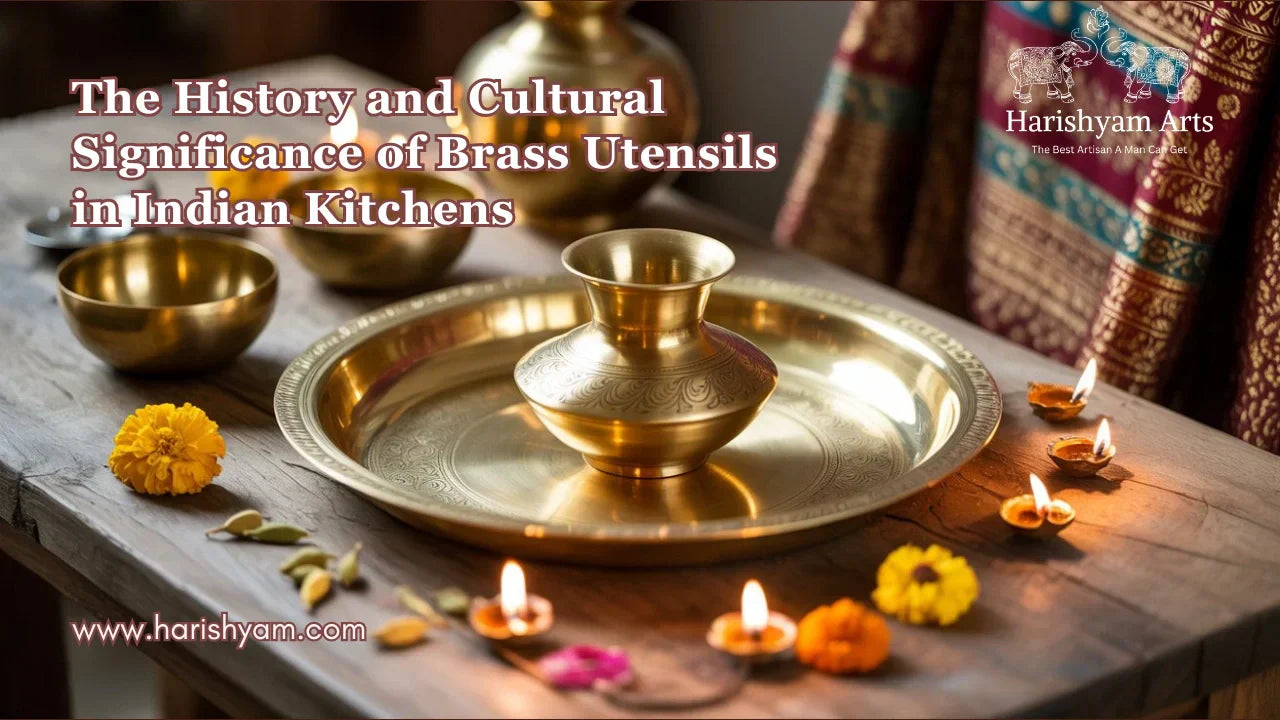
The gleaming golden surfaces of brass utensils have illuminated Indian kitchens for millennia, serving as silent witnesses to countless family meals, sacred ceremonies, and cultural traditions. Far beyond their practical applications, these lustrous vessels represent an enduring legacy that connects modern Indian households to their ancestral roots while embodying centuries of metallurgical expertise, spiritual significance, and cultural identity.
Ancient Origins: From the Indus Valley to Vedic Traditions
The story of brass utensils in Indian kitchens begins with one of the world's earliest urban civilizations. Archaeological excavations from the Indus Valley Civilization (2600-1900 BCE) have revealed extensive use of brass and bronze alloys, demonstrating that metalworking was a sophisticated craft even in ancient times. These early inhabitants understood the unique properties of brass—an alloy of copper and zinc—and utilized it for creating both functional cookware and ceremonial vessels.
During the Vedic period (1500-500 BCE), brass utensils gained profound spiritual and cultural significance. Ancient Sanskrit texts, including the Rig Veda, make specific references to brass and bronze alloys, describing their purity and suitability for sacred purposes. The metal was considered inherently auspicious, earning it the designation of a "sattvic" material that promoted spiritual well-being and divine connection.
The transition from purely utilitarian objects to culturally embedded artifacts occurred gradually. Vedic literature reveals that brass vessels were not merely cooking implements but integral components of religious rituals, water storage systems, and community gatherings. This period established the foundational belief that the choice of cookware materials could influence both physical health and spiritual purity—a concept that continues to resonate in contemporary Indian households.
Medieval Flourishing: The Mughal Renaissance
The medieval period, particularly during the Mughal Empire (1526-1857), marked a golden age for brass craftsmanship in Indian kitchens. Mughal patronage elevated metalworking from a craft to an art form, introducing Persian aesthetic influences while preserving indigenous techniques. The imperial workshops produced brass utensils of unprecedented sophistication, featuring intricate engravings, geometric patterns, and decorative motifs that reflected the cosmopolitan nature of Mughal culture.
During this era, brass cookware transcended social boundaries, appearing in royal kitchens and common households alike, though with varying degrees of ornamentation. The Mughal period saw the standardization of specific brass vessel types—degchis for rice dishes, handis for curries, and elaborate serving thalis for formal dining. These vessels were not merely functional; they became symbols of prosperity, sophistication, and cultural refinement.
The Mughal influence also introduced new manufacturing techniques and design aesthetics. Court artisans developed methods for creating paper-thin brass vessels with remarkable durability, while decorative elements incorporated Persian calligraphy, floral patterns, and architectural motifs. This period established many of the design principles and manufacturing standards that continue to influence contemporary brass utensil production.
Regional Variations: A Tapestry of Local Traditions
Across India's diverse geographical and cultural landscape, brass utensils evolved distinctive regional characteristics that reflect local culinary traditions, available materials, and artistic preferences. Each region developed its own vocabulary of vessel shapes, sizes, and decorative elements, creating a rich tapestry of metallurgical diversity.
Northern India: The Thathera Legacy
In Punjab and surrounding regions, the Thathera community emerged as master craftsmen of brass and copper utensils. Recognized by UNESCO as bearers of Intangible Cultural Heritage, the Thatheras of Jandiala Guru developed sophisticated techniques for creating everything from small bowls to large cooking vessels. Their traditional methods involve careful temperature control using wood-fired stoves, hand-hammering techniques, and finishing with natural materials like sand and tamarind juice.
The Thathera tradition exemplifies the deep connection between craft communities and their metalworking heritage. For these artisans, metalwork extends beyond livelihood—it defines family structures, social hierarchies, and cultural identity within their communities. Their brass vessels, characterized by precise proportions and durable construction, became essential elements in Punjabi kitchens and religious ceremonies.
Eastern India: The Kansari Artisans
In Odisha, the Kansari community has specialized in brass and bell metal craftsmanship since the eleventh century, producing both utilitarian cookware and ceremonial objects for temples and households. Unlike their northern counterparts, Kansari artisans developed techniques specifically suited to bell metal—a bronze alloy known for its sonorous qualities and ritual significance.
The Kansari tradition demonstrates remarkable specialization, with master artisans typically focusing on either brass or bell metal, and often specializing in specific product categories. Districts like Ganjam, Puri, and Cuttack became centers of production, each developing distinctive product lines and decorative styles. The community's work includes not only cooking vessels but also temple bells, ceremonial lamps, and ritual objects that play crucial roles in Hindu worship practices.
Southern India: Bronze Heritage
Southern Indian regions, particularly Kerala, Tamil Nadu, and Karnataka, developed strong traditions around bronze utensils, locally known as Kansa. The region's bronze vessels, including the distinctive urulis (wide, shallow bowls), became integral to local cooking traditions and ceremonial practices. These vessels excel in slow-cooking applications, making them ideal for preparing traditional dishes like payasam, sambhar, and various curry preparations.
The southern tradition emphasizes the relationship between vessel shape and cooking technique. The wide, shallow design of traditional urulis facilitates even heat distribution and reduction of liquids, making them perfect for sweet preparations and ceremonial foods. Regional variations include different alloy compositions, decorative patterns, and specialized vessel types designed for specific culinary applications.
Western India: Commercial Centers
Gujarat and Rajasthan emerged as major commercial centers for brass utensil production, with cities like Moradabad in Uttar Pradesh becoming manufacturing hubs. These regions developed more standardized production methods while maintaining traditional hand-crafting techniques for premium products. The western tradition balanced commercial viability with cultural authenticity, creating products that served both local markets and broader trade networks.
Sacred and Ceremonial Applications
Beyond their culinary functions, brass utensils hold profound spiritual and ceremonial significance in Indian culture. The metal's inherent properties—resistance to corrosion, warm golden appearance, and believed purifying qualities—made it ideal for religious applications and sacred food preparation.
Temple and Religious Use
In Hindu traditions, brass vessels are considered essential for proper ritual conduct. Temples across India utilize brass lamps (deepams), water vessels (kalashas), offering plates (thalis), and ceremonial containers for various religious purposes. The metal's non-reactive nature and believed spiritual properties make it suitable for storing holy water, preparing sacred foods, and conducting religious ceremonies.
The use of brass in religious contexts extends beyond mere functionality. According to traditional beliefs, brass emits positive vibrations that purify surroundings and enhance spiritual experiences. This understanding led to the integration of brass utensils into daily prayer routines, festival celebrations, and life-cycle ceremonies.
Festival and Ceremonial Dining
Major Indian festivals showcase brass utensils in their full cultural glory. During Diwali, brass lamps illuminate homes while brass serving vessels present traditional sweets and offerings. Navratri celebrations feature brass containers for distributing prasad, while wedding ceremonies incorporate brass thalis and serving sets as symbols of prosperity and auspicious beginnings.
The ceremonial use of brass extends to community gatherings and religious festivals. Large brass vessels facilitate communal cooking during temple festivals, while individual brass dining sets mark special occasions and family celebrations. These practices reinforce the metal's association with purity, abundance, and spiritual well-being.
Heirloom Status and Family Traditions
Many families treat their brass utensils as precious heirlooms, passing them down through generations as symbols of cultural continuity and family heritage. These inherited vessels often carry deep emotional significance, representing connections to ancestral homes, traditional cooking methods, and family memories.
The heirloom tradition surrounding brass utensils reflects their exceptional durability and timeless appeal. Unlike modern cookware that may wear out within years, properly maintained brass vessels can last for centuries, developing a distinctive patina that adds to their aesthetic and emotional value. This longevity has contributed to the metal's association with permanence, stability, and enduring family bonds.
Artisanal Craftsmanship: Techniques and Traditions
The creation of brass utensils involves sophisticated craftsmanship techniques that have been refined over millennia. Traditional methods combine metallurgical knowledge, artistic skill, and practical understanding of cooking requirements to produce vessels that are both functional and beautiful.
Traditional Manufacturing Processes
The brass utensil-making process begins with procuring metal cakes that are flattened into thin plates through careful hammering. Artisans then shape these plates into curved forms using traditional techniques that require precise temperature control and skilled hand-eye coordination.
Temperature management represents one of the most critical aspects of traditional brass working. Artisans use wood-fired stoves buried in earth, aided by hand-held bellows, to achieve the exact heat levels required for different shaping operations. This traditional heating method allows for gradual temperature changes and precise control that modern equipment sometimes cannot match.
Decorative Techniques and Finishing
Traditional brass utensils often feature intricate decorative elements created through specialized techniques. Artisans create patterns by hammering series of tiny dents into heated metal, producing textures and designs that are both functional and aesthetic. These surface treatments can improve heat distribution while adding visual appeal to finished pieces.
Finishing processes involve hand-polishing with traditional materials such as sand and tamarind juice, creating the characteristic lustrous surface associated with quality brass utensils. These finishing techniques not only enhance appearance but also create protective surface layers that resist tarnishing and maintain the metal's hygienic properties.
Knowledge Transmission and Community Structure
The transmission of brass-working knowledge follows traditional patterns of oral instruction from master to apprentice, typically within family lineages or craft communities. This system ensures both technical skill preservation and cultural continuity, maintaining standards of quality and authenticity across generations.
Craft communities like the Thatheras and Kansaris organize themselves around shared technical knowledge, common tools, and collaborative work arrangements. Within these communities, individual artisans often specialize in particular techniques or product types while sharing resources like workshops and furnaces.
Cultural Symbolism and Social Significance
Brass utensils in Indian kitchens carry symbolic meanings that extend far beyond their practical applications. These vessels represent connections to tradition, demonstrations of social status, expressions of religious devotion, and manifestations of cultural identity.
Status and Social Position
Historically, the quality and quantity of brass utensils in a household served as indicators of social and economic status. Wealthy families displayed elaborate brass serving sets during social gatherings, while the metal's durability made it a practical investment for families of more modest means. The tradition of including brass utensils in wedding dowries reflected both their material value and their symbolic importance in establishing new households.
The social significance of brass extended to community events and religious gatherings. Families who could provide brass vessels for community feasts earned respect and recognition for their contributions to collective welfare. This tradition reinforced the metal's association with generosity, hospitality, and community spirit.
Cultural Identity and Regional Pride
Different regions of India take pride in their distinctive brass-working traditions, viewing local styles and techniques as expressions of cultural identity. The preservation of traditional manufacturing methods represents resistance to cultural homogenization and commitment to maintaining distinctive regional characteristics.
Contemporary interest in brass utensils often reflects broader concerns about cultural preservation and authentic lifestyle choices. Many individuals and families choose brass cookware as a way of connecting with their cultural heritage while making environmentally conscious consumer decisions.
Modern Revival and Contemporary Relevance
After decades of decline during the colonial period and early independence era, brass utensils are experiencing a remarkable revival in contemporary Indian kitchens. This renaissance reflects changing consumer preferences, increased awareness of health benefits, and growing appreciation for traditional craftsmanship.
Health Consciousness and Natural Living
Modern consumers increasingly recognize the health advantages of cooking with brass utensils. The metal's antimicrobial properties, trace mineral content, and non-toxic nature align with contemporary preferences for natural, chemical-free cooking methods. Studies suggest that brass cookware can help retain up to 93% of food nutrients, significantly higher than many modern materials.
The alkalizing properties of brass help balance pH levels in food preparation, potentially reducing acidity and improving digestion. These benefits resonate with health-conscious consumers seeking alternatives to non-stick coatings and synthetic materials that may leach harmful substances into food.
Environmental Sustainability
Growing environmental awareness has contributed to renewed interest in brass utensils as sustainable cookware alternatives. The metal's exceptional durability means that well-maintained brass vessels can last for generations, reducing waste and environmental impact associated with frequent cookware replacement.
The recyclability of brass aligns with circular economy principles, allowing old or damaged utensils to be melted down and reformed into new products without loss of material properties. This sustainability aspect appeals to environmentally conscious consumers seeking to reduce their ecological footprint while maintaining high-quality cookware.
Cultural Preservation Efforts
Government initiatives and cultural organizations have recognized the importance of preserving traditional brass-working crafts. UNESCO's recognition of the Thathera craft as Intangible Cultural Heritage has brought international attention to these traditional skills. Similar efforts in other regions aim to support artisan communities and maintain traditional manufacturing techniques.
Contemporary craft preservation efforts often combine traditional techniques with modern marketing and distribution methods. Online platforms enable traditional artisans to reach global markets while maintaining authentic production methods. This approach helps sustain craft communities economically while preserving cultural knowledge for future generations.
Economic and Social Impact
The brass utensil industry continues to provide livelihoods for thousands of artisans across India while contributing to local economies and cultural tourism. Traditional craft centers like Jandiala Guru, various districts in Odisha, and manufacturing hubs in Gujarat maintain significant economic activity based on brass utensil production.
Artisan Communities and Employment
Traditional brass-working communities face both opportunities and challenges in the contemporary market. While increased demand for authentic products creates economic opportunities, competition from machine-made alternatives and changing consumer preferences require adaptation and innovation. Many craft communities are exploring ways to modernize production methods while preserving essential traditional elements.
Support for artisan communities often comes through fair trade initiatives, government craft promotion programs, and consumer preference for handmade products. These efforts help maintain traditional skills while providing sustainable livelihoods for craft families and communities.
Tourism and Cultural Heritage
Brass utensil-making centers have become important cultural tourism destinations, attracting visitors interested in observing traditional crafts and purchasing authentic products. Craft demonstrations, workshop tours, and artisan interactions provide economic benefits to local communities while promoting cultural understanding and appreciation.
The integration of craft centers into cultural tourism circuits helps maintain public interest in traditional skills while generating additional income streams for artisan communities. This tourism dimension adds cultural and educational value to the economic activities surrounding brass utensil production.
Future Prospects and Contemporary Challenges
The future of brass utensils in Indian kitchens depends on successful navigation of contemporary challenges while maintaining authentic traditional elements. Key issues include competition from modern alternatives, maintaining craft skills, adapting to changing consumer preferences, and ensuring economic sustainability for artisan communities.
Innovation and Adaptation
Contemporary brass utensil manufacturers are exploring ways to combine traditional craftsmanship with modern convenience features. Some producers offer brass cookware with improved handles, better heat distribution designs, and enhanced finishing techniques that maintain traditional aesthetics while improving functionality.
The integration of modern quality control methods with traditional manufacturing techniques helps ensure consistent product quality while preserving authentic craft elements. This approach allows traditional products to compete effectively with modern alternatives while maintaining their distinctive cultural character.
Market Development and Consumer Education
Expanding markets for brass utensils requires continued consumer education about health benefits, proper care methods, and cultural significance. Successful market development often involves demonstrating the practical advantages of brass cookware while highlighting its cultural and aesthetic value.
Digital marketing platforms enable traditional craft producers to reach new consumer segments while educating them about proper use and care of brass utensils. This educational component is essential for maintaining consumer satisfaction and ensuring the long-term success of traditional brass cookware in modern markets.
Frequently Asked Questions
Q1. How far back does the history of brass utensils in Indian kitchens actually extend?
Ans: The history of brass utensils in Indian kitchens extends back to the Indus Valley Civilization (2600-1900 BCE), making it a tradition spanning over 4,000 years. Archaeological excavations have revealed sophisticated brass and bronze artifacts from this period, demonstrating that metalworking was already a well-developed craft in ancient India. The tradition continued through the Vedic period (1500-500 BCE), when brass gained spiritual significance and was mentioned in ancient Sanskrit texts including the Rig Veda.
Q2. What makes the Thathera artisans of Punjab culturally significant?
Ans: The Thathera community of Jandiala Guru, Punjab, represents one of the most distinguished traditions in brass utensil craftsmanship, earning UNESCO recognition as bearers of Intangible Cultural Heritage of Humanity in 2014. Their traditional techniques involve hand-hammering metals using wood-fired stoves with precise temperature control, finishing with natural materials like sand and tamarind juice, and creating intricate designs through skilled metalworking. For Thatheras, metalwork extends beyond livelihood—it defines their family structure, work ethic, and social position within their community.
Q3. How do regional variations in brass utensils reflect India's cultural diversity?
Ans: Regional variations in brass utensils demonstrate India's rich cultural tapestry through distinctive designs, manufacturing techniques, and usage patterns. Northern regions like Punjab developed the Thathera tradition with emphasis on durability and precision, while Eastern India's Kansari artisans in Odisha specialized in both brass and bell metal with focus on ceremonial objects. Southern India created distinctive bronze urulis perfect for regional cooking styles, and Western regions like Gujarat became commercial manufacturing centers balancing traditional craft with broader market needs. Each region's products reflect local culinary traditions, available materials, and aesthetic preferences.
Q4. What role do brass utensils play in Hindu religious and ceremonial practices?
Ans: Brass utensils hold profound spiritual significance in Hindu traditions, considered essential for proper ritual conduct due to their believed purifying properties and spiritual vibrations. Temples utilize brass lamps (deepams), water vessels (kalashas), and offering plates (thalis) for various religious purposes. During festivals like Diwali and Navratri, brass containers present offerings and distribute prasad, while wedding ceremonies incorporate brass serving sets as symbols of prosperity. The metal's non-reactive nature and golden appearance make it ideal for storing holy water, preparing sacred foods, and conducting religious ceremonies.
Q5. How did the Mughal period influence brass utensil design and craftsmanship?
Ans: The Mughal period (1526-1857) marked a golden age for brass craftsmanship, elevating metalworking from craft to art form through imperial patronage. Mughal workshops introduced Persian aesthetic influences including intricate engravings, geometric patterns, and decorative motifs while preserving indigenous techniques. This era saw standardization of specific vessel types like degchis for rice and handis for curries, along with development of paper-thin brass vessels with remarkable durability. Mughal artisans incorporated Persian calligraphy, floral patterns, and architectural motifs, establishing design principles that continue to influence contemporary brass utensil production.
Q6. What factors are driving the contemporary revival of brass utensils in modern Indian kitchens?
Ans: The modern revival of brass utensils stems from multiple converging factors: increased health consciousness recognizing brass's antimicrobial properties and ability to retain up to 93% of food nutrients, environmental awareness appreciating brass's durability and recyclability as sustainable alternatives to disposable cookware, and cultural preservation efforts seeking authentic connections to traditional heritage. Government initiatives and UNESCO recognition have supported artisan communities, while digital platforms enable traditional producers to reach new markets with educational content about proper use and benefits. This revival represents a broader movement toward natural living, cultural authenticity, and sustainable consumption patterns in contemporary India.

Lakshay Sharma
I’m Lakshay Sharma, a writer with a deep passion for Hindu mythology, Vastu Shastra, and home interiors. I enjoy exploring the rich traditions of Hindu gods and goddesses, sharing insights into Vastu principles, and offering guidance on creating sacred spaces like Puja Mandirs. Through my writing, I aim to inspire harmony and spiritual well-being, blending traditional knowledge with modern perspectives.
Harishyam Arts | Jaipur
Related Blogs

Bhagavad Gita Chapter 6 Verse 38 Meaning in Hindi & English
Lakshay Sharma | June 25, 2026
Bhagavad Gita Chapter 6 Verse 38 continues Arjuna's heartfelt inquiry about th...
Read More...
Bhagavad Gita Chapter 6 Verse 37 Meaning in Hindi & English
Lakshay Sharma | June 25, 2026
Bhagavad Gita Chapter 6 Verse 37 begins one of the most comforting and inspiri...
Read More...
Bhagavad Gita Chapter 6 Verse 36 Meaning in Hindi & English
Lakshay Sharma | June 25, 2026
Bhagavad Gita Chapter 6 Verse 36 concludes Lord Krishna's response to Arjuna's...
Read More...
Bhagavad Gita Chapter 6 Verse 35 Meaning in Hindi & English
Lakshay Sharma | June 25, 2026
Bhagavad Gita Chapter 6 Verse 35 contains Lord Krishna's famous response to Ar...
Read More...
Bhagavad Gita Chapter 6 Verse 34 Meaning in Hindi & English
Lakshay Sharma | June 25, 2026
Bhagavad Gita Chapter 6 Verse 34 continues Arjuna's heartfelt discussion with ...
Read More...
Bhagavad Gita Chapter 6 Verse 33 Meaning in Hindi & English
Lakshay Sharma | June 25, 2026
Bhagavad Gita Chapter 6 Verse 33 marks an important turning point in the dialo...
Read More...
Bhagavad Gita Chapter 6 Verse 32 Meaning in Hindi & English
Lakshay Sharma | June 25, 2026
Bhagavad Gita Chapter 6 Verse 32 concludes Lord Krishna's profound teachings o...
Read More...
Bhagavad Gita Chapter 6 Verse 31 Meaning in Hindi & English
Lakshay Sharma | June 25, 2026
Bhagavad Gita Chapter 6 Verse 31 continues Lord Krishna's profound teachings o...
Read More...
Bhagavad Gita Chapter 6 Verse 30 Meaning in Hindi & English
Lakshay Sharma | June 25, 2026
Bhagavad Gita 6.30 – Seeing God Everywhere
Lor...
Read More...
The Ancient Lost-Wax Technique Behind Traditional Brass Statue Making
Lakshay Sharma | June 25, 2026
India has a rich artistic heritage that reflects centuries of craftsmanship, s...
Read More...
Bhagavad Gita Chapter 6 Verse 29 Meaning in Hindi & English
Lakshay Sharma | June 24, 2026
Bhagavad Gita Chapter 6 Verse 29 presents one of the most profound spiritual r...
Read More...
Bhagavad Gita Chapter 6 Verse 28 Meaning in Hindi & English
Lakshay Sharma | June 24, 2026
Bhagavad Gita Chapter 6 Verse 28 continues Lord Krishna's teachings on meditat...
Read More...
Bhagavad Gita Chapter 6 Verse 27 Meaning in Hindi & English
Lakshay Sharma | June 24, 2026
Bhagavad Gita Chapter 6 Verse 27 describes the beautiful reward that comes fro...
Read More...
Bhagavad Gita Chapter 6 Verse 26 Meaning in Hindi & English
Lakshay Sharma | June 24, 2026
Bhagavad Gita Chapter 6 Verse 26 is one of the most practical and compassionat...
Read More...
Bhagavad Gita Chapter 6 Verse 25 Meaning in Hindi & English
Lakshay Sharma | June 24, 2026
Bhagavad Gita Chapter 6 Verse 25 continues Lord Krishna's practical guidance o...
Read More...
Bhagavad Gita Chapter 6 Verse 24 Meaning in Hindi & English
Lakshay Sharma | June 24, 2026
Bhagavad Gita Chapter 6 Verse 24 continues Lord Krishna's teachings on meditat...
Read More...
Bhagavad Gita Chapter 6 Verse 23 Meaning in Hindi & English
Lakshay Sharma | June 24, 2026
Bhagavad Gita Chapter 6 Verse 23 is one of the most powerful definitions of Yo...
Read More...
Why White Marble Moortis Create a Peaceful and Positive Energy in Homes and Temples
Lakshay Sharma | June 24, 2026
In Indian culture, spirituality is deeply connected to everyday life. Homes an...
Read More...
Bhagavad Gita Chapter 6 Verse 22 Meaning in Hindi & English
Lakshay Sharma | June 23, 2026
Bhagavad Gita Chapter 6 Verse 22 continues Lord Krishna's description of the s...
Read More...
-Bhagavad Gita Chapter 6 Verse 21 Meaning in Hindi & English
Lakshay Sharma | June 23, 2026
Bhagavad Gita Chapter 6 Verse 21 continues Lord Krishna's description of the h...
Read More...
Bhagavad Gita Chapter 6 Verse 20 Meaning in Hindi & English
Lakshay Sharma | June 23, 2026
Bhagavad Gita Chapter 6 Verse 20 marks the beginning of Lord Krishna's descrip...
Read More...
Bhagavad Gita Chapter 6 Verse 19 Meaning in Hindi & English
Lakshay Sharma | June 23, 2026
Bhagavad Gita Chapter 6 Verse 19 presents one of the most beautiful and memora...
Read More...
Bhagavad Gita Chapter 6 Verse 18 Meaning in Hindi & English
Lakshay Sharma | June 23, 2026
Bhagavad Gita Chapter 6 Verse 18 marks an important stage in Lord Krishna's te...
Read More...
Bhagavad Gita Chapter 6 Verse 17 Meaning in Hindi & English
Lakshay Sharma | June 23, 2026
Bhagavad Gita Chapter 6 Verse 17 continues Lord Krishna's teaching on moderati...
Read More...
Bhagavad Gita Chapter 6 Verse 16 Meaning in Hindi & English
Lakshay Sharma | June 23, 2026
Bhagavad Gita Chapter 6 Verse 16 is an important teaching from Lord Krishna on...
Read More...
Bhagavad Gita Chapter 6 Verse 15 Meaning in Hindi & English
Lakshay Sharma | June 23, 2026
Bhagavad Gita Chapter 6 Verse 15 concludes Lord Krishna's detailed instruction...
Read More...
Bhagavad Gita Chapter 6 Verse 14 Meaning in Hindi & English
Lakshay Sharma | June 23, 2026
Bhagavad Gita Chapter 6 Verse 14 continues Lord Krishna's teachings on meditat...
Read More...
Bhagavad Gita Chapter 6 Verse 13 Meaning in Hindi & English
Lakshay Sharma | June 23, 2026
Bhagavad Gita Chapter 6 Verse 13 continues Lord Krishna's step-by-step instruc...
Read More...
Bhagavad Gita Chapter 6 Verse 11 Meaning in Hindi & English
Lakshay Sharma | June 23, 2026
Bhagavad Gita Chapter 6 Verse 11 continues Lord Krishna's practical instructio...
Read More...
Bhagavad Gita Chapter 6 Verse 10 Meaning in Hindi & English
Lakshay Sharma | June 23, 2026
Bhagavad Gita Chapter 6 Verse 10 marks the beginning of Lord Krishna's detaile...
Read More...
Bhagavad Gita Chapter 6 Verse 9 Meaning in Hindi & English
Lakshay Sharma | June 23, 2026
Bhagavad Gita Chapter 6 Verse 9 expands Lord Krishna's teaching on the qualiti...
Read More...
Bhagavad Gita Chapter 6 Verse 8 Meaning in Hindi & English
Lakshay Sharma | June 23, 2026
Bhagavad Gita Chapter 6 Verse 8 further describes the qualities of an accompli...
Read More...
Bhagavad Gita Chapter 6 Verse 7 Meaning in Hindi & English
Lakshay Sharma | June 23, 2026
Bhagavad Gita Chapter 6 Verse 7 describes the state of a person w...
Read More...
Bhagavad Gita Chapter 6 Verse 6 Meaning in Hindi & English
Lakshay Sharma | June 23, 2026
Bhagavad Gita Chapter 6 Verse 6 continues Lord Krishna's profound teaching on ...
Read More...
Bhagavad Gita Chapter 6 Verse 5 Meaning in Hindi & English
Lakshay Sharma | June 23, 2026
Bhagavad Gita Chapter 6 Verse 5 contains one of Lord Krishna's most empowering...
Read More...
Bhagavad Gita Chapter 6 Verse 4 Meaning in Hindi & English
Lakshay Sharma | June 23, 2026
Bhagavad Gita Chapter 6 Verse 4 continues Lord Krishna's teachings on Dhyana Y...
Read More...
Bhagavad Gita Chapter 6 Verse 2 Meaning in Hindi & English
Lakshay Sharma | June 23, 2026
Bhagavad Gita Chapter 6 Verse 2 continues Lord Krishna's teachings on Dhyana Y...
Read More...
Bhagavad Gita Chapter 6 Verse 1 Meaning in Hindi & English
Lakshay Sharma | June 23, 2026
Bhagavad Gita Chapter 6 Verse 1 marks the beginning of Dhyana Yoga (The Yoga o...
Read More...
Bhagavad Gita Chapter 6 Verse 12 Meaning in Hindi & English
Lakshay Sharma | June 23, 2026
Bhagavad Gita Chapter 6 Verse 12 continues Lord Krishna's detailed instruction...
Read More...
Bhagavad Gita Chapter 6 Verse 3 Meaning in Hindi & English
Lakshay Sharma | June 23, 2026
Bhagavad Gita Chapter 6 Verse 3 continues Lord Krishna's teachings on Dhyana Y...
Read More...
Bhagavad Gita Chapter 2 Verse 34 Meaning in Hindi and English
Lakshay Sharma | June 22, 2026
Bhagavad Gita Chapter 2 Verse 34 continues Lord Krishna's effort to awaken Arj...
Read More...
Sacred Animals in Hinduism and Their Spiritual Meaning
Lakshay Sharma | June 22, 2026
Hinduism is one of the oldest religions in the world, deeply connected with na...
Read More...
Bhagavad Gita Chapter 5 Verse 27 Meaning in Hindi and English
Lakshay Sharma | June 17, 2026
Bhagavad Gita Chapter 5 Verse 27 Meaning in Hindi and English

Bhagavad Gita Chapter 5 Verse 28 Meaning in Hindi and English
Lakshay Sharma | June 17, 2026
Bhagavad Gita Chapter 5 Verse 28 Meaning in Hindi and English

Bhagavad Gita Chapter 5 Verse 26 Meaning in Hindi and English
Lakshay Sharma | June 17, 2026
Bhagavad Gita Chapter 5 Verse 26 Meaning in Hindi and English

Bhagavad Gita Chapter 5 Verse 25 Meaning in Hindi and English
Lakshay Sharma | June 17, 2026
Bhagavad Gita Chapter 5 Verse 25 Meaning in Hindi and English

Bhagavad Gita Chapter 5 Verse 23 Meaning in Hindi and English
Lakshay Sharma | June 17, 2026
Bhagavad Gita Chapter 5 Verse 23 Meaning in Hindi and English
Bhagavad Gita Chapter 5 Verse 15 Meaning in Hindi and English
Lakshay Sharma | June 17, 2026
Bhagavad Gita Chapter 5 Verse 15 Meaning in Hindi and English

Bhagavad Gita Chapter 5 Verse 14 Meaning in Hindi and English
Lakshay Sharma | June 17, 2026
Bhagavad Gita Chapter 5 Verse 14 is important because:

Bhagavad Gita Chapter 5 Verse 11 Meaning in Hindi and English
Lakshay Sharma | June 17, 2026


